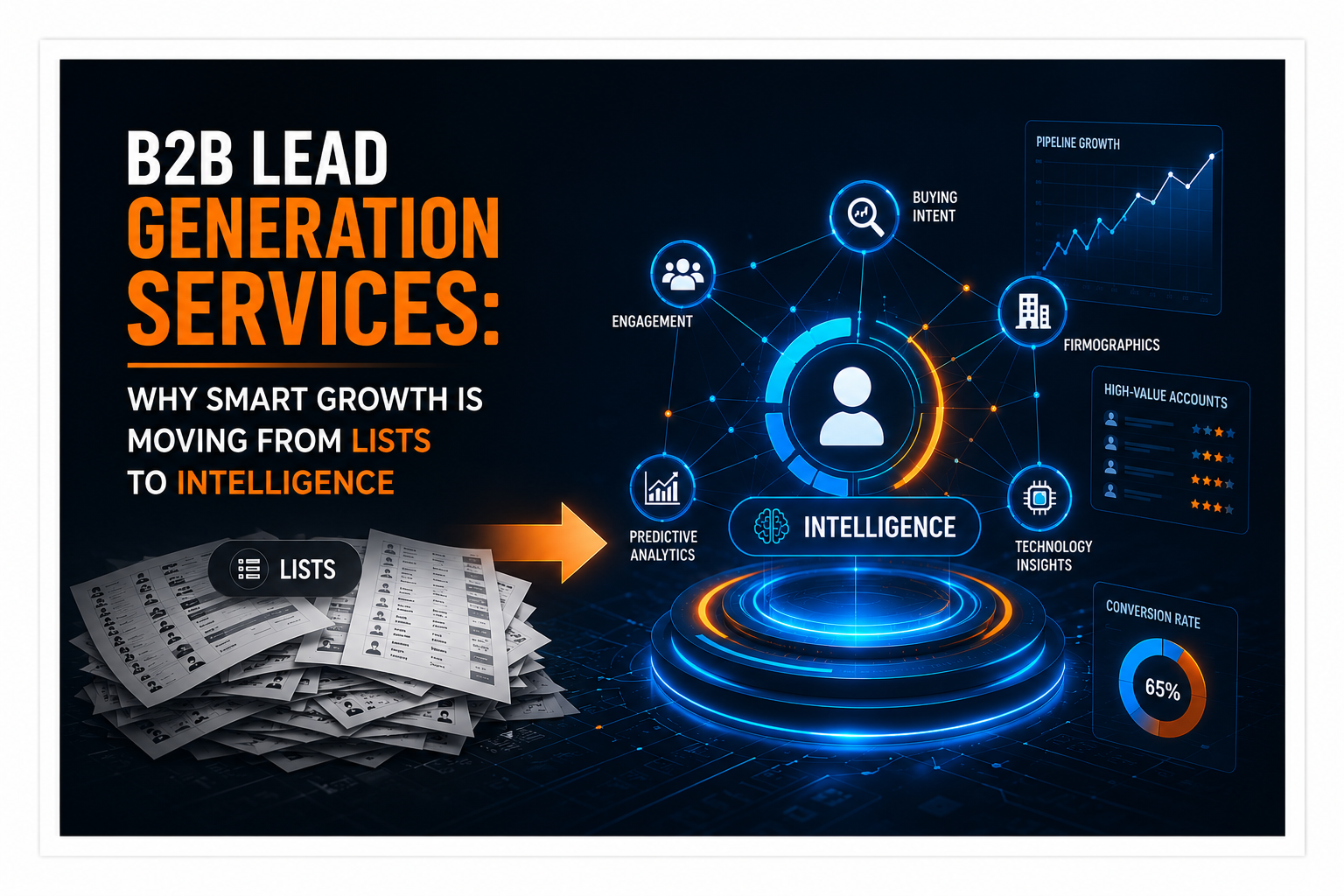
Positive B2B Lead Generation Services: Why Smart Growth Is Moving From Lists to Intelligence
 Purva Wankhade,
2 months ago
4 min read
Purva Wankhade,
2 months ago
4 min read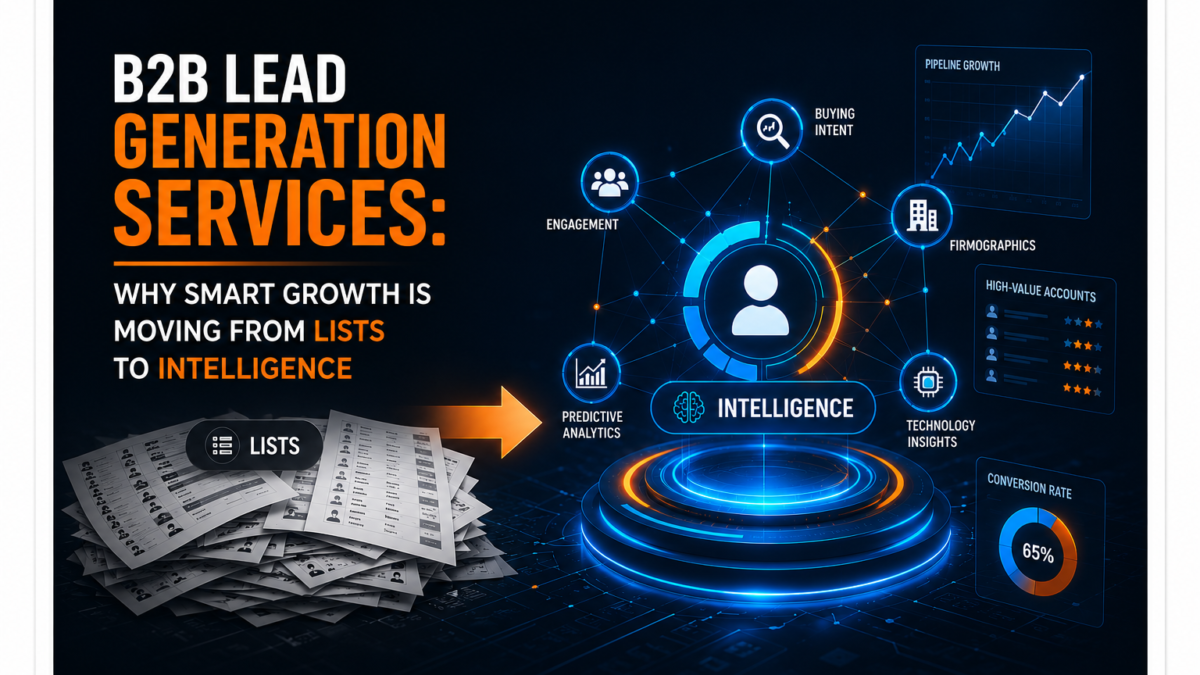
B2B Lead Generation Services are entering a smarter era. For years, businesses treated lead generation like a numbers game: collect names, add emails, send messages, and hope somebody responds. But modern B2B buyers are harder to impress and easier to lose. A giant spreadsheet of contacts may look productive, yet it can hide the most important question: who is actually ready to buy?
The answer is changing the way companies think about growth. Instead of chasing lists, forward-looking teams are building intelligence around every prospect.
B2B Lead Generation Services: The List Era Is Losing Its Edge
Buying or building large contact lists once felt like progress. More contacts meant more people to reach, more campaigns to launch, and supposedly more opportunities to close.
A list can tell you someone’s job title, company, location, or email address. It rarely tells you why they might need your solution today. It cannot reliably explain whether they recently changed vendors, expanded a team, opened a new office, searched for a particular technology, or started evaluating competitors.
Intelligence Changes the Question
The smarter approach asks a different question: “Who is showing signs of buying?”
This is where intent data, behavioral signals, firmographic information, technology usage, engagement patterns, and predictive analytics become powerful. Instead of treating every contact equally, businesses can prioritize prospects based on meaningful evidence.
Imagine a software company with 50,000 contacts. A traditional campaign might send the same message to everyone. An intelligence-led strategy could identify 300 companies researching a relevant solution, narrow those accounts by industry and size, identify decision-makers, and personalize outreach around their likely challenges.
That is the real promise of modern B2B Lead Generation Services: not simply finding people, but understanding them.
From Databases to Buyer Signals
A prospect downloading a report is useful information. A prospect downloading three reports about cybersecurity, visiting pricing pages, comparing vendors, and returning to your website several times is a much stronger signal.
Modern lead generation therefore increasingly connects scattered behaviors into a clearer picture of intent. CRM activity, website engagement, content consumption, account changes, and external signals can work together to reveal movement inside an account.
This shift also makes sales and marketing alignment more practical. Marketing can identify accounts showing interest, while sales can focus conversations on the opportunities with the strongest signals.
AI Is Making the Shift Faster
Artificial intelligence is accelerating this transition. AI can process enormous datasets, recognize patterns, score accounts, summarize research activity, and help teams decide where human attention is most valuable.
But the goal is not to replace marketers or salespeople with machines. It is to remove guesswork.
The best B2B Lead Generation Services use AI as a layer of intelligence rather than a shortcut to spam. Automation can identify promising accounts, but humans still need to understand business problems, build trust, and create relevant conversations.
A thousand automated messages may generate activity. One timely message to a company facing the exact problem you solve can generate revenue.
Why Quality Is Becoming the New Volume
The obsession with lead volume is slowly giving way to pipeline quality.
A marketing team that produces 10,000 leads may look successful until sales discovers that most are irrelevant, inactive, or nowhere near a buying decision.
This is why B2B Lead Generation Services increasingly focus on qualification, intent, enrichment, segmentation, and prioritization.
What Businesses Should Look For
Companies evaluating B2B Lead Generation Services should look beyond promises of databases or guaranteed lead counts. Ask how prospects are researched, how intent is identified, how data is verified, and how accounts are prioritized.
A strong partner should help answer three questions: Who should we target? Why now? What should we say?
The future of B2B Lead Generation Services belongs to teams that can answer all three before launching an outreach campaign.
The Bigger Opportunity
It reflects a deeper change in how B2B buying works. Buyers have more information, more choices, and more control than ever. Winning their attention requires relevance before outreach begins.
For businesses exploring B2B Lead Generation Services, that means investing in systems that recognize signals instead of simply collecting records.
The companies that master this shift will not necessarily have the biggest databases. They will have the clearest understanding of where opportunity is forming.
And that is a powerful advantage.
For technology insights, explore Whitepapers Online, a resource library covering technology, AI, marketing, finance, and HR.
Ultimately, B2B Lead Generation Services are evolving from contact collection into commercial intelligence. The winners of B2B Lead Generation Services will be the teams that stop asking, “How many leads did we generate?” and start asking, “Which accounts are telling us they are ready?”
The future of lead generation is not a bigger list. It is a smarter signal.