The Exciting Next Gaming Revolution May Have Nothing to Do With Better Graphics
 Purva Wankhade,
3 months ago
4 min read
Purva Wankhade,
3 months ago
4 min read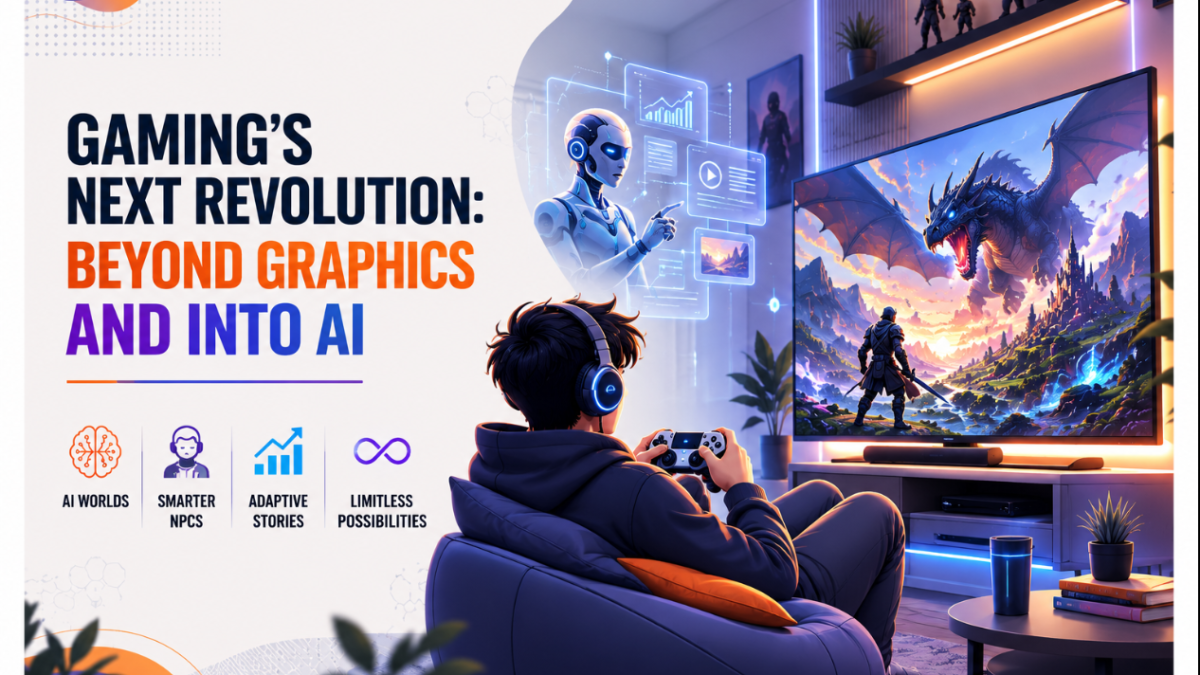
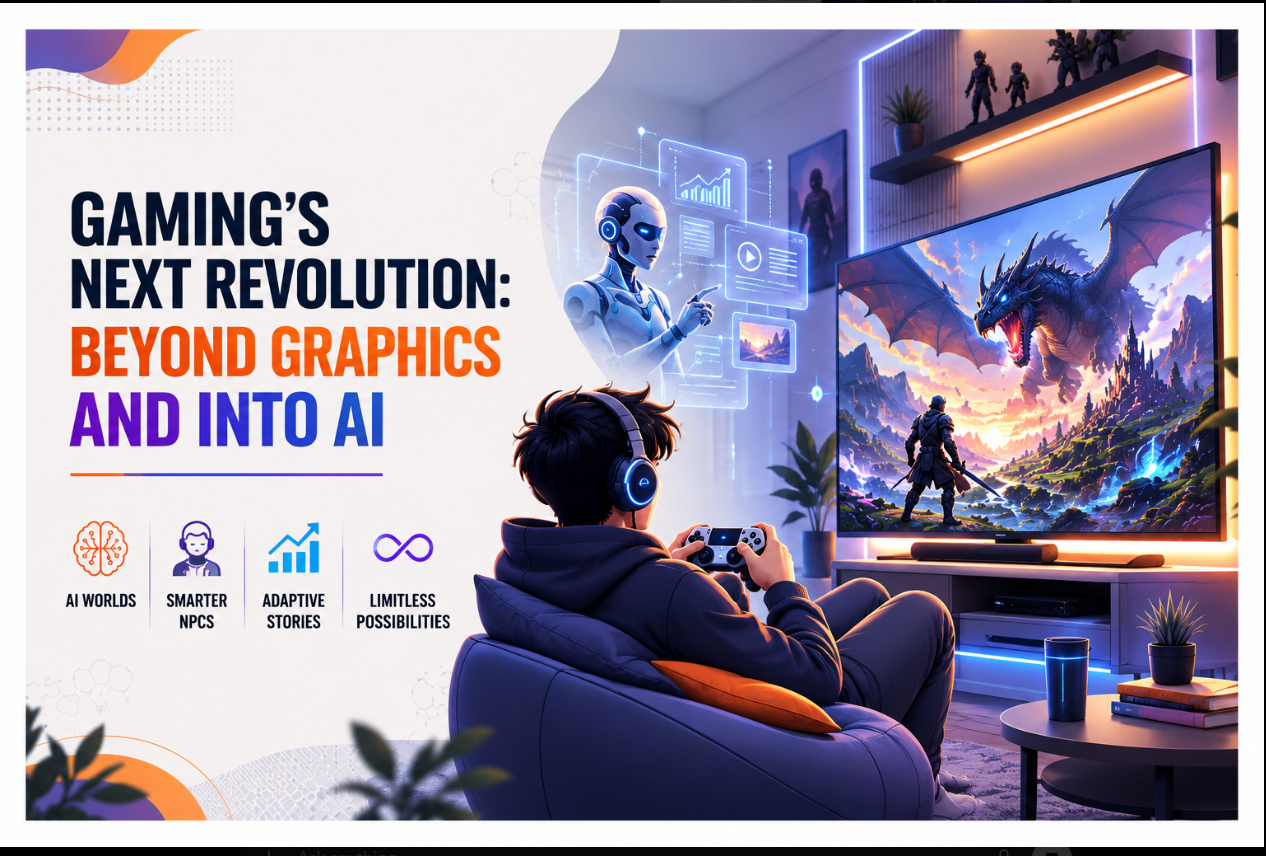
Gaming is approaching a fascinating turning point. For decades, the industry has sold progress through prettier worlds, sharper textures, and realistic lighting. Yet the next major leap may not be something players can measure in pixels. It may be something they can feel: worlds that react, characters that remember, stories that adapt, and experiences that change because of the person holding the controller.
Gaming Is Learning to Become More Alive
The most exciting gaming developments in gaming are moving beyond visual polish. Developers are experimenting with artificial intelligence, procedural generation, advanced physics, cloud computing, and systems that can respond to player behavior. Instead of presenting a beautiful world, these technologies can create one that feels less predictable.
Imagine entering a city where an NPC remembers a conversation from twenty hours earlier. Imagine an enemy changing tactics because it has studied your habits. Imagine discovering a village whose economy, weather, relationships, and political tensions evolve differently depending on what players actually do.
That is a different kind of gaming. Technology disappears into the experience, leaving players with something more powerful than spectacle: surprise.
The Rise of Games That Think
AI could become a major force reshaping modern gaming. Today, most characters operate within carefully written boundaries. They can appear intelligent, but their responses are usually limited to predetermined possibilities.
Generative AI could widen those boundaries. Characters may eventually hold longer memories, respond naturally to unexpected questions, and develop behavior based on events inside a game world. Developers could use AI to create dialogue, environments, quests, animations, and testing systems faster.
The goal should not be filling games with endless machine-generated content. More content does not automatically create a better experience. The opportunity is creating systems that make a world responsive without making it chaotic.
When Every Player Gets a Different Story
One of the most intriguing possibilities is personalization. Traditional games give millions of players the same gaming experience. Future gaming could make the experience more dynamic.
A game might notice that one player loves exploration and quietly create more mysterious locations. Another might prefer strategy and encounter challenges that reward careful planning. A third could become attached to a particular character, causing the story to develop around that relationship.
This does not mean handing players an infinite story. Instead, developers could design flexible frameworks where choices influence the direction, pacing, and personality of the experience.
Suddenly, replayability would mean more than starting the same campaign again. It could mean discovering a version of the world you have never seen before.
Graphics Still Matter—Just Differently
None of this means visual technology is becoming irrelevant. Better lighting, animation, rendering, and hardware will continue making virtual worlds more convincing. The difference is that visual realism may become the foundation rather than the headline.
A beautifully rendered gaming character who behaves like a vending machine can break immersion instantly. A slightly less realistic character who remembers your decisions, reacts believably, and surprises you may feel far more alive.
That is why the next gaming breakthrough in gaming could be measured less by resolution and more by responsiveness.
The Developers’ New Challenge
These possibilities also create difficult questions. How much freedom should AI receive? How can developers prevent generated dialogue from becoming repetitive? What happens when a procedural system creates something inappropriate, confusing, or simply boring?
Gaming design could become less like writing every sentence and more like designing rules for an ecosystem. Developers may increasingly act as architects, setting boundaries, personalities, incentives, and consequences while intelligent systems handle some of the variation.
That requires creativity. The best games may not be those with the most AI, but those where technology is used carefully enough that players barely notice it.
The Next Era Will Feel Different
Future gaming experiences may not announce their technology with flashy menus or futuristic labels. They will simply feel strangely personal.
A character will remember something you forgot. A world will react to a decision you assumed was insignificant. A quest will unfold differently because of an unexpected choice. You will wonder whether the developers planned that exact moment.
Perhaps that is the revolution.
Gaming has spent years teaching computers to make worlds look more convincing. The next step in gaming is teaching those worlds to behave more convincingly.
When that happens, players may stop asking how realistic a game looks and start asking a more interesting question: how alive does it feel?
The winners will not necessarily be studios with the largest budgets or most spectacular graphics. They will be the ones that understand that technology is most powerful when it creates emotion, unpredictability, and meaningful agency.
The future of gaming may therefore arrive quietly for players. Not with another jump in resolution, but with a world that notices you are there.