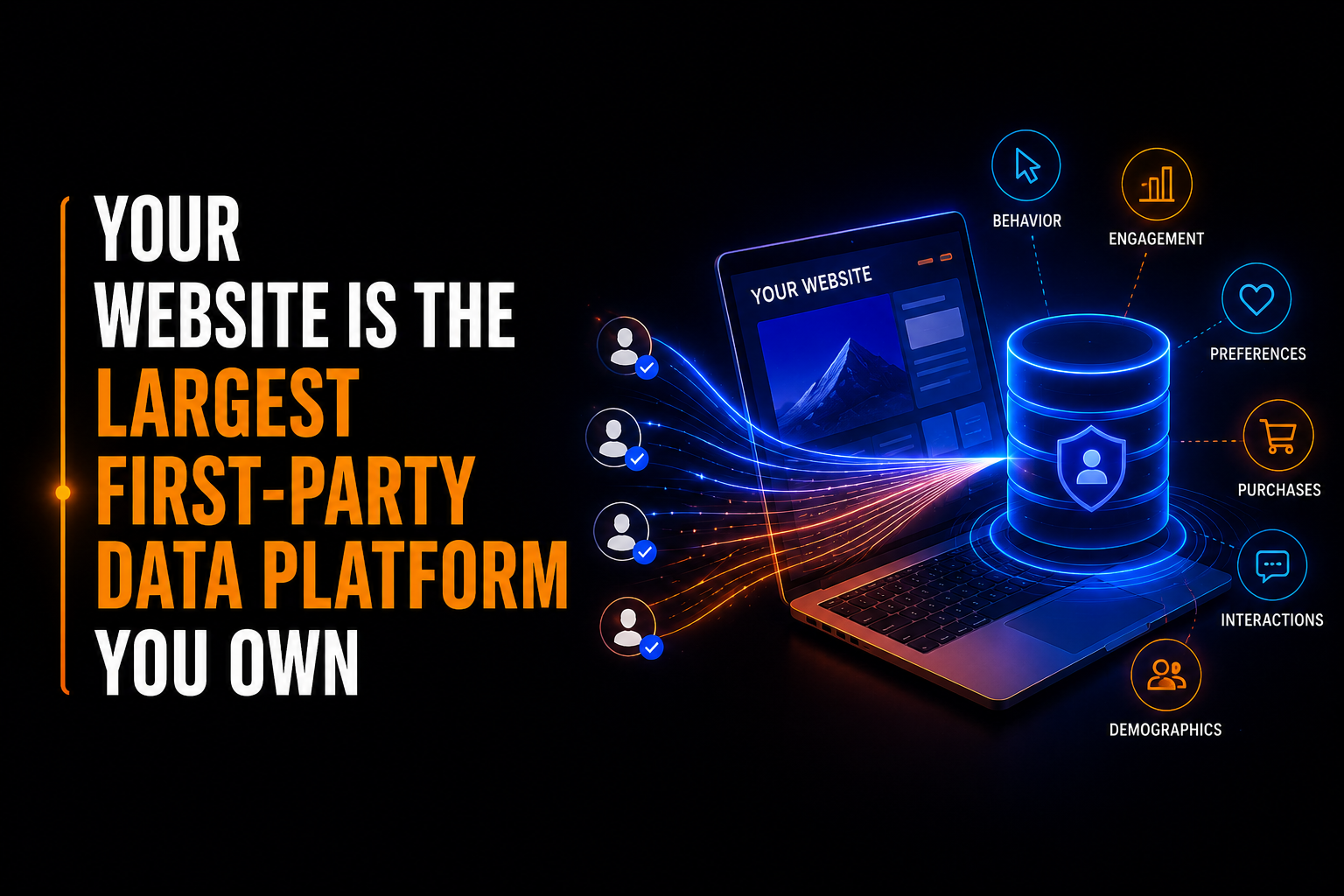
Your Website Is the Largest First-Party Data Platform You Own
 Purva Wankhade,
2 months ago
5 min read
Purva Wankhade,
2 months ago
5 min read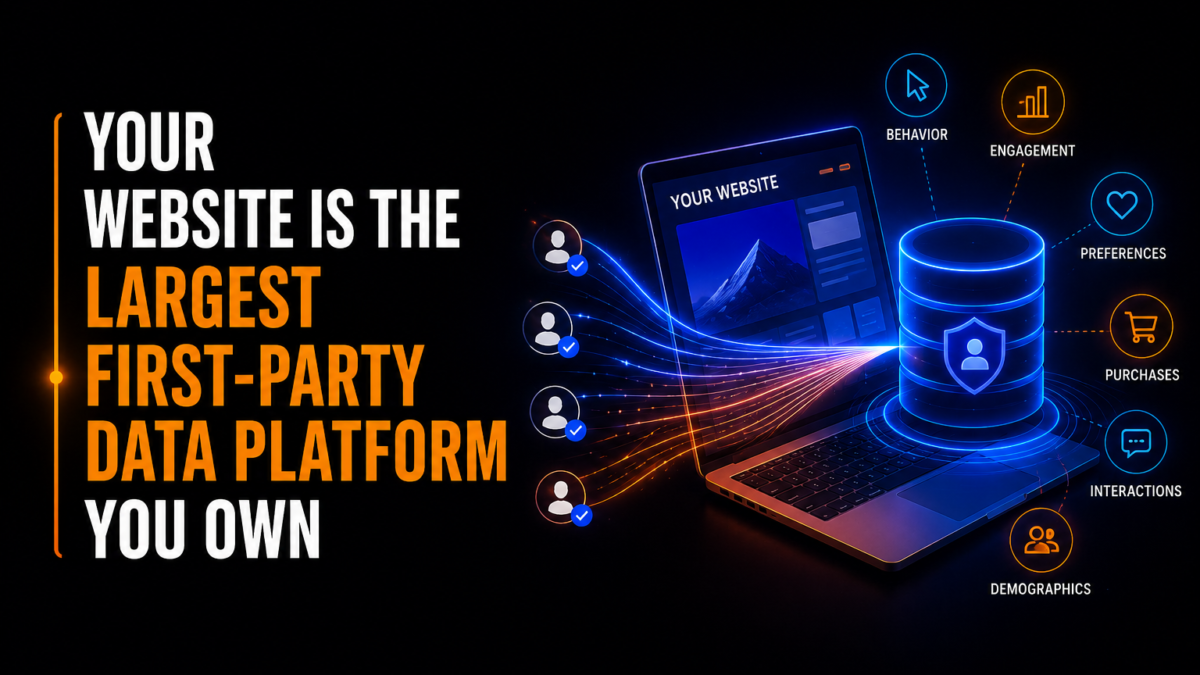
For many organizations, a website is still viewed as a digital storefront a place where visitors learn about products, read company information, and occasionally submit a contact form. While that perspective may have been sufficient a decade ago, it no longer reflects how modern businesses compete.
Today, every visit, search query, content interaction, product comparison, and return session represents valuable insight into customer intent. In an era shaped by privacy regulations, AI-powered search, and the gradual disappearance of third-party cookies, the information organizations collect directly through their own digital properties has become one of their most valuable business assets.
This is why Website development has taken on a much broader strategic role. Building a modern website is no longer just about creating attractive pages or improving page speed. It is about developing an intelligent digital platform capable of understanding visitor behavior, supporting personalized experiences, and generating reliable first-party data that informs business decisions.
For B2B decision-makers, this shift is redefining how websites contribute to marketing, sales, and long-term growth.
First-Party Data Is Becoming the Foundation of Digital Strategy
The digital marketing landscape has changed dramatically over the past few years. Privacy-focused browser updates, stricter data protection regulations, and evolving consumer expectations have significantly reduced marketers’ dependence on third-party tracking. At the same time, enterprise buyers have become more selective about the information they willingly share.
Rather than relying on external data sources, organizations are increasingly focusing on information collected through their own websites.
Every interaction tells a story. The pages visitors explore, the resources they download, the topics they revisit, the search terms they use within a website, and the amount of time they spend researching specific solutions all contribute to a deeper understanding of customer interests and business priorities.
Recent industry developments highlight this transition. Google continues advancing its Privacy Sandbox initiative to support more privacy-preserving advertising technologies, while major marketing platforms are expanding tools designed around consent-driven first-party data strategies. Simultaneously, AI-powered analytics platforms are helping organizations interpret behavioral signals with greater accuracy, enabling marketers to identify patterns that were previously difficult to detect.
This evolution is changing the purpose of Website development. Instead of simply publishing digital content, businesses are building websites that function as intelligent data ecosystems capable of supporting personalization, customer insights, and long-term relationship building.
The companies that recognize this opportunity are treating their websites as strategic business infrastructure rather than standalone marketing assets.
Every Digital Experience Creates Business Intelligence
Many organizations underestimate how much information already exists within their own websites.
Visitors continuously reveal their priorities through their actions, often without completing a contact form. They compare service pages, revisit pricing information, consume educational resources, explore case studies, and return multiple times before making purchasing decisions. These behaviors represent valuable first-party signals that can improve marketing strategy, sales engagement, and product development.
Artificial intelligence is making these insights even more actionable. Modern analytics platforms can identify behavioral trends, predict visitor intent, recommend personalized content, and uncover opportunities for optimization based on user activity across digital touchpoints.
Meanwhile, AI-powered search experiences are changing how users discover and consume information online. Instead of browsing multiple websites, buyers increasingly rely on AI-generated summaries to answer initial questions. This means organizations must ensure their websites offer structured, authoritative, and experience-driven content that remains valuable even as search behavior evolves.
Consequently, Website development now extends beyond design and functionality. It involves creating digital experiences that encourage meaningful engagement while capturing high-quality behavioral insights in a privacy-conscious manner.
For B2B organizations with long buying cycles, these insights are particularly valuable because they reveal buyer interests long before prospects identify themselves. Marketing and sales teams can use this information to better understand customer needs, refine messaging, and deliver more relevant experiences throughout the buying journey.
The website becomes not only a communication channel but also an ongoing source of strategic intelligence.
Intelligent Websites Will Power the Next Generation of Growth
As artificial intelligence continues reshaping business operations, websites are becoming increasingly dynamic. Static pages are giving way to adaptive digital experiences capable of responding to visitor intent in real time.
Personalized recommendations, AI-powered search functionality, conversational interfaces, predictive content suggestions, and dynamic user journeys are transforming how organizations engage with prospective customers. Rather than presenting identical experiences to every visitor, businesses can tailor interactions based on behavioral patterns and contextual signals while respecting privacy preferences.
Another emerging trend is the growing integration between websites and broader business systems. Customer relationship management platforms, marketing automation tools, customer data platforms, and AI analytics solutions now work together to create unified views of customer engagement. This interconnected approach enables organizations to make better decisions based on reliable first-party data collected through their own digital properties.
As these technologies continue to evolve, Website development is becoming increasingly strategic. Success is no longer measured solely by website traffic or visual design. Instead, organizations evaluate how effectively their websites generate actionable insights, improve customer experiences, and support business growth.
For B2B decision-makers, this represents an important mindset shift. The website should not be viewed as a destination where customers simply arrive. It should be recognized as a continuously evolving platform that learns from every interaction and contributes meaningful intelligence across the organization.
Ultimately, the businesses that gain the greatest competitive advantage will be those that invest in websites designed not only to attract visitors but also to understand them. As privacy-first marketing becomes the industry standard and AI transforms digital engagement, first-party data will become one of the most valuable strategic resources a company possesses. In that future, Website development will no longer be considered a technical project. It will be recognized as one of the most important investments an organization can make in building stronger customer relationships, making smarter business decisions, and creating sustainable digital growth.