The AI Agent Boom Is Here. But Who Is Actually Ready for Autonomous Work?
 Purva Wankhade,
3 months ago
4 min read
Purva Wankhade,
3 months ago
4 min read
AI Agent technology is moving from clever demonstrations into everyday business conversations. The promise sounds simple. It also raises a less glamorous question: are most organizations actually prepared to let software act on their behalf?
Giving an agent access to calendars, customer records, finance systems, documents, or internal communication is different from asking a chatbot to draft an email. The moment software can act, rather than simply respond, the cost of a wrong decision becomes much higher.
AI Agent Systems Change the Job Description
Traditional automation follows predefined rules. If one condition occurs, a particular action happens. An AI Agent operates in a less predictable environment. It may interpret a request, decide which tools to use, adjust its approach, and continue until it believes the task is complete.
That flexibility makes autonomous systems interesting. A sales agent might research a prospect, summarize information, prepare a personalized message, update a customer relationship system, and schedule a follow-up. A service agent could investigate an issue across several systems before recommending a response. An AI Agent could coordinate the next step.
But flexibility introduces uncertainty. Businesses are used to predictable software. An agent can behave differently when context changes, especially when instructions are vague, data is incomplete, or systems return unexpected results.
AI Agent Adoption Needs More Than Good Models
The biggest barrier may not be model quality. It may be readiness.
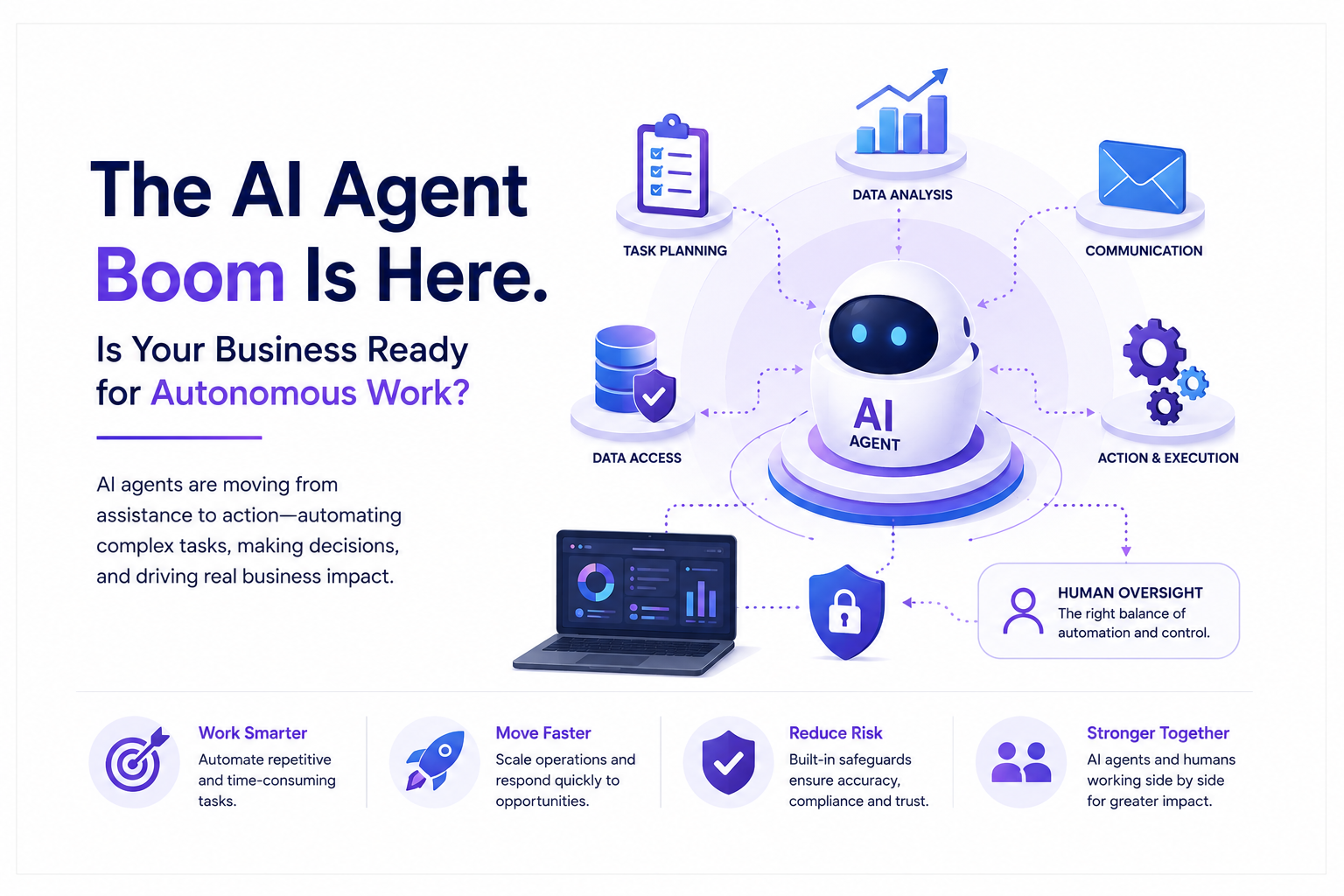
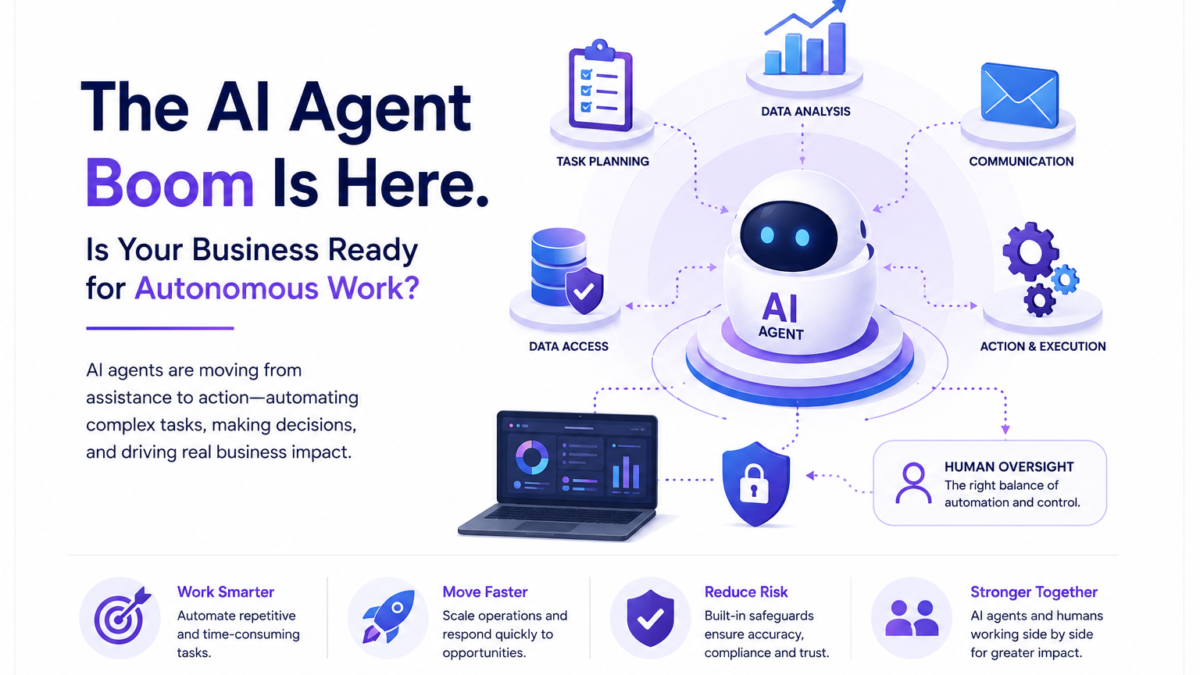
An AI Agent needs clearly defined permissions. It needs reliable data. It needs boundaries describing what it can do independently and what requires approval. It also needs monitoring, logging, and a way to recover when something goes wrong.
This sounds obvious until a company tries to connect autonomous software to a real workflow. Many businesses still operate with fragmented applications, inconsistent data, outdated processes, and unclear ownership. Adding an agent to that environment does not magically remove the complexity. It can simply move the complexity somewhere harder to see.
That is why early deployments can be narrow. Instead of giving an agent control over an entire department, companies can start with a workflow where success is measurable and mistakes are containable.
AI Agent Work Requires New Trust Rules
Autonomous work also changes the meaning of trust.
When an employee makes a decision, responsibility can usually be traced to a person. When software makes the decision, accountability becomes more complicated. Who approved the workflow? Who set the permissions? Who reviews the agent’s actions? What happens when it makes a reasonable decision using incorrect information?
These questions become important when agents interact with customers, financial systems, sensitive documents, or regulated processes.
The answer is not removing humans completely. A more realistic model is selective oversight. Low-risk tasks can move automatically, while high-impact decisions trigger human review. People are not watching every action; they are supervising the boundaries.
AI Agent Readiness Starts With Workflow Design
Companies often begin technology projects by asking which platform they should buy. Autonomous work may require a different starting point: which process is actually worth delegating?
A good candidate is repetitive, rules-heavy, measurable, and digitally accessible. A poor candidate depends heavily on judgment, unclear exceptions, or information that changes without warning.
This distinction matters because an AI Agent does not fix a broken process simply by being intelligent. If approvals are unclear, data is unreliable, or responsibilities overlap, the agent inherits those problems.
There is also a cultural challenge. Employees may welcome automation that removes tedious work but resist systems they believe are evaluating performance or replacing judgment. Deployment depends on explaining what the agent handles, what remains human, and how outcomes will be checked.
AI Agent Experiments Should Stay Curious
The organizations most likely to benefit from autonomous work may not be those making the loudest announcements. They may be companies quietly testing one workflow at a time, measuring results, discovering failure points, and improving their operating model before expanding.
That approach leaves room for curiosity without turning every experiment into a company-wide transformation project. It also recognizes an important reality: autonomous software is not simply another productivity feature.
Businesses exploring this shift can also look at technology-focused resources such as ToolsMetric to discover broader software and automation ideas that can complement these experiments.
The AI Agent boom may eventually produce workplaces where software handles much more of the coordination that currently consumes human attention. But the real advantage will not come from giving agents the most freedom. It will come from knowing where freedom creates value, where supervision matters, and where a human should still make the final call.
Autonomous work is arriving. AI Agent readiness is less about having the newest model and more about having the discipline to design the right environment around it.