From Media Buying to Business Intelligence: The New Role of Programmatic Advertising
 Purva Wankhade,
3 months ago
5 min read
Purva Wankhade,
3 months ago
5 min read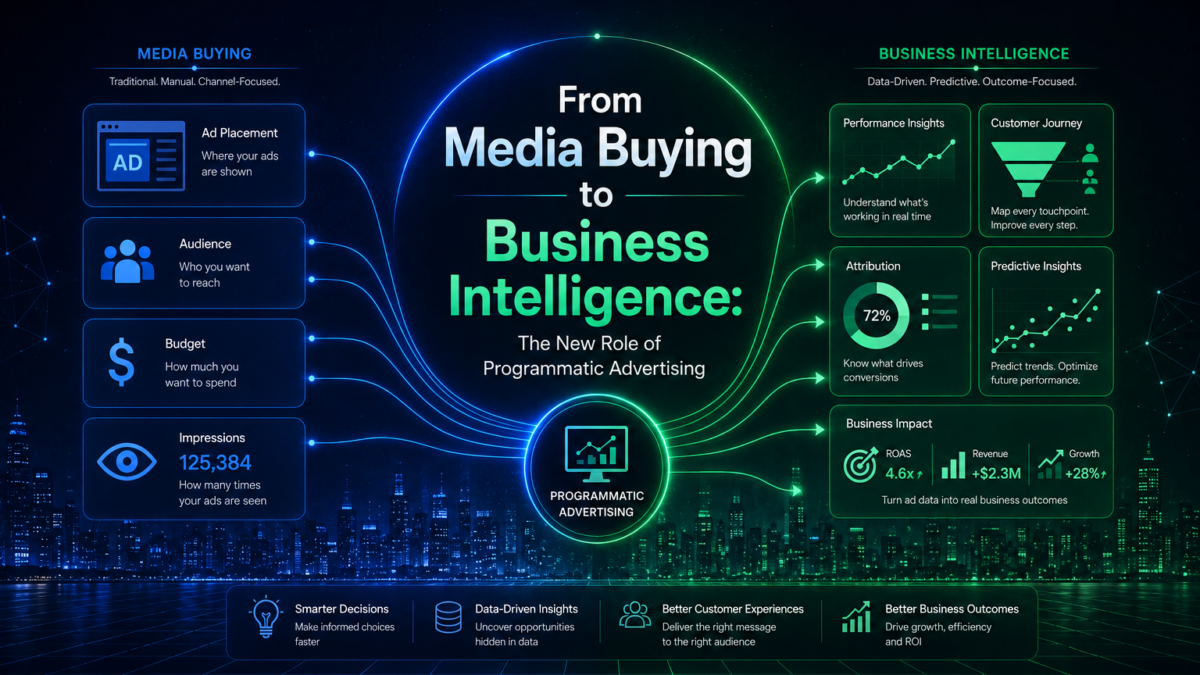
For years, Programmatic Advertising was primarily associated with automation. Its greatest promise was efficiency, using algorithms to purchase digital advertising space faster, optimize bids in real time, and deliver campaigns to the right audience without the need for constant manual intervention. Success was measured through familiar performance metrics such as impressions, clicks, conversions, and return on ad spend.
That definition is beginning to feel incomplete.
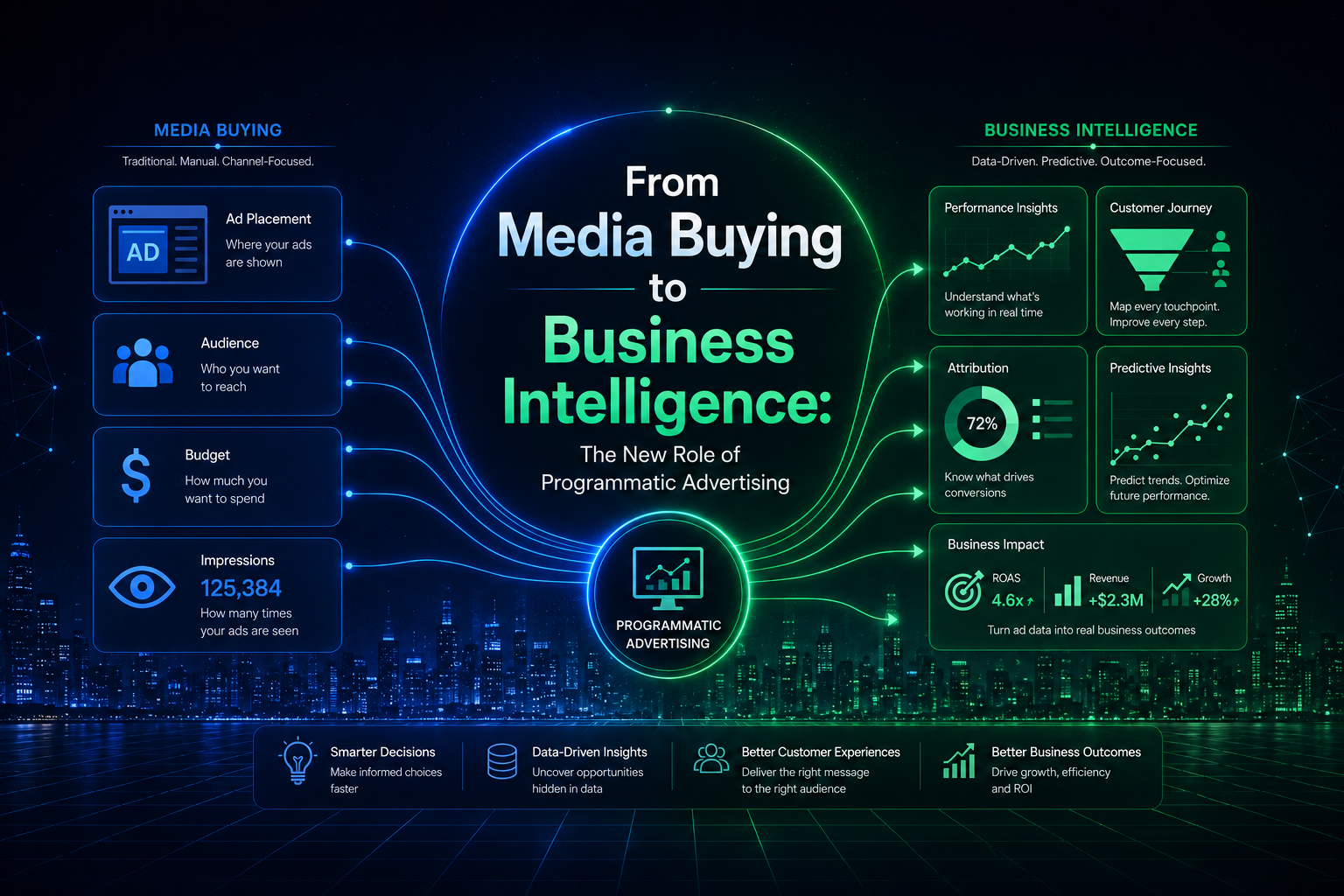
As artificial intelligence reshapes enterprise marketing, Programmatic Advertising is evolving from an automated media-buying system into a powerful source of business intelligence. Every impression served, every audience interaction, and every campaign outcome generates valuable insights about customer behavior, market demand, purchasing intent, and competitive dynamics.
For B2B decision-makers, this shift is significant. The value of programmatic campaigns is no longer limited to advertising performance. Increasingly, the data generated through these campaigns is helping organizations make smarter decisions across marketing, sales, product strategy, and customer experience.
In the AI era, the real competitive advantage isn’t simply buying media more efficiently, it’s learning from every interaction more intelligently.
AI Is Transforming Programmatic Advertising Into a Learning System
Modern advertising platforms process billions of data signals every day. Artificial intelligence has dramatically expanded their ability to analyze these signals, identify patterns, and continuously optimize campaign performance without requiring constant human intervention.
Today’s Programmatic Advertising platforms do far more than automate bidding.
They evaluate contextual relevance, audience behavior, engagement history, device preferences, geographic trends, content consumption habits, and countless other variables simultaneously. AI models continuously refine audience selection, budget allocation, creative delivery, and conversion prediction based on changing market conditions.
The result is a marketing ecosystem that becomes more knowledgeable with every campaign.
This evolution reflects a broader trend across enterprise technology.
Organizations are increasingly treating advertising data as a strategic asset rather than a collection of campaign metrics. Instead of asking which advertisement generated the highest click-through rate, leaders are beginning to ask broader business questions.
Which industries are showing increased interest in our solutions?
Which messaging resonates most strongly with enterprise buyers?
Which regions demonstrate emerging demand?
How are buying behaviors changing over time?
Programmatic platforms are uniquely positioned to answer these questions because they observe customer interactions at remarkable scale.
Recent advancements in AI-powered media buying, predictive audience modeling, privacy-preserving measurement, and contextual targeting have accelerated this transformation. As third-party cookies continue to decline in importance, enterprises are relying more heavily on first-party data, AI-driven optimization, and real-time behavioral insights to understand evolving customer needs.
The campaign itself becomes a continuous source of market intelligence.
Programmatic Data Is Connecting Marketing With Business Strategy
One of the most important developments in Programmatic Advertising is its growing influence beyond the marketing department.
Historically, campaign insights remained largely within advertising teams.
Today, those insights are informing decisions across the enterprise.
Marketing teams use programmatic data to understand content preferences and optimize customer engagement strategies. Sales organizations gain visibility into industries demonstrating increased buying intent. Product teams discover emerging customer challenges that influence future innovation. Executive leadership benefits from a clearer understanding of market trends, competitive positioning, and regional demand.
This makes programmatic advertising far more valuable than a media channel.
It becomes an organizational intelligence platform.
Artificial intelligence plays a central role in this evolution by identifying meaningful patterns that would be nearly impossible to detect manually. Machine learning can recognize subtle changes in audience behavior, forecast campaign outcomes, recommend budget reallocations, and surface emerging opportunities before they become obvious through traditional reporting.
The implications for B2B enterprises are considerable.
Long sales cycles often make it difficult to identify changing buyer behavior early enough to adjust strategy. Programmatic campaigns, however, generate continuous behavioral signals that provide a much earlier indication of market interest.
Organizations that integrate these insights across departments gain the ability to respond more quickly to shifting customer expectations.
Rather than reacting to quarterly sales reports, leaders can use advertising intelligence to make proactive business decisions.
The Future of Programmatic Advertising Will Be Defined by Intelligence, Not Automation
Automation may have introduced programmatic advertising to the enterprise, but intelligence will define its future.
Artificial intelligence is steadily reducing the amount of manual campaign management required. Bid optimization, audience segmentation, creative testing, frequency management, and performance forecasting are becoming increasingly automated across leading advertising platforms.
This changes the role of enterprise marketers.
Instead of spending hours adjusting campaign settings, teams can focus on interpreting insights, refining business strategy, improving customer experiences, and creating compelling narratives that resonate with decision-makers.
The most successful organizations will treat Programmatic Advertising as a source of continuous learning rather than simply a mechanism for buying media.
This perspective aligns with broader developments across enterprise marketing. AI-generated insights, predictive analytics, privacy-first measurement frameworks, retail media growth, connected TV advertising, and omnichannel attribution are all contributing to a more intelligent advertising ecosystem where every interaction generates actionable knowledge.
For B2B decision-makers, this requires a different mindset.
Campaign performance should no longer be evaluated solely by advertising metrics.
Instead, enterprises should ask how programmatic insights are improving strategic decision-making across the organization.
Are they revealing new customer segments?
Are they identifying emerging industries?
Are they helping sales teams prioritize outreach?
Are they informing product innovation?
These questions elevate advertising from a tactical activity to a strategic business capability.
The future of Programmatic Advertising belongs to organizations that recognize data as more than operational output. It is a source of competitive intelligence that can shape decisions far beyond media buying.
As AI continues to transform digital marketing, enterprises that combine automated execution with human interpretation will gain deeper customer understanding, stronger market awareness, and more informed business strategies.
In that future, Programmatic Advertising will no longer be viewed as simply another advertising channel. It will become an essential intelligence function, one that helps organizations understand not only how customers respond to campaigns, but also how markets evolve, opportunities emerge, and competitive advantage is created.