B2B Lead Generation: The Invisible Leak Costing Enterprise Brands Future Clients
 Purva Wankhade,
3 months ago
5 min read
Purva Wankhade,
3 months ago
5 min read
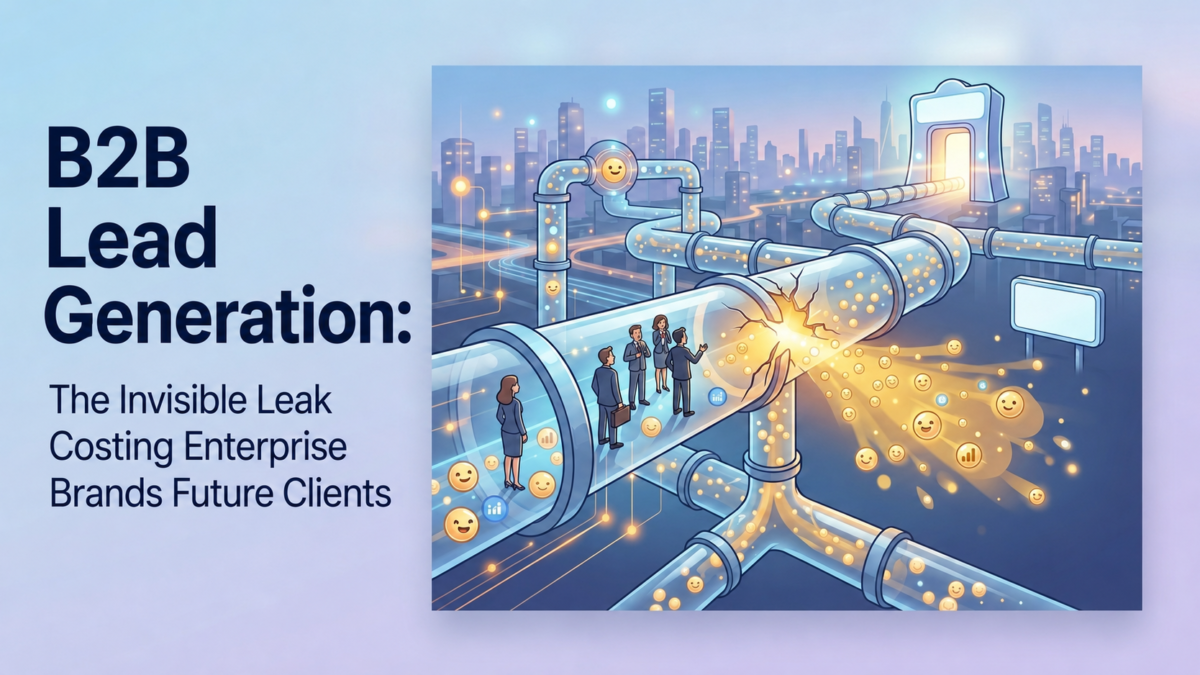
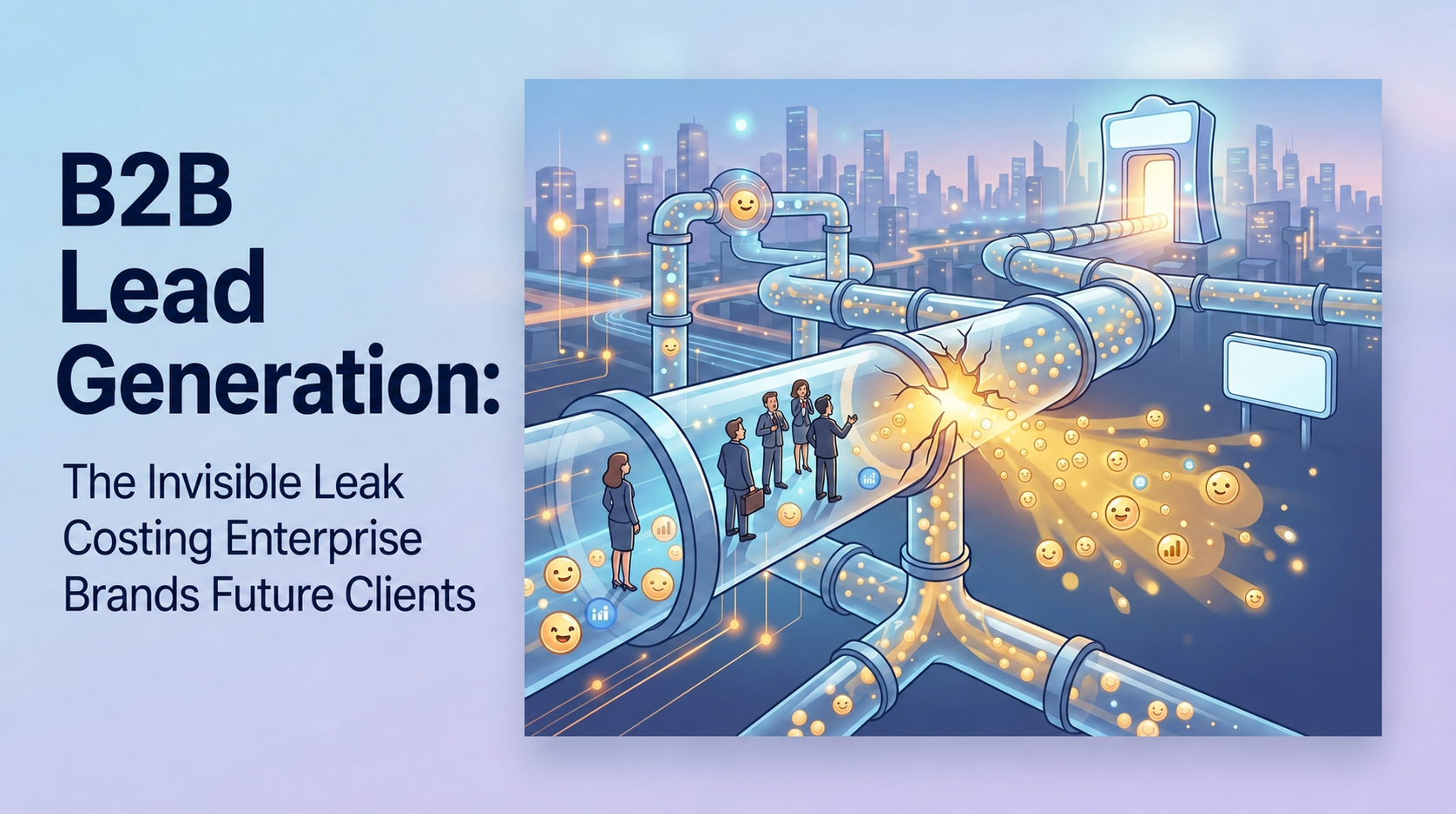
Every day, enterprise leaders review their sales pipeline and notice a troubling pattern. Their organizations have industry-leading products, experienced sales teams, and substantial marketing budgets. Yet high-value opportunities continue to slip away to competitors with fewer resources and smaller market presence.
This raises an important question: How can established market leaders lose qualified prospects before the sales conversation even begins?
The answer rarely lies in pricing or product quality. Instead, it lies in how modern B2B buyers make purchasing decisions. Today’s buyers complete a significant portion of their research independently before ever speaking with a vendor. By the time they schedule a product demo, they have already shortlisted potential partners and eliminated others. If your company is absent during this critical research phase, you are losing qualified opportunities long before your sales team has the chance to engage.
That is why B2B lead generation has become far more than a marketing initiative. It is now a business growth strategy that helps organizations connect with decision-makers throughout every stage of the buying journey.
Where Traditional B2B Lead Generation Falls Short
For decades, businesses relied on trade shows, cold outreach, referrals, and networking to build their sales pipeline. While these methods still contribute to growth, they no longer provide the consistency required in today’s digital-first buying environment.
Enterprise buyers expect educational content, personalized experiences, and relevant information before they are willing to engage with a salesperson. Companies that continue relying primarily on traditional prospecting often struggle with low-quality leads, disconnected marketing and sales efforts, and websites that fail to convert interested visitors into qualified opportunities.
Instead of focusing solely on increasing lead volume, modern B2B lead generation emphasizes attracting the right prospects through data, automation, and customer insights. Businesses that embrace this shift create scalable systems capable of identifying buyer intent and nurturing relationships long before purchase decisions are made.
Organizations looking to modernize their demand generation strategy can also explore the latest insights on marketing automation and digital growth available through ITmunch, where emerging technologies shaping enterprise marketing are regularly discussed.
Building a Stronger B2B Lead Generation Strategy
Successful organizations understand that predictable pipeline growth is built on a combination of technology, valuable content, and operational alignment.
The first step is understanding buyer intent. Rather than treating every visitor equally, advanced B2B lead generation strategies identify organizations actively researching solutions through account-based marketing, behavioral analytics, and visitor intelligence tools. This allows marketing and sales teams to prioritize prospects who are already demonstrating genuine interest instead of spending resources on cold outreach with uncertain outcomes.
Equally important is the role of authoritative content. Enterprise buyers rarely respond to aggressive promotional messaging. Instead, they seek practical guidance that helps solve business challenges. Publishing research reports, technical whitepapers, case studies, industry insights, and comparison guides establishes credibility while naturally attracting qualified decision-makers. Over time, this positions the organization as a trusted advisor rather than simply another vendor competing for attention.
Another critical element is intelligent lead qualification. Modern marketing automation platforms continuously evaluate prospect behavior, tracking activities such as repeated website visits, webinar registrations, whitepaper downloads, and pricing page interactions. Instead of forwarding every inquiry to the sales team, these platforms prioritize prospects based on their level of engagement, allowing sales representatives to focus on opportunities with the highest likelihood of conversion.
Looking Beyond Traffic to Revenue
Many organizations still evaluate marketing performance using website traffic, impressions, or the total number of form submissions. Although these metrics provide useful insights, they rarely reveal whether marketing efforts are contributing to business growth.
Effective B2B lead generation shifts attention toward revenue-focused outcomes. Organizations gain greater value by measuring how marketing influences qualified pipeline, customer acquisition costs, opportunity conversion rates, and long-term customer lifetime value. When marketing platforms integrate seamlessly with CRM systems, leadership teams gain complete visibility into which campaigns produce the highest-quality leads and generate the strongest return on investment.
This level of visibility transforms marketing from a cost center into a measurable revenue driver, allowing businesses to make more informed investment decisions.
Creating a Sustainable Growth Engine
Building a predictable sales pipeline is not a one-time campaign. It requires an ongoing commitment to improving every stage of the customer journey.
The most successful organizations combine internal expertise with automation, analytics, and specialized external support to create an integrated B2B lead generation ecosystem. Marketing, sales, and customer success teams work toward shared objectives while technology handles repetitive processes such as lead nurturing, segmentation, and qualification.
Many enterprise businesses also strengthen their strategy by learning from industry research and best practices. Comprehensive reports available through Whitepapers Online provide valuable insights into scalable demand-generation frameworks that help organizations optimize long sales cycles and improve conversion performance.
Final Thoughts
Today’s buyers are making purchasing decisions long before they contact a salesperson. Businesses that fail to establish visibility during this early research phase risk losing valuable opportunities without ever realizing they existed.
The organizations that consistently outperform competitors are not necessarily those with the largest marketing budgets or the biggest sales teams. They are the companies that build intelligent B2B lead generation systems capable of understanding buyer intent, delivering valuable content, nurturing relationships, and creating seamless customer experiences from the very first interaction.
As digital buying behavior continues to evolve, investing in a scalable B2B lead generation strategy is no longer optional. It is one of the most effective ways to generate qualified opportunities, accelerate revenue growth, and build long-term competitive advantage.