
The Rise of “Signal-Based Email Marketing” in B2B: Sending Emails When Buyers Are Actually Ready
 Simon Powell,
8 months ago
3 min read
Simon Powell,
8 months ago
3 min read
B2B email marketing has long been a core channel for demand generation. However, many organizations still rely on traditional batch campaigns and static nurture sequences that are sent on predefined schedules. While these approaches help maintain consistent communication, they often miss a critical factor: buyer intent signals.
Today’s B2B buyers leave digital footprints across multiple channels — website visits, content downloads, product comparisons, and engagement with industry platforms. These signals reveal when prospects are actively researching solutions.
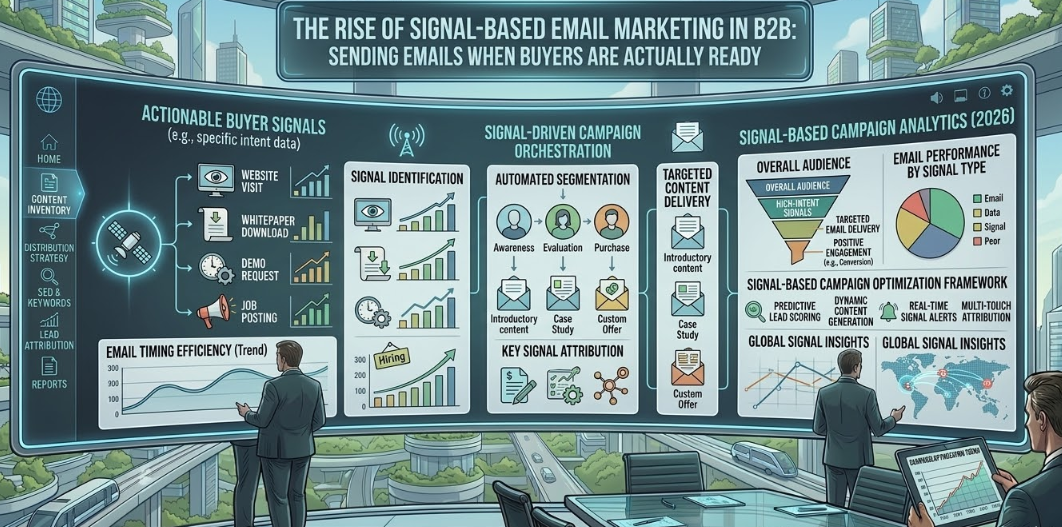
This has led to the rise of signal-based email marketing, a strategy where emails are triggered by real buyer behavior rather than fixed campaign timelines. By responding to intent signals in real time, companies can deliver highly relevant messages when prospects are most likely to engage.
What Is Signal-Based Email Marketing?
Signal-based email marketing focuses on sending emails triggered by buyer activity signals instead of traditional campaign schedules.
These signals may include:
- Visiting product or pricing pages
- Downloading whitepapers or case studies
- Repeated visits from the same company domain
- Engagement with industry comparison platforms
- Interaction with previous email campaigns
When these signals appear, marketing automation systems trigger personalized emails that address the prospect’s specific stage in the buying journey.
Why Traditional Email Campaigns Are Losing Effectiveness
Many B2B marketers still rely on email sequences designed months in advance. While these campaigns maintain consistent outreach, they often fail to align with real-time buyer behavior.
For example, a prospect who is actively researching solutions may receive a generic newsletter rather than a message addressing their immediate needs.
Signal-based marketing solves this problem by shifting email strategies from time-based campaigns to behavior-based communication.
How Intent Signals Power Smarter Email Campaigns
Modern marketing platforms integrate with various data sources to detect buyer intent signals.
Website Behavior Tracking
Analytics tools track visitor activity, such as repeated visits to product pages or time spent reviewing pricing information.
Content Engagement
Downloading technical guides, whitepapers, or research reports often indicates that a prospect is entering an evaluation stage.
Third-Party Intent Data
Some platforms collect anonymized research behavior across industry websites, helping marketers identify companies that are actively researching specific solutions.
CRM and Sales Activity
Signals can also come from CRM interactions, such as demo requests or direct inquiries.
When these signals are detected, marketing automation systems can trigger relevant email responses automatically.
Benefits of Signal-Based Email Marketing
This approach offers several advantages for B2B marketing teams.
Higher Email Engagement
Emails triggered by buyer activity are more relevant, increasing open and click-through rates.
Improved Lead Qualification
Intent signals help marketers identify prospects who are more likely to convert.
Better Alignment Between Marketing and Sales
Sales teams can prioritize accounts showing strong buying signals.
More Efficient Campaign Performance
Marketing teams focus on prospects who are actively researching solutions rather than sending broad campaigns.
Challenges in Implementing Signal-Based Strategies
Despite its benefits, signal-based email marketing requires the right data infrastructure.
Organizations must integrate marketing automation platforms, CRM systems, website analytics, and intent data providers. Without accurate signals, automated campaigns may trigger irrelevant messages.
Data privacy regulations and responsible data usage must also be carefully considered when tracking user behavior.
The Future of B2B Email Marketing
As B2B buying journeys become more complex, marketers will need to rely increasingly on data-driven engagement strategies.
Signal-based email marketing represents a shift from volume-driven outreach toward context-driven communication. Instead of sending more emails, companies will focus on sending the right message at the right moment.
Organizations that adopt signal-based strategies will be better positioned to engage modern B2B buyers and convert intent into meaningful business opportunities.


