The Dark Funnel in B2B: Why Buyers Are Invisible Until It’s Too Late
 Vansh Banthia,
6 months ago
4 min read
Vansh Banthia,
6 months ago
4 min read
Introduction
One of the biggest misconceptions in B2B marketing is that you can see your entire funnel.
Dashboards show website visits, downloads, clicks, and conversions. CRM systems track leads and opportunities. Analytics tools provide detailed reports on campaign performance.
But despite all this visibility, a large portion of the buyer journey remains hidden.
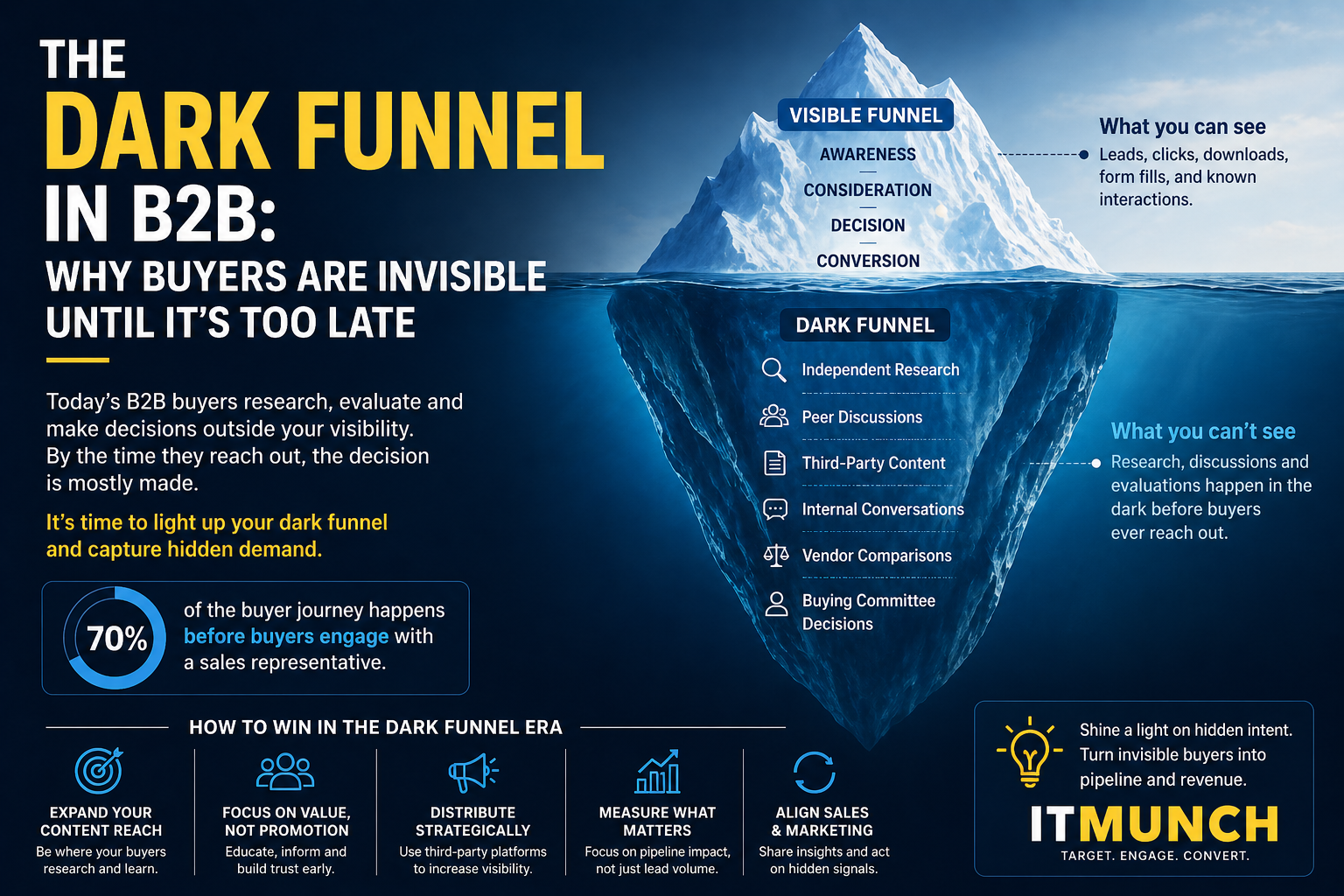
In 2026, this hidden space is known as the dark funnel—a place where buyers research, evaluate, and make decisions without ever directly engaging with your brand in trackable ways.
By the time they fill out a form or speak to sales, most of their decision-making is already complete.
What is the Dark Funnel?
The dark funnel refers to all the interactions and research activities that happen outside of measurable channels.
This includes:
- Reading third-party content
- Engaging in private communities and forums
- Consuming peer recommendations
- Reviewing competitor comparisons
- Internal discussions within buying committees
None of these actions show up clearly in your analytics.
From a marketer’s perspective, it often looks like a lead suddenly appeared out of nowhere. In reality, that lead has already gone through a significant portion of the buying journey.
Why the Funnel Has Gone Dark
The shift toward the dark funnel is driven by changing buyer behavior.
Modern B2B buyers prefer to stay anonymous for as long as possible. They avoid filling out forms, ignore early sales outreach, and rely heavily on independent research.
There are several reasons for this.
First, buyers have access to more information than ever before. They can evaluate solutions without needing direct interaction with vendors.
Second, buying decisions are now made by groups rather than individuals. Internal discussions, approvals, and evaluations happen privately within organizations.
Third, trust has shifted. Buyers often value peer insights and third-party content more than branded messaging.
All of this pushes a significant portion of the journey outside the traditional, trackable funnel.
The Problem with Traditional Measurement
Most marketing strategies are still built around visible metrics—clicks, leads, and conversions.
This creates a distorted view of reality.
Marketers tend to overvalue the channels they can track and undervalue the influence of unseen interactions. As a result, budgets and strategies are often misaligned with actual buyer behavior.
For example, a prospect might read multiple articles, see industry discussions, and evaluate competitors before ever visiting your website. When they finally convert, the credit is often given to the last touchpoint, ignoring everything that came before.
This leads to incomplete insights and missed opportunities.
How to Market in the Dark Funnel Era
Adapting to the dark funnel does not mean abandoning measurement. It means expanding your approach to account for what cannot be directly tracked.
The first step is shifting from lead capture to demand influence. Instead of focusing only on form fills, marketers need to ensure their brand is present wherever buyers are researching and learning.
Content plays a central role here. High-value, educational, and widely distributed content increases the chances of being discovered during the research phase. This includes thought leadership articles, industry insights, and solution-focused resources.
Distribution is equally important. Content must reach audiences beyond owned channels—through third-party platforms, content networks, and industry ecosystems.
Another key factor is consistency. Buyers may encounter your brand multiple times across different environments before taking action. A consistent message helps reinforce credibility and recall.
Rethinking Attribution and Success Metrics
In a dark funnel environment, traditional attribution models fall short.
Instead of trying to track every touchpoint, successful teams focus on broader indicators of impact. These include pipeline contribution, engagement trends, and overall brand visibility within target markets.
Qualitative insights also become more valuable. Feedback from sales teams, customer conversations, and market signals can provide context that data alone cannot capture.
The goal is not perfect visibility, but better alignment with how buyers actually behave.
How iTMunch Helps You Reach the Invisible Buyer
This is where platforms like iTMunch become increasingly relevant.
iTMunch enables brands to distribute content across targeted ecosystems where B2B buyers are already active. Instead of waiting for prospects to visit your website, it ensures your content appears in the spaces where research is happening.
This approach helps brands influence buyers earlier in their journey, even before they become visible in traditional funnels.
By focusing on reach, relevance, and intent-driven distribution, iTMunch allows marketers to engage audiences that would otherwise remain hidden. It bridges the gap between unseen research and measurable pipeline impact.
Conclusion
The dark funnel is not a limitation. It is a reflection of how modern buyers prefer to operate.
In 2026, success in B2B marketing depends on understanding that visibility is incomplete. The most important interactions often happen outside your direct line of sight.
Rather than trying to force buyers into trackable paths, marketers need to meet them where they are—through valuable content, strategic distribution, and consistent presence.
The brands that adapt to this reality will not just capture demand. They will shape it, long before it becomes visible.