AI-Powered Biometrics: Strengthening Digital Identity Against Sophisticated Fraud
 Maria Jones,
9 months ago
5 min read
Maria Jones,
9 months ago
5 min read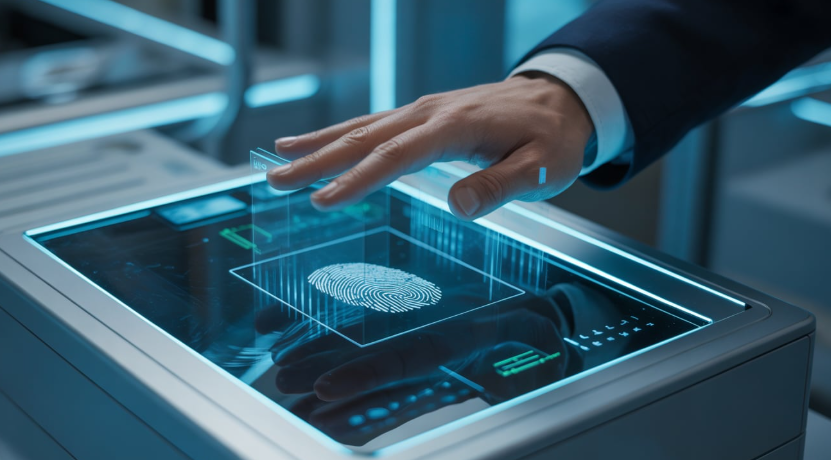
The Increasing Risk of Advanced Online Fraud.
Fraud techniques are changing at a faster rate than ever as the digital transformation gains momentum. The cybercriminals are not dependent on basic impersonation or credential theft using simple methods anymore. Rather, they borrow synthetic identities, deepfakes, stolen biometric data, and automated attacks to circumvent the traditional security systems. Such advanced fraud methods are a big threat to any organization that relies on digital identity verification to register users and realize transactions.
In such a setting, the old methods of authentication (i.e. passwords, PINs, and static identity checks) are no longer sufficient. They are susceptible to recycling, phishing, and major breaches. This escalating threat environment has led to a compelling necessity to have smarter, adaptive and more resilient identity security solutions.
Learning the AI-Powered Biometrics.
Artificial intelligence and machine learning to authenticate unusual human traits is referred to as AI-powered biometrics. In contrast to the traditional biometric systems that operate on the premise of the statical comparisons, AI-based solutions are constantly shaped out of the data trends and become more accurate and less prone to manipulation over time.
Such systems combine complex biometric data with contextual information. AI models are not only able to determine a match between a biometric sample and a stored template, but also tell whether the interaction is natural, consistent, and human. This is a dynamic methodology that will make AI-based biometrics considerably more efficient in preventing sophisticated fraud.
The reason why Biometrics are no longer enough.
Simple biometric authentication used to be regarded as an effective security procedure. Its limitations have however been revealed with the emergence of high-quality spoofing techniques. With masks as well as deepfake videos and altered images, nowadays, fraudsters can deceive a system that is based on mere biometric matching.
The AI can overcome these shortcomings by introducing intelligence and flexibility. It examines micro-expressions, body movements, texture anomalies and behavioral cues that are hard to mimic. In such a way, AI-driven biometrics leave surface-level screening behind and aim at the intent and authenticity.
Critical Biometric Modalities Improved with AI.
AI improves a variety of biometric modalities and makes them more reliable and secure. Machine learning models trained on large datasets are useful in facial recognition or voice recognition, fingerprint recognition, and behavioral biometrics. These models keep developing and become more capable of differentiating genuine users and fraud. The facial biometrics in particular have been significantly advanced. Facial recognition systems that are powered by AI are able to identify slight anomalies as a result of deepfakes or presentation attacks. These systems used together with liveness detection make sure that a legitimate individual is present when authenticating and the chances of impersonation are minimized.
How Biometrics Can Fight Advanced Fraud with AI-Powered Technology.
Biometric systems based on AI are used to protect against fraud through a combination of layers of analysis. They evaluate biometrics, device intelligence and contextual behavior in real-time. This big picture allows proper risk evaluation to be practiced without creating friction to legitimate users.
Some of their major fraud defense capabilities are:
- Spoofing attempts that include masks, photos, and deep fake videos have been detected.
- Detection of artificial identities made with a combination of real and counterfeiting information.
- On-going education on new patterns of fraud to enhance detection accuracy.
In a bid to keep up with changes in fraudulent techniques, AI-driven biometrics remain useful in detecting fraudsters despite the current changes in their approach to attacks.
Increasing Trust in Digital Identity in Industries.
Digital interactions are based on trust. It can be in the financial services, healthcare, e-commerce, or online platform, but it does not matter; organizations have to be sure that these users are who they say they are. This trust is enhanced with AI-based biometrics that will create high assurance identity verification without interference with user experience. To businesses, it translates to lower false positives, less losses due to fraud, and better adherence to the regulatory aspects. To the users, it translates to quicker onboarding process, easy authentication and the assurance that their identity is secured. Such a security-usability ratio is a key to the sustainable digital development.
Privacy, Ethics and responsible AI Use.
Although AI-based biometrics have excellent security advantages, they should be used in a responsible manner. Biometric information is quite sensitive and mismanagement can result to privacy and loss of confidence. The biometric payments should be stored in a non-transparent manner that minimizes data and is safe. It is also essential that AI practices are responsible. Different datasets should be used to train models in order to be less biased and fair. Explicit consenting schemes and adherence to the data protection laws assist to adjust biometric systems to ethical principles, preserving their efficiency.
The AI and Irrelentless Identity Protection.
Among other things, the transition to constant identity protection rather than one-time verification is one of the largest benefits of AI-based biometrics. Rather than authenticating a user during the onboarding process, AI systems could track identity indication along the user journey. This allows timely identification of account takeovers, suspicious activities, or hacked credentials. The constant check-up will enhance security but does not bother authentic users. Risk is quietly determined by AI models in the background, checking it only in cases of suspicious activity. The adaptive strategy is especially efficient in combat with long-term and insider fraud.
The Future of Biometric Security Powered by AI.
Due to the current development of fraud methods, biometrics AI is going to become a more central element of digital identities. The next generation systems will combine biometric intelligence, decentralized identity systems, behavior analytics and real-time risk scoring. Such convergence will allow more individual and safe digital experiences. Companies investing in AI-based biometric solutions today will be in a position to overcome threats even tomorrow. They are able to secure the digital identities through the creation of security that is adaptable, learns, and evolves, thereby building trust and innovation.
Conclusion
Biometrics powered by artificial intelligence will be one of the significant contributions to combating complex fraud. These systems offer scalable, intelligent and adaptable identity protection by integrating special human attributes with smart examination. Digital trust is being compromised every day, so AI-based biometrics offer the strength to ensure identity, protect businesses, and facilitate safe interactions online.