The Future of B2B Lead Generation: Why AI-Powered Content Syndication Is No Longer Optional
 Simon Powell,
6 months ago
4 min read
Simon Powell,
6 months ago
4 min read
B2B marketing is undergoing a fundamental transformation. What once worked—publishing a whitepaper, distributing it across a few channels, and waiting for leads—no longer delivers the same results. Today’s buyers are more informed, more selective, and more independent than ever before. They consume multiple pieces of content, often anonymously, before ever engaging with a sales team.
In this evolving landscape, content syndication is no longer about reach—it’s about precision, intent, and timing. And at the center of this transformation is Artificial Intelligence.
In this evolving landscape, content syndication is no longer about reach—it’s about precision, intent, and timing. And at the center of this transformation is Artificial Intelligence.
The Problem with Traditional Content Syndication
For years, marketers relied on a volume-driven approach: distribute content widely, capture as many leads as possible, and hope a fraction converts. But this “spray and pray” model is quickly becoming obsolete.
Why?
- Leads often lack buying intent
- Audience targeting is too broad
- Engagement data is limited
- Conversion rates remain inconsistent
In fact, traditional syndication often produces noise instead of pipeline, with many leads going cold shortly after capture .
The modern buyer journey is nonlinear. Decision-makers consume content across multiple touchpoints, compare vendors independently, and only engage when they are close to making a decision. Without understanding intent signals, marketers are essentially guessing.
Enter AI: From Distribution to Intelligence
Artificial Intelligence is redefining content syndication by shifting the focus from volume to value.
Instead of targeting generic personas like “IT managers,” AI analyzes behavioral data—such as search activity, content consumption, and engagement patterns—to identify prospects actively researching solutions .
This enables:
1. Intent-Based Targeting
AI helps marketers reach buyers who are already in-market, dramatically improving lead quality.
2. Smarter Segmentation
Audiences are grouped into micro-segments based on real behavior, not assumptions.
3. Predictive Lead Scoring
AI prioritizes leads most likely to convert, allowing sales teams to focus their efforts effectively.
4. Personalized Content Delivery
Different stakeholders receive content tailored to their role—technical, strategic, or operational.
The result? Higher-quality leads, better engagement, and measurable ROI.
The Rise of Syndication as a Revenue Engine
Modern content syndication is no longer just a distribution tactic—it’s becoming a predictable growth engine.
By combining AI with structured execution, marketers can:
- Deliver the right content to the right audience at the right time
- Align marketing efforts with buyer intent
- Create a consistent pipeline of qualified opportunities
This shift is often referred to as Syndication 2.0—a model that uses AI, intent data, and multi-channel distribution to maximize both reach and relevance .
Why Most Marketers Still Get It Wrong
Despite the availability of advanced tools, many organizations struggle to adapt. Common mistakes include:
- Treating downloads as buying signals
- Focusing on quantity over quality
- Ignoring behavioral data
- Failing to align content with the buyer journey
The truth is simple: great content alone is not enough. Distribution strategy determines success.
As one insight highlights, content today isn’t just about creation—it’s about how and when it reaches decision-makers .
Building an AI-Powered Content Syndication Playbook
To succeed in this new era, marketers need a structured approach. A modern playbook includes:
1. Intent Data Integration
Leverage AI to identify accounts actively researching your solution space.
2. Multi-Channel Distribution
Go beyond a single platform—use publisher networks, email, social, and niche communities.
3. Content Personalization
Adapt formats and messaging based on audience preferences.
4. Continuous Optimization
Use real-time data to refine targeting, messaging, and performance.
5. Alignment with Sales
Ensure high-intent leads are quickly routed and followed up.
The Competitive Advantage: Acting Early
Companies that adopt AI-powered syndication early gain a significant edge:
- Faster pipeline generation
- Better conversion rates
- Stronger market positioning
- Improved marketing efficiency
Meanwhile, those relying on outdated methods risk falling behind in an increasingly competitive digital ecosystem.
Want the Complete Playbook?
This blog only scratches the surface of what’s possible with AI-powered content syndication.
If you’re looking to:
- Build a scalable, intent-driven demand generation strategy
- Improve lead quality and conversion rates
- Turn content syndication into a predictable revenue channel
then you need a deeper, structured framework.
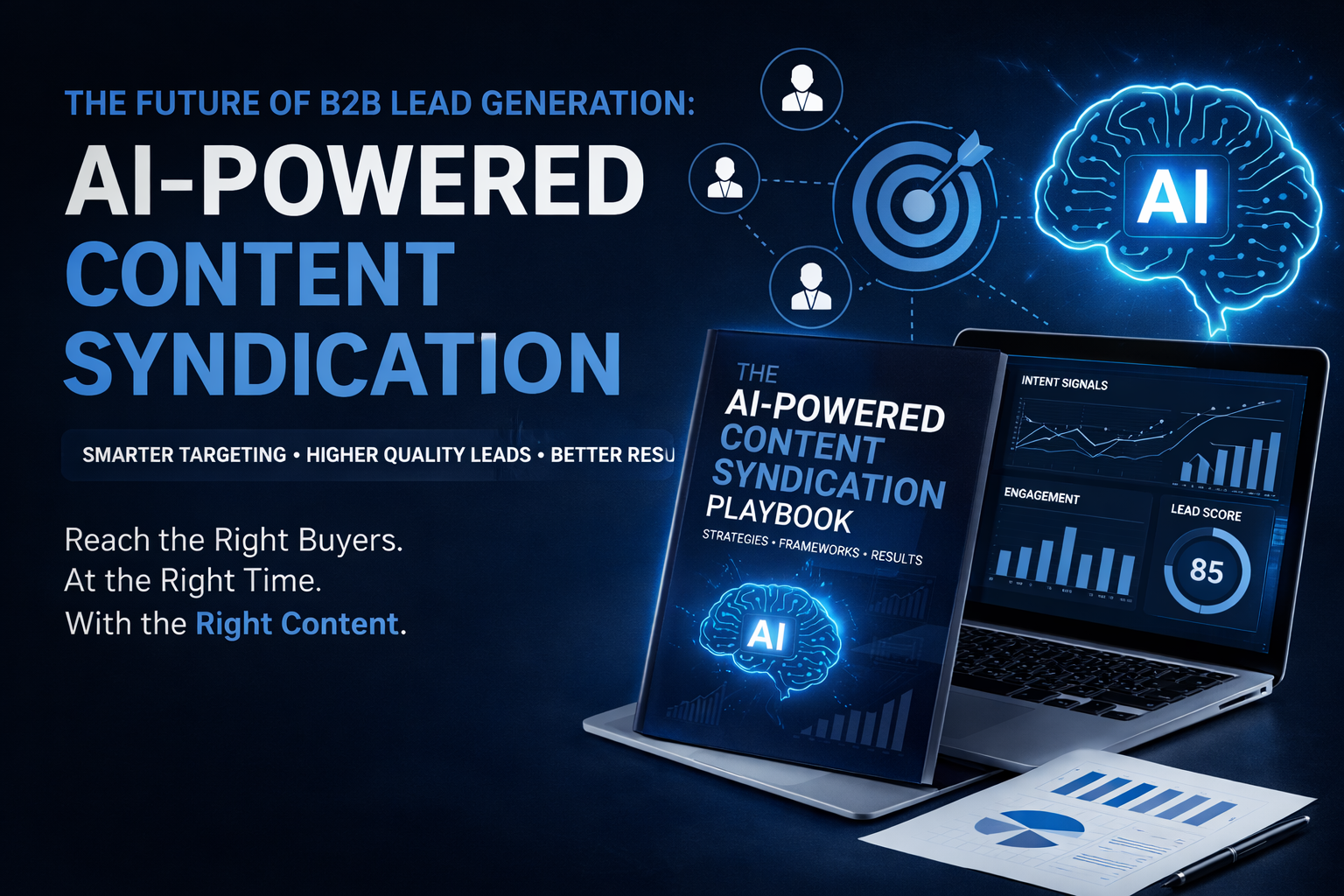
👉 The The AI-Powered Content Syndication Playbook provides a comprehensive guide to mastering this transformation. It breaks down the exact strategies, frameworks, and execution models modern B2B marketers are using to stay ahead.
Final Thoughts
The rules of B2B marketing have changed. Buyers are smarter, journeys are longer, and competition is fiercer.
In this environment, AI-powered content syndication isn’t just an advantage—it’s a necessity.
The question is no longer whether you should adopt it, but how fast you can implement it.
And those who move first? They won’t just generate leads—they’ll build a pipeline that scales.