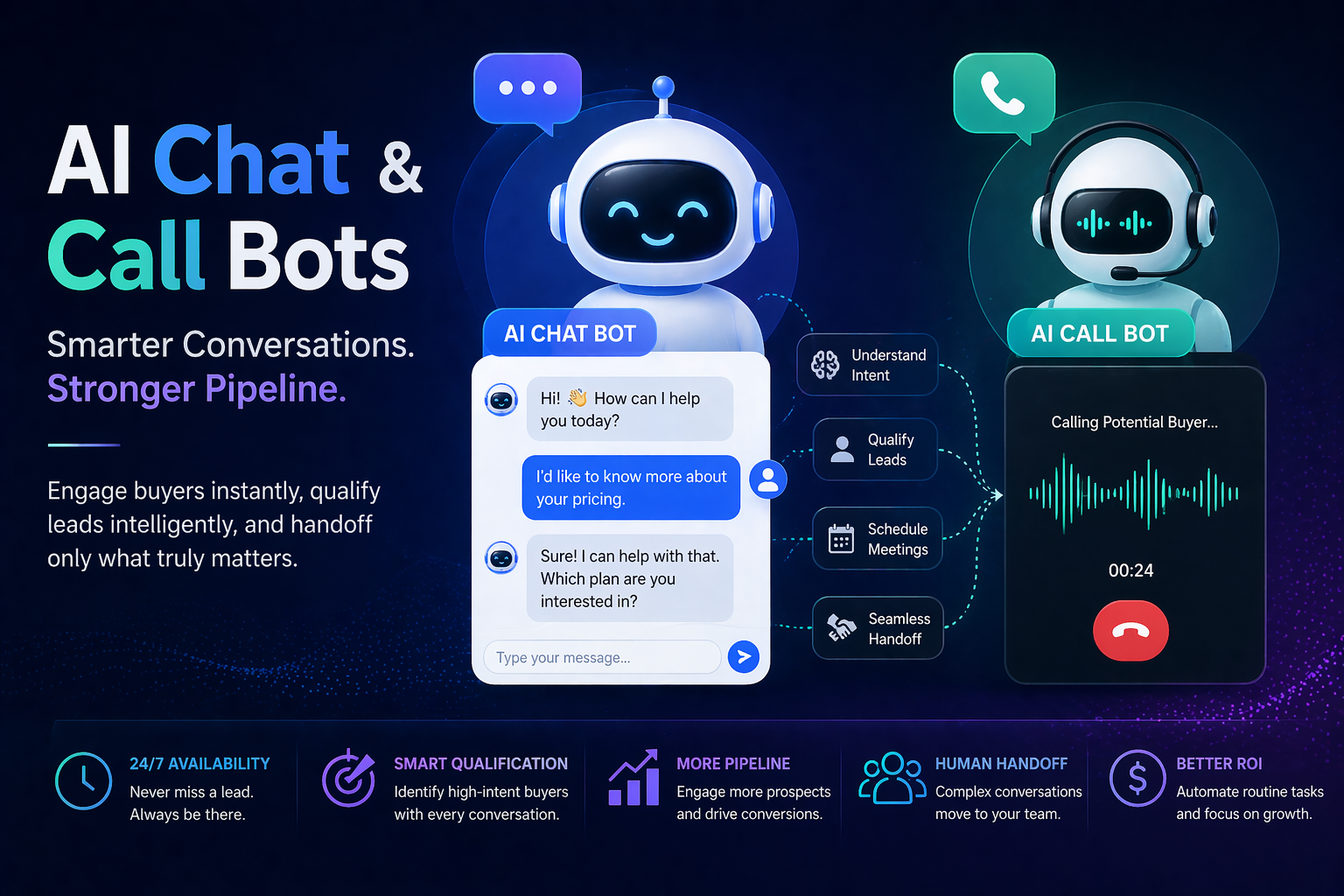
The Rise of AI Chat & Call Bots: Are B2B Conversations Finally Scaling?
 Vansh Banthia,
6 months ago
4 min read
Vansh Banthia,
6 months ago
4 min read
Introduction: The Missed Conversation
A potential buyer lands on your website at 11:47 PM.
They’ve already done their research. They know your category, they’ve compared vendors, and they’re close to making a decision. They click through your pricing page, skim a case study, and pause.
They have a question. A simple one.
But there’s no one there to answer it.
By morning, they’re gone.
Not because your product wasn’t right—but because the conversation never happened.
This is the gap AI chat and call bots are starting to close in 2026. Not by replacing humans, but by making sure opportunities don’t disappear in silence.
From Static Funnels to Real Conversations
For a long time, B2B marketing relied on structured journeys. A visitor becomes a lead, a lead enters a nurture sequence, and eventually—if everything aligns—they speak to sales.
The problem is, buyers don’t always follow that path.
Sometimes they’re ready to talk immediately. Sometimes they just need one question answered. Sometimes they want clarity before committing to a demo.
Traditional systems weren’t built for this kind of flexibility. They were built for process.
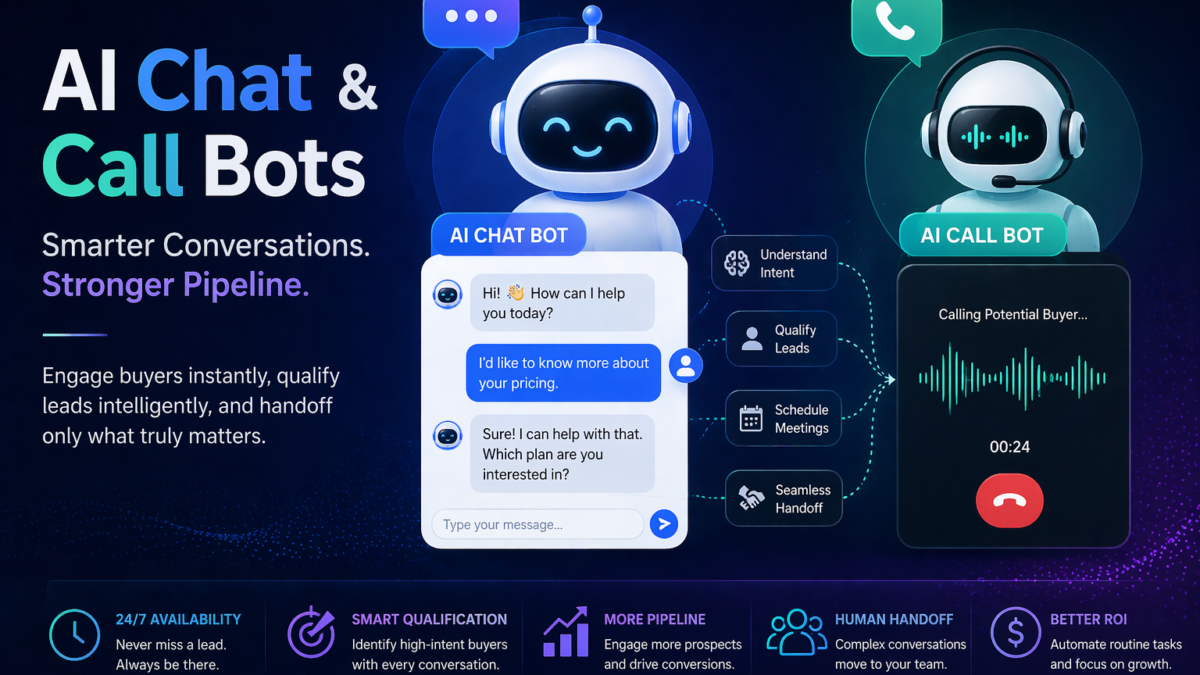
AI chat and call bots change that by introducing something B2B marketing has struggled to scale—real-time conversation.
What’s Actually Changed in 2026
Chatbots have been around for years, but most of them felt scripted and limited. They could answer basic questions, but anything beyond that led to frustration.
What’s different now is the intelligence behind them.
Modern AI bots can understand context, respond more naturally, and guide conversations based on intent rather than predefined flows. They don’t just react—they adapt.
Call bots are evolving in a similar way. Instead of sounding robotic or intrusive, they’re becoming more conversational, handling tasks like lead qualification, follow-ups, and even initial discovery calls with surprising effectiveness.
The result is a system where conversations can start instantly, continue smoothly, and scale without overwhelming human teams.
Why This Matters More Than Ever
B2B buyers are moving faster.
They research independently, form opinions early, and often reach out only when they’re close to making a decision. That means every interaction matters more than before.
If you miss that moment, you don’t just lose a lead—you lose a nearly qualified opportunity.
AI chat and call bots reduce that risk by ensuring that when a buyer is ready to engage, there’s always a response waiting. Not hours later. Not the next day. Instantly.
And in today’s environment, speed isn’t just an advantage—it’s often the difference between winning and losing.
The Balance Between Automation and Experience
There’s a natural concern that automation might make interactions feel impersonal. And to be fair, poorly implemented bots can still create that experience.
But when done right, AI doesn’t replace human interaction—it enhances it.
It handles the initial engagement, answers common questions, and filters out low-intent interactions. This allows human teams to focus on what they do best: building relationships and closing deals.
In other words, bots don’t remove the human element. They protect it from being diluted.
Where Most Teams Get It Wrong?
Despite the potential, many companies still struggle to get value from AI bots.
Some rely too heavily on automation, trying to replace entire conversations instead of supporting them. Others treat bots as a simple add-on, without integrating them into their broader sales and marketing workflows.
The result is either a poor user experience or missed opportunities.
The real value comes from alignment—connecting bots with CRM systems, sales teams, and intent data so that every conversation leads somewhere meaningful.
The Bigger Shift: Conversations as a Growth Channel
What’s happening here isn’t just a technology upgrade—it’s a mindset shift.
For years, B2B growth was driven by campaigns and content. Conversations were the outcome.
Now, conversations are becoming the starting point.
Instead of waiting for leads to convert, businesses are engaging buyers earlier, answering questions faster, and guiding decisions in real time.
This turns conversations into a scalable growth channel rather than a limited resource.
The Future: Always-On Engagement
As AI continues to evolve, the line between automated and human interaction will become less noticeable. Conversations will feel more natural, more contextual, and more aligned with buyer needs.
We’re moving toward a model where engagement is always on—where every visitor, at any time, can start a meaningful interaction without friction.
And in a world where attention is limited and timing is critical, that kind of availability is a powerful advantage.
Conclusion: Don’t Let Silence Cost You Deals
In B2B, not every opportunity announces itself.
Sometimes it shows up quietly—a late-night visit, a quick question, a moment of hesitation before a decision.
If you’re not there to respond, someone else will be.
AI chat and call bots aren’t just about efficiency. They’re about making sure those moments don’t go unanswered.
Because in 2026, the brands that win won’t just have better products or better marketing.
They’ll be the ones that are ready to have the conversation—when it actually matters.