Global Conflicts, Slowing Markets — Can Tech Companies Still Capture B2B Buyers?
 Vansh Banthia,
3 weeks ago
4 min read
Vansh Banthia,
3 weeks ago
4 min read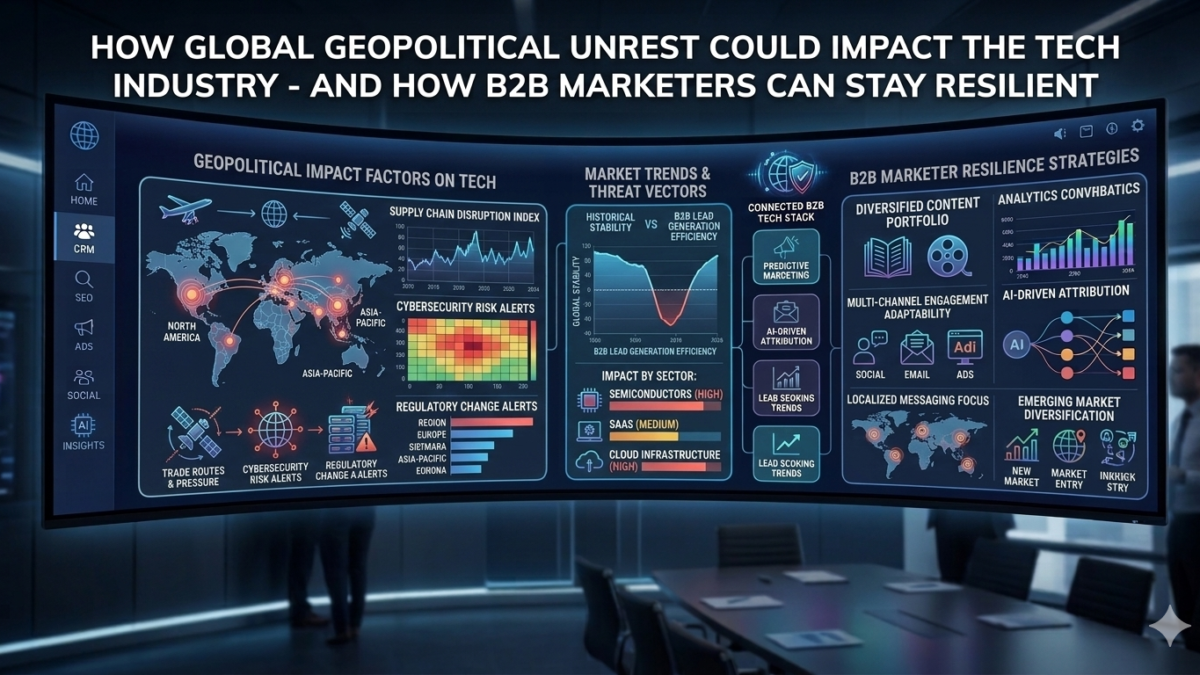
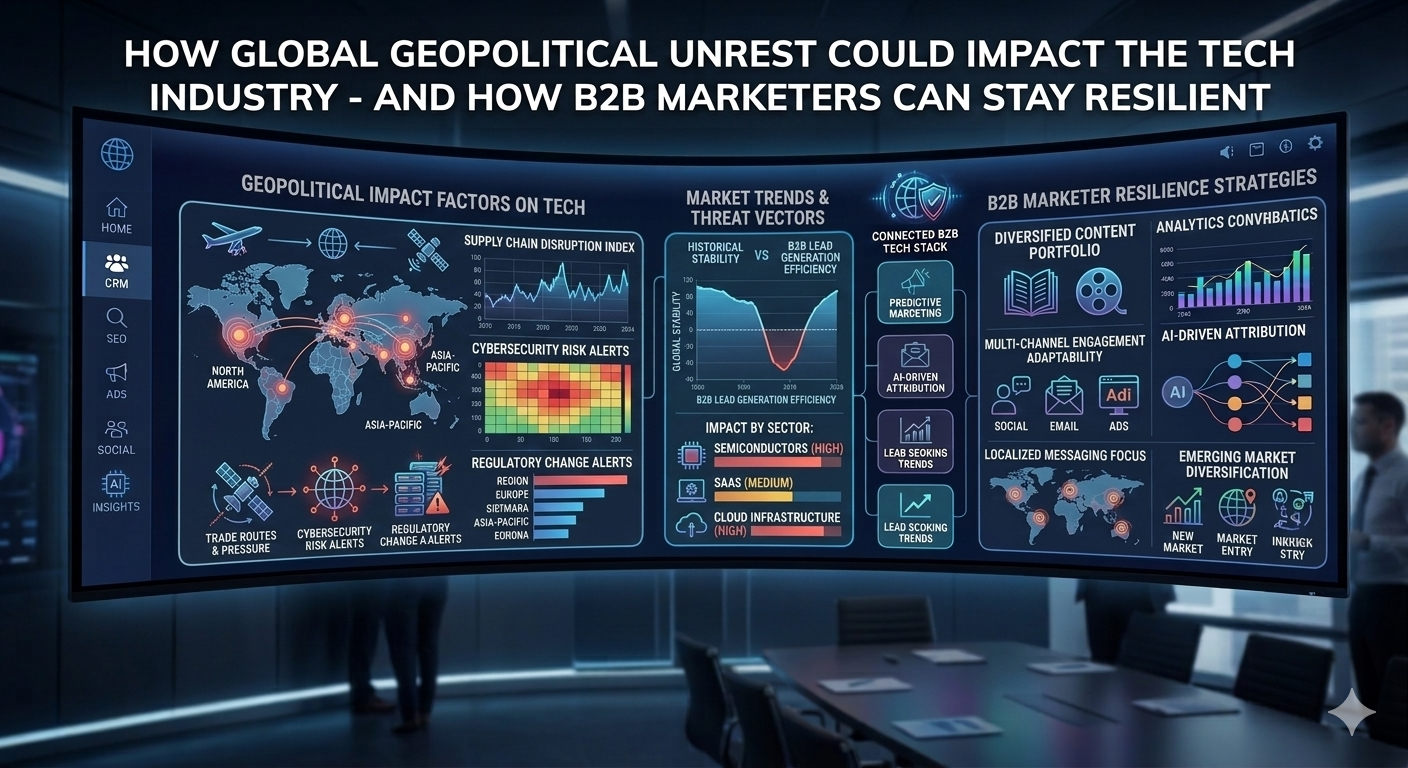
The global technology industry has long thrived on innovation, collaboration, and cross-border partnerships. However, the modern geopolitical landscape is becoming increasingly complex. Rising global tensions, regional conflicts, trade restrictions, and economic sanctions are creating uncertainty across multiple industries — including technology.
From supply chain disruptions to shifting investment priorities, geopolitical developments have the potential to reshape how technology companies operate and grow.
For B2B organizations navigating these challenges, the key question is not just how markets may change — but how companies can remain visible, competitive, and resilient despite global uncertainty.
This is where strategic marketing and demand generation platforms like iTMunch can play a critical role.
How Geopolitical Tensions Affect the Technology Industry
Geopolitical instability can influence the tech industry in several ways.
First, supply chains can become vulnerable. Many technology companies depend on global manufacturing networks, semiconductor production, and international logistics systems. Political conflicts or trade restrictions may disrupt these networks, causing delays and increased operational costs.
Second, investment patterns often shift during periods of global uncertainty. Venture capital funding, enterprise technology budgets, and innovation initiatives may slow as organizations prioritize stability and risk management.
Third, regulatory landscapes can change rapidly. Governments may introduce new data regulations, cybersecurity requirements, or trade policies that affect how technology companies operate across borders.
These factors create a more unpredictable environment for technology providers and B2B marketers alike.
The Importance of Market Visibility During Uncertainty
When markets become uncertain, many companies instinctively reduce marketing investments. However, this approach can often backfire.
Periods of disruption actually make market visibility more important than ever.
Decision-makers continue to search for solutions that improve efficiency, reduce risk, and support digital transformation. Organizations that maintain strong visibility during uncertain times are more likely to capture attention from buyers actively exploring new solutions.
Rather than disappearing from the market conversation, successful companies adapt their marketing strategies to remain present where decision-makers are researching and learning.
Why Content-Led Marketing Becomes Critical
In uncertain environments, buyers tend to become more research-driven.
Enterprise decision-makers often seek deeper insights before committing to new technology investments. They want credible information that helps them evaluate risks, understand industry developments, and compare potential solutions.
This is where content-led marketing strategies become essential.
Whitepapers, research reports, and industry insights allow organizations to educate potential buyers while building trust. Instead of relying solely on promotional messaging, companies can provide valuable knowledge that supports informed decision-making.
Content-driven strategies not only attract attention but also strengthen credibility during uncertain times.
How iTMunch Helps B2B Companies Navigate Market Disruptions
Platforms like iTMunch are designed to help B2B organizations maintain strong demand generation even when markets become unpredictable.
Through targeted content syndication and strategic distribution, iTMunch enables technology companies to reach decision-makers actively searching for industry insights and solutions.
This approach offers several key advantages.
Expanding Reach Across Global Audiences
Geopolitical disruptions may affect specific regions, but global digital platforms still allow companies to connect with audiences across multiple markets.
iTMunch helps businesses distribute valuable content to professionals across industries and geographies, ensuring that organizations continue to generate visibility and engagement.
Supporting Research-Driven Buyer Journeys
Modern B2B buyers rely heavily on research before making purchasing decisions.
By syndicating whitepapers, case studies, and expert insights, iTMunch ensures that this research-driven audience can easily discover relevant content.
This approach helps companies stay connected with buyers who are actively exploring solutions, even during uncertain economic conditions.
Strengthening Lead Generation Pipelines
Economic uncertainty often slows traditional sales cycles, making consistent lead generation even more important.
Content syndication platforms allow organizations to maintain a steady pipeline of qualified prospects by connecting valuable insights with professionals interested in specific topics.
Through targeted campaigns and data-driven distribution, iTMunch helps B2B companies continue generating leads while adapting to changing market conditions.
Turning Uncertainty into Opportunity
While geopolitical instability presents challenges, it also creates opportunities for organizations that adapt quickly.
Companies that continue investing in visibility, thought leadership, and demand generation often emerge stronger when markets stabilize.
By sharing valuable insights and maintaining strong engagement with potential buyers, organizations can build trust and position themselves as reliable partners during uncertain times.
Platforms like iTMunch help enable this resilience by ensuring that valuable content reaches the right audiences when it matters most.
Looking Ahead
The global technology landscape will likely continue to evolve alongside geopolitical developments. While businesses cannot control these external forces, they can control how they respond.
Organizations that remain proactive in their marketing strategies — focusing on knowledge sharing, digital visibility, and consistent engagement — will be better positioned to navigate market uncertainty.
In an environment where trust, insight, and adaptability matter more than ever, strategic content distribution and demand generation will remain essential tools for technology companies seeking sustainable growth