The “Signal Surge”: Why 2026 B2B Marketing is Replacing the Static Funnel with Real-Time Orchestration
 Vansh Banthia,
7 months ago
3 min read
Vansh Banthia,
7 months ago
3 min read
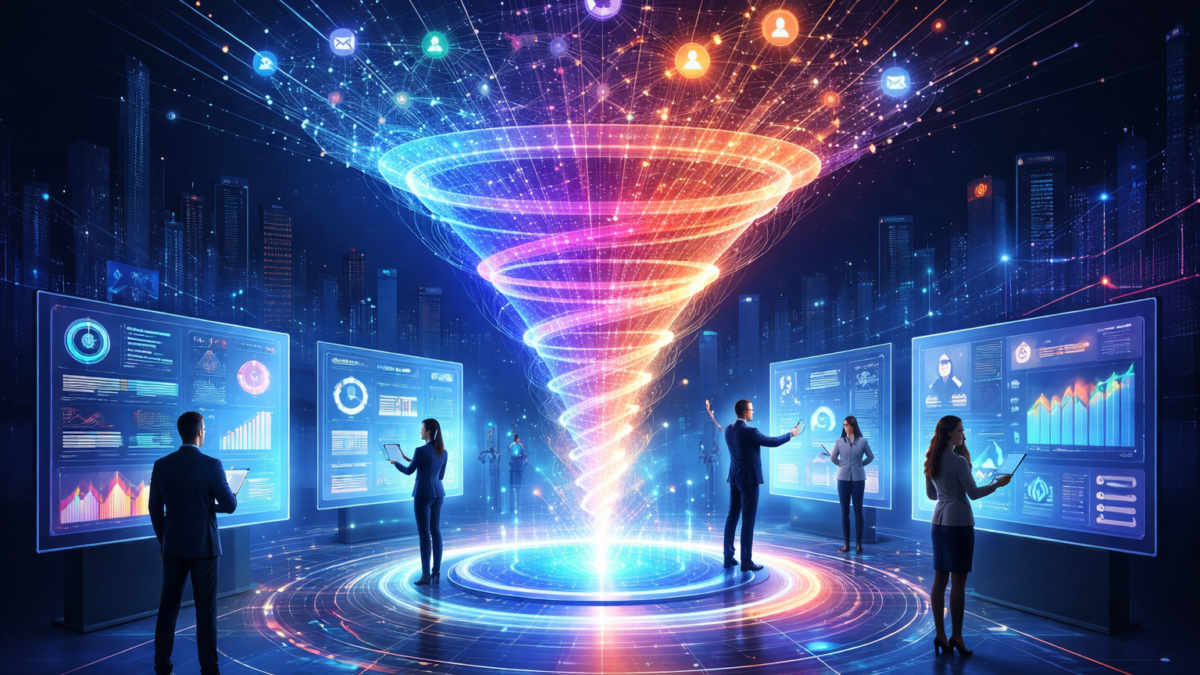
For decades, the B2B marketing funnel was a linear, predictable journey: Awareness, Consideration, Decision. We pushed leads through the pipe and hoped they didn’t leak. But as we move through 2026, the “funnel” has officially collapsed. It has been replaced by the Signal Surge.
In a world where 75% of B2B pipeline decisions are now influenced by AI and 90% of buying is intermediated by AI Agents, the traditional lead-scoring model is broken. Buyers don’t move in stages anymore; they move in bursts of high-intent signals. The most successful brands on ITMunch.com this year have stopped “managing a funnel” and started “orchestrating a signal.”
The Crisis: The “Lead-Based” Blind Spot
In 2024, we celebrated when an individual downloaded a white paper. We called them a “Lead.” In 2026, we know that a single person downloading a PDF is often just noise. B2B purchasing is a Buying Group sport, involving an average of 11–15 stakeholders.
If you are only tracking the individual, you are blind to the account. The “Signal Surge” approach looks for Intent Clusters—when a Lead Architect, a CFO, and a Security Director from the same company all engage with different pieces of your “Knowledge Graph” within the same 48-hour window. That is a signal. Everything else is just a click.
2026 Strategy: “From MQLs to Account-Based Experiences (ABX): Mapping the 2026 Buying Group Signal.”
3 Pillars of Signal-Driven Orchestration
To capture and convert the 2026 buyer, your IT marketing stack must master these three pillars:
1. Predictive “Surge” Detection
Static lead scores are out; Dynamic Signal Surge Scores are in.
- The Tech: Using AI-powered analytics (like the Improvado AI Agent) to query your data in plain English: “Which accounts in the SaaS vertical showed a 50% increase in technical documentation engagement this week?”
- The Action: Instead of a generic email, this “Surge” triggers an automated, personalized video demo sent directly to the account’s decision-makers.
2. The “Human-in-the-Loop” Multiplier
As AI-generated content saturates the web, Human-First Media has become the ultimate trust signal.
- The Strategy: Use AI to handle the “Generalist” work (SEO formatting, data cleaning), but use your Subject Matter Specialists to provide the “Pattern Recognition” that machines can’t mimic.
- The Action: Feature your actual engineers in “Raw, Unfiltered” behind-the-scenes content. In 2026, a “specialist” who has seen 1,000 implementations is 10x more valuable than a generic white paper.
3. Agentic Content Syndication
Since AI agents are now the “Gatekeepers” of research, your content must be Agent-Friendly.
- The Tech: Implementing Schema Markup and structured “Answer Blocks” so that when a buyer’s AI agent asks, “Compare the security protocols of Vendor A and Vendor B,” your data is the most ingestible and authoritative source.
- The Goal: Achieving a high “Share of LLM”—becoming the most cited brand in AI-generated research reports.
The Shift in Marketing Fundamentals
| Metric | The Funnel Era (2024) | The Signal Surge Era (2026) |
| Unit of Measure | Individual Leads (MQLs). | Account-Based Buying Groups. |
| Content Goal | Traffic & Downloads. | Revenue Impact & AI Citations. |
| Response Time | Follow up in 24 hours. | Real-time “Surge” Orchestration. |
| Key Resource | Generalist Content Teams. | Specialized Human Experts + AI Agents. |
The Bottom Line: Velocity is a Product of Signal
The B2B winners of 2026 aren’t the ones with the biggest budgets; they are the ones with the clearest Visibility. By moving away from “Set it and Forget it” marketing and toward a Signal Surge model, you reduce the friction between your brand and the buyer.
On a technical hub like ITMunch, the “Answer Economy” demands that you prove your expertise instantly. Stop trying to “nurture” a lead through a fake journey and start responding to the signals they are already sending. In 2026, the fastest way to revenue is to be the brand that listens the hardest.