Intent Data is Overrated? What Actually Drives B2B Conversions in 2026
 Vansh Banthia,
6 months ago
4 min read
Vansh Banthia,
6 months ago
4 min read
Introduction
For the past few years, intent data has been positioned as the ultimate advantage in B2B marketing.
The idea is compelling. If you know which companies are actively researching your category, you can prioritize outreach, personalize messaging, and close deals faster. Intent signals promise clarity in a complex buying environment.
But in 2026, a critical question is emerging:
Is intent data enough?
Many organizations now have access to intent signals. Yet, despite this, conversion rates are not improving at the same pace. Pipelines are still inconsistent, and sales cycles remain unpredictable.
This suggests that while intent data is valuable, it is not the complete answer.
The Rise—and Limits—of Intent Data
Intent data transformed how marketers identify potential buyers.
Instead of relying on assumptions, teams could track behaviors such as content consumption, search activity, and engagement patterns. This allowed for more targeted campaigns and better prioritization.
However, as adoption increased, so did its limitations.
One of the biggest challenges is that intent signals are often shared across competitors. If multiple vendors are targeting the same accounts based on similar data, differentiation becomes difficult.
Additionally, intent does not always equal readiness. A company researching a topic may be in an early exploration phase rather than actively evaluating solutions. Acting too early or too aggressively can reduce effectiveness.
This creates a gap between identifying interest and converting it into action.
Why Conversions Require More Than Signals
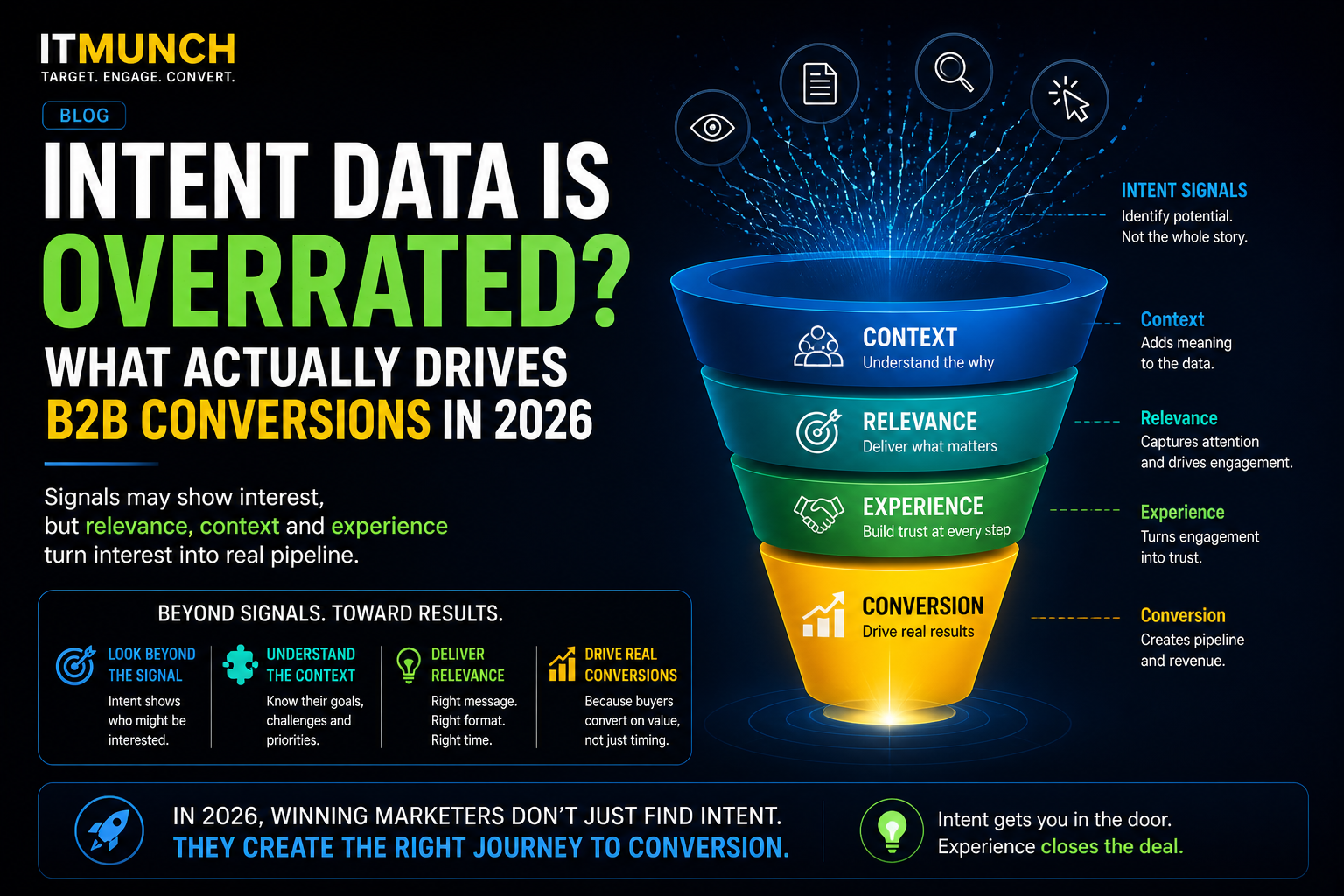
At its core, conversion is not just about timing. It is about relevance and trust.
Intent data tells you who might be interested. It does not tell you how to engage them effectively.
Buyers today expect more than generic outreach triggered by activity signals. They expect context, value, and clarity. Without these elements, even high-intent prospects may disengage.
This is why many campaigns that rely heavily on intent data fail to deliver strong results. They identify the right audience but do not provide the right experience.
The Role of Context in Modern B2B Marketing
Context is what transforms interest into engagement.
It involves understanding not just what a prospect is researching, but why. Are they exploring options, solving a specific problem, or comparing vendors? Each scenario requires a different approach.
Context also includes industry trends, company priorities, and the stage of the buying journey. Messaging that aligns with these factors is far more effective than broad, one-size-fits-all communication.
In 2026, successful marketers are those who combine intent signals with contextual intelligence.
Content That Actually Converts
Content plays a critical role in bridging the gap between intent and conversion.
However, not all content is equally effective.
High-performing content is designed to move buyers forward. It addresses specific pain points, answers key questions, and provides actionable insights. It reduces uncertainty and builds confidence.
This is particularly important in B2B environments, where decisions involve multiple stakeholders and higher levels of scrutiny.
When content aligns with both intent and context, it becomes a powerful driver of conversion.
Timing vs Experience
Much of the focus around intent data is on timing—reaching buyers at the right moment.
While timing is important, it is only part of the equation.
The experience that follows matters just as much. If a prospect engages with your content or brand and finds it irrelevant or unhelpful, the opportunity is lost regardless of timing.
This is why conversion strategies must prioritize both when and how engagement happens.
How iTMunch Bridges the Gap
This is where iTMunch adds real value.
Rather than relying solely on identifying intent, iTMunch focuses on delivering the right content to the right audience in the right context. It ensures that engagement is not just timely, but meaningful.
By combining targeted distribution with content relevance, iTMunch helps brands connect with prospects in a way that supports their decision-making process.
This approach increases the likelihood of conversion by aligning outreach with actual buyer needs, not just observed behavior.
Rethinking Conversion Strategy in 2026
As B2B marketing continues to evolve, it is becoming clear that no single data source or tactic can drive results on its own.
Intent data remains valuable, but it must be part of a broader strategy that includes context, content, and experience.
Marketers need to move beyond simply identifying opportunities and focus on creating meaningful interactions that guide buyers toward a decision.
This requires a more holistic approach—one that integrates data with insight and execution.
Conclusion
Intent data changed the way marketers identify potential buyers, but it does not guarantee conversions.
In 2026, success depends on what happens after the signal is detected. It depends on how well brands understand their audience, how effectively they communicate value, and how seamlessly they guide prospects through the buying journey.
The future of B2B marketing is not about more data. It is about better use of data.
And ultimately, conversions are not driven by signals alone, but by the experiences built around them.