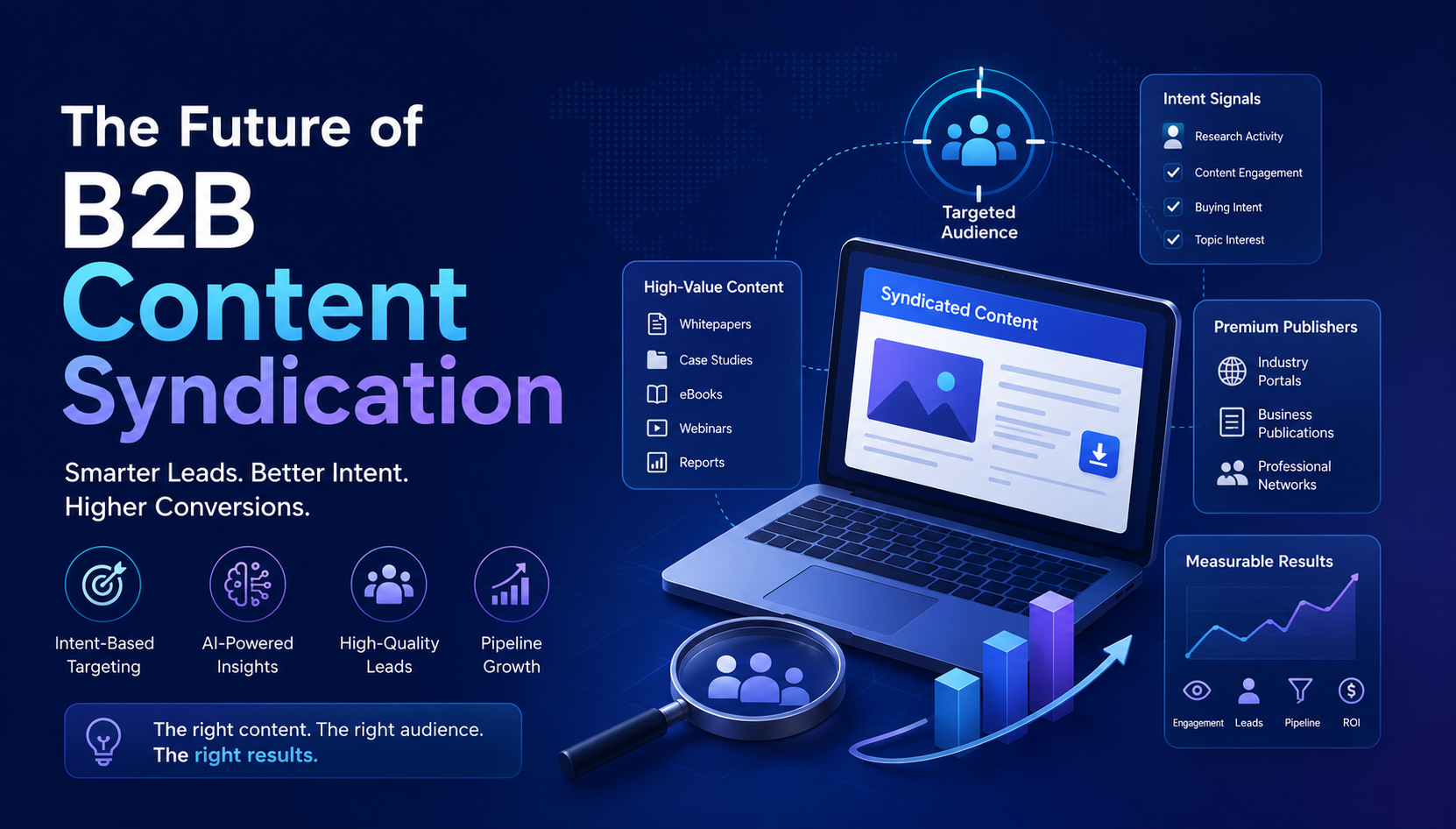
The Future of B2B Content Syndication in 2026: Smarter Leads, Better Intent, Higher Conversions
 Vansh Banthia,
6 months ago
5 min read
Vansh Banthia,
6 months ago
5 min read
Introduction
B2B marketing in 2026 is no longer about generating the maximum number of leads. It is about generating the right leads — prospects that show real buying intent, engage with content meaningfully, and move faster through the sales funnel.
This shift has transformed the role of B2B content syndication. Once viewed as a volume-based lead generation tactic, content syndication has now evolved into an intelligent demand generation engine powered by intent signals, AI-driven targeting, predictive analytics, and omnichannel distribution.
For marketers struggling with rising acquisition costs, declining organic reach, and longer B2B buying cycles, content syndication has become one of the most effective ways to scale pipeline generation while maintaining lead quality.
In this blog, we’ll explore how B2B content syndication is evolving in 2026, why it matters more than ever, and how modern marketers can use it to drive measurable business growth.
What is B2B Content Syndication?
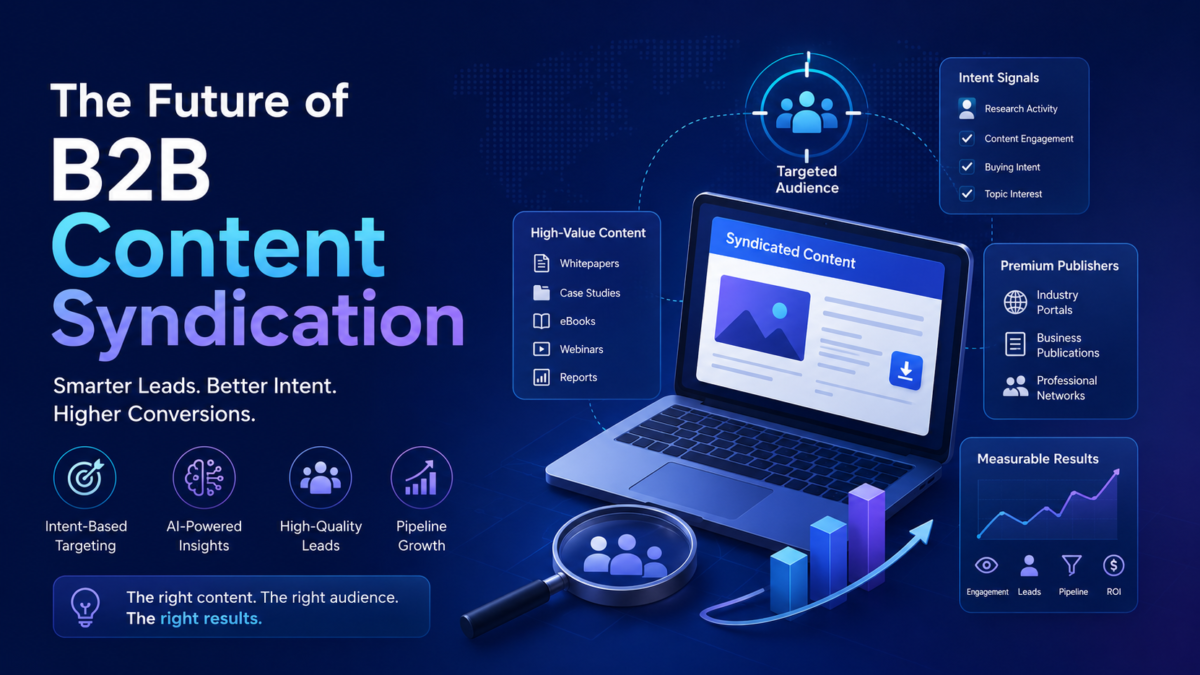
B2B content syndication is the process of distributing your content — such as whitepapers, case studies, eBooks, webinars, reports, or blogs — across third-party platforms, publisher networks, and industry websites to reach a larger and more targeted audience.
Instead of waiting for prospects to discover your content organically, syndication places your content directly in front of decision-makers who are actively researching solutions.
The primary goal is simple:
- Generate high-quality leads
- Increase brand visibility
- Build authority
- Accelerate demand generation
- Improve sales pipeline efficiency
But in 2026, syndication goes far beyond simple content distribution.
Why Content Syndication Matters More Than Ever in 2026
1. Organic Reach is Becoming Increasingly Difficult
Search engines are more competitive than ever, and AI-generated search experiences are reducing traditional website clicks. Even strong SEO strategies now require support from external demand generation channels.
Content syndication helps brands bypass discoverability challenges by directly reaching audiences through trusted industry platforms.
2. B2B Buyers Prefer Self-Education
Modern buyers complete a significant portion of their purchasing journey before speaking to sales teams. They consume reports, compare vendors, attend webinars, and evaluate multiple solutions independently.
Syndicated content allows brands to become part of this research journey early in the funnel.
3. Intent Data is Reshaping Lead Generation
Traditional lead generation focused on demographics. Today, intent data drives everything.
Modern syndication platforms can identify users based on:
- Research activity
- Content consumption behavior
- Topic engagement
- Buying-stage signals
- Competitive research patterns
This allows marketers to target prospects with significantly higher conversion potential.
Key Trends Defining B2B Content Syndication in 2026
1. AI-Powered Audience Targeting
Artificial intelligence is transforming how syndication campaigns operate.
AI-driven platforms now analyze:
- Behavioral signals
- Firmographic data
- Historical engagement
- Buyer journey progression
- Predictive purchase intent
This enables hyper-targeted content distribution that improves both lead quality and ROI.
Instead of broad campaigns, marketers can now syndicate specific assets to highly relevant micro-audiences.
2. Intent-Based Lead Qualification
Lead quantity is no longer the success metric.
Modern marketers prioritize:
- Engagement depth
- Multi-touch interactions
- Topic relevance
- Content completion rates
- Account-level intent scoring
Intent-qualified leads convert significantly better because they demonstrate active interest rather than passive engagement.
3. Multi-Channel Syndication Strategies
In 2026, successful syndication campaigns operate across multiple channels simultaneously.
These include:
- Industry publications
- Professional communities
- LinkedIn campaigns
- Email distribution networks
- Webinar partnerships
- AI-driven recommendation engines
- B2B marketplaces
The goal is to create repeated visibility across the buyer journey.
4. Interactive Content is Outperforming Static Assets
Static PDFs are no longer enough.
Interactive content formats are dominating syndication performance:
- Interactive reports
- ROI calculators
- AI-driven assessments
- Live webinars
- Product simulations
- Dynamic infographics
These formats increase engagement while generating richer first-party data.
5. First-Party Data is Becoming Critical
With increasing privacy regulations and the decline of third-party cookies, marketers are investing heavily in first-party data acquisition.
Content syndication has become a powerful way to build compliant, permission-based prospect databases through valuable content exchanges.
Benefits of B2B Content Syndication
Increased Brand Visibility
Syndication places your brand in front of larger and more relevant audiences across trusted platforms.
Faster Pipeline Generation
Instead of relying solely on inbound traffic, syndication accelerates lead acquisition and sales opportunities.
Better Lead Quality
Intent-based targeting improves conversion probability and sales readiness.
Scalable Demand Generation
Syndication campaigns can scale rapidly across industries, regions, and verticals.
Improved ROI Tracking
Modern platforms now provide detailed analytics on:
- Engagement quality
- Lead behavior
- Conversion pathways
- Campaign attribution
- Pipeline contribution
Best Practices for Successful Content Syndication in 2026
Create High-Value Content
Your content must solve real business problems. Decision-makers engage with content that provides actionable insights, research, benchmarks, or strategic value.
Focus on Intent Signals
Prioritize platforms that offer intent-driven targeting and behavioral insights rather than generic lead lists.
Align Sales and Marketing Teams
Marketing-generated syndicated leads should align with sales qualification criteria to improve conversion efficiency.
Use Multi-Touch Nurturing
Not every lead converts immediately. Build automated nurturing sequences across email, retargeting, and personalized outreach.
Continuously Optimize Campaigns
Monitor:
- CPL (Cost Per Lead)
- MQL-to-SQL conversion rates
- Content engagement metrics
- Pipeline velocity
- Revenue attribution
Optimization is essential for long-term performance.
The Future of B2B Content Syndication
The future of B2B content syndication lies in intelligence, personalization, and intent.
As AI continues to evolve, syndication platforms will become even more predictive — helping marketers identify buying committees, anticipate purchase timing, and personalize content delivery automatically.
The brands that succeed in 2026 will not be the ones producing the most content.
They will be the ones distributing the right content to the right audience at the right moment.
Conclusion
B2B content syndication is no longer just a lead generation tactic — it is a strategic growth engine.
In a digital landscape dominated by information overload, shrinking attention spans, and increasingly complex buyer journeys, syndication helps brands cut through the noise and reach high-intent decision-makers effectively.
With AI-driven targeting, intent-based qualification, interactive experiences, and omnichannel distribution, modern content syndication is delivering better leads, stronger engagement, and higher conversion rates than ever before.
For B2B marketers looking to scale demand generation in 2026, content syndication is becoming impossible to ignore.