The Algorithmic Infrastructure: Decoding China’s AI Deployment Targets for 2026
 Vansh Banthia,
6 months ago
4 min read
Vansh Banthia,
6 months ago
4 min read
In Western tech circles, Artificial Intelligence is often discussed as a series of “hero” products—a faster LLM, a more creative image generator, or a smarter coding assistant. But if you look at China’s 14th Five-Year Plan and its 2026 deployment targets, you see a fundamentally different philosophy. China isn’t treating AI as a product; it’s treating it as a foundational utility, akin to high-speed rail or the electrical grid.
For the global IT community, understanding these targets is essential. China isn’t just trying to win an “arms race” of models; they are architecting a society-wide “Industrial AI” ecosystem that aims to reorganize how physical and digital value is created.
1. The “Industrial Brain”: Scaling AI Beyond the Screen
While the world has been captivated by generative AI for creative work, China’s primary mandate is the total digital transformation of its massive manufacturing base. The 2025–2026 target is clear: achieve 70% digital penetration in large-scale manufacturing.
To do this, they are deploying what they call “Industrial Brains.” These aren’t just software packages; they are centralized AI hubs that manage entire industrial parks.
- Predictive Logistics: AI that anticipates supply chain bottlenecks before they manifest in a physical warehouse.
- Energy Orchestration: Smart grids that use reinforcement learning to reroute power in real-time, reducing carbon footprints by double digits.
- The IT Impact: This creates a massive demand for Edge Computing. Because a factory floor cannot tolerate the latency of a distant cloud cluster, the next two years will see a surge in “Edge AI” hardware deployment across the Chinese mainland.
2. Computing Power as Sovereignty
A critical pillar of the Five-Year Plan is the push for Computing Power Autonomy. China has recognized that silicon is the new oil, and they are targeting a 30% annual growth rate in national computing capacity through 2026.
The centerpiece of this effort is the “East-West Computing Resource Transfer” project.
- The Strategy: Build massive data center clusters in the energy-rich, cooler Western provinces to process the data generated by the high-tech, densely populated Eastern hubs like Shanghai and Shenzhen.
- The Hardware Pivot: With global supply chain tensions, there is a heavy focus on developing a domestic GPGPU (General-Purpose Graphics Processing Unit) ecosystem. For tech architects, this means watching for the emergence of new instruction sets and AI frameworks that may eventually challenge the dominance of CUDA.
3. “AI for Science” (AI4S): The New R&D Engine
Perhaps the most ambitious target is the AI4S mandate. China is betting that AI will be the primary engine for breakthroughs in “hard” sciences—physics, biology, and materials science.
By 2026, the goal is to have established national open-source platforms that use Large Language Models and Reinforcement Learning to simulate:
- Molecular Structures: Speeding up drug discovery by 40%.
- Aerodynamic Flows: Shortening the R&D cycle for aerospace components.
- New Materials: Using AI to “hallucinate” new chemical compounds that are then verified in automated labs.
For the ITMunch audience, this represents a shift from “AI for Chat” to “AI for Creation.” The infrastructure required to run these high-fidelity simulations is a distinct vertical from the one that powers consumer chatbots.
4. Digital Twin Cities: Orchestration at Scale
By 2026, the target is for Digital Twin technology to be the standard operating procedure for Tier-1 and Tier-2 cities. This isn’t just about a 3D map; it’s about a living, breathing digital replica of a city’s “nervous system.”
- Traffic Flow: AI-driven signal synchronization that reduces congestion by a targeted 15%.
- Public Safety: Integrating AI into the “Social Governance” layer to manage everything from crowd control to emergency response times.
- Infrastructure Monitoring: Using computer vision and IoT sensors to predict when a bridge or a subway line needs maintenance before a failure occurs.
The “Intelligence Plus” (智能+) Philosophy
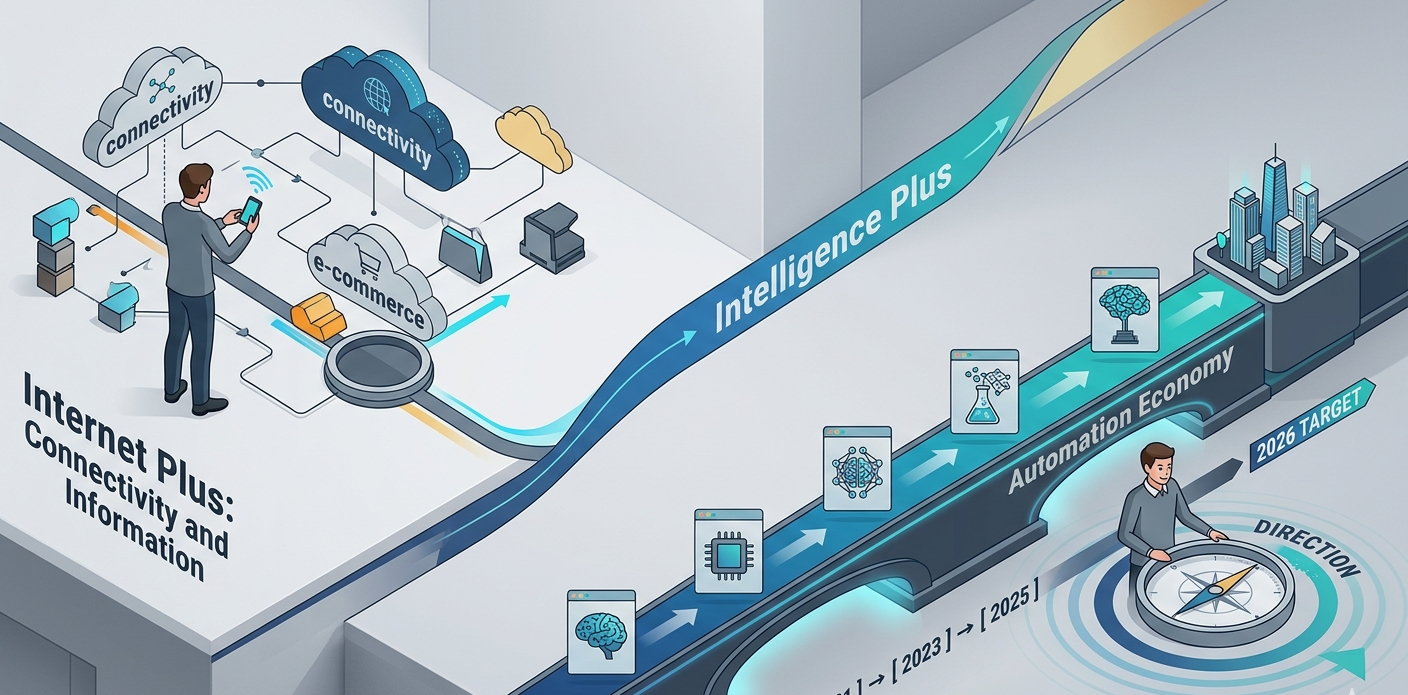
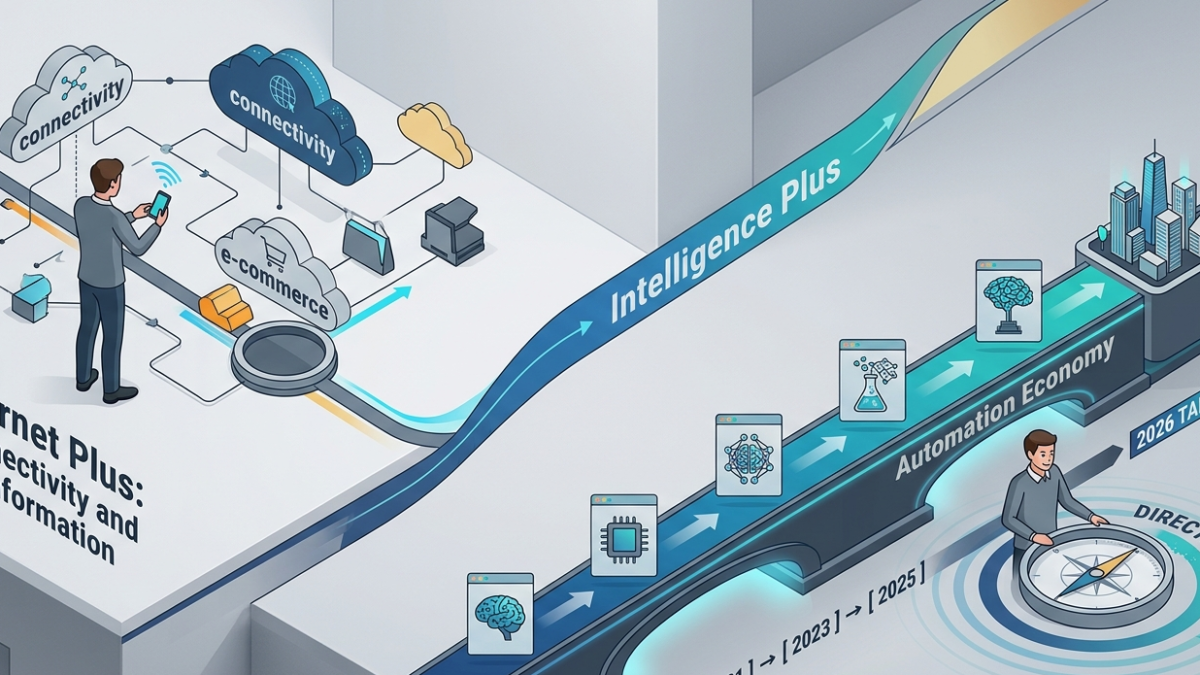
The Five-Year Plan explicitly views “Intelligence Plus” as the successor to “Internet Plus.” The philosophy is a roadmap for the transition from a Connectivity Economy to an Automation Economy.
The Takeaway for Tech Leaders: China’s AI roadmap is less about “General Intelligence” (AGI) and more about “Applied Intelligence.” They are building the physical and legal infrastructure to ensure that AI models aren’t just “smart”—they are useful in the most literal, industrial sense of the word.
As we move toward 2027, the global IT landscape will be increasingly defined by how other nations react to this “Algorithmic Infrastructure.” Whether you are a developer, a CTO, or a policy-maker, the targets set in Beijing today are the technical constraints of tomorrow.
Stay Ahead of the Global Tech Curve
As the world’s algorithmic infrastructure shifts, the “wait and see” approach is a liability. Whether you are managing a dev team or architecting a global network, understanding the systemic deployment of AI is non-negotiable.
For more technical deep dives, supply chain insights, and the latest in enterprise digital transformation, keep your pulse on ITMunch.com—your guide to the high-velocity world of modern IT.