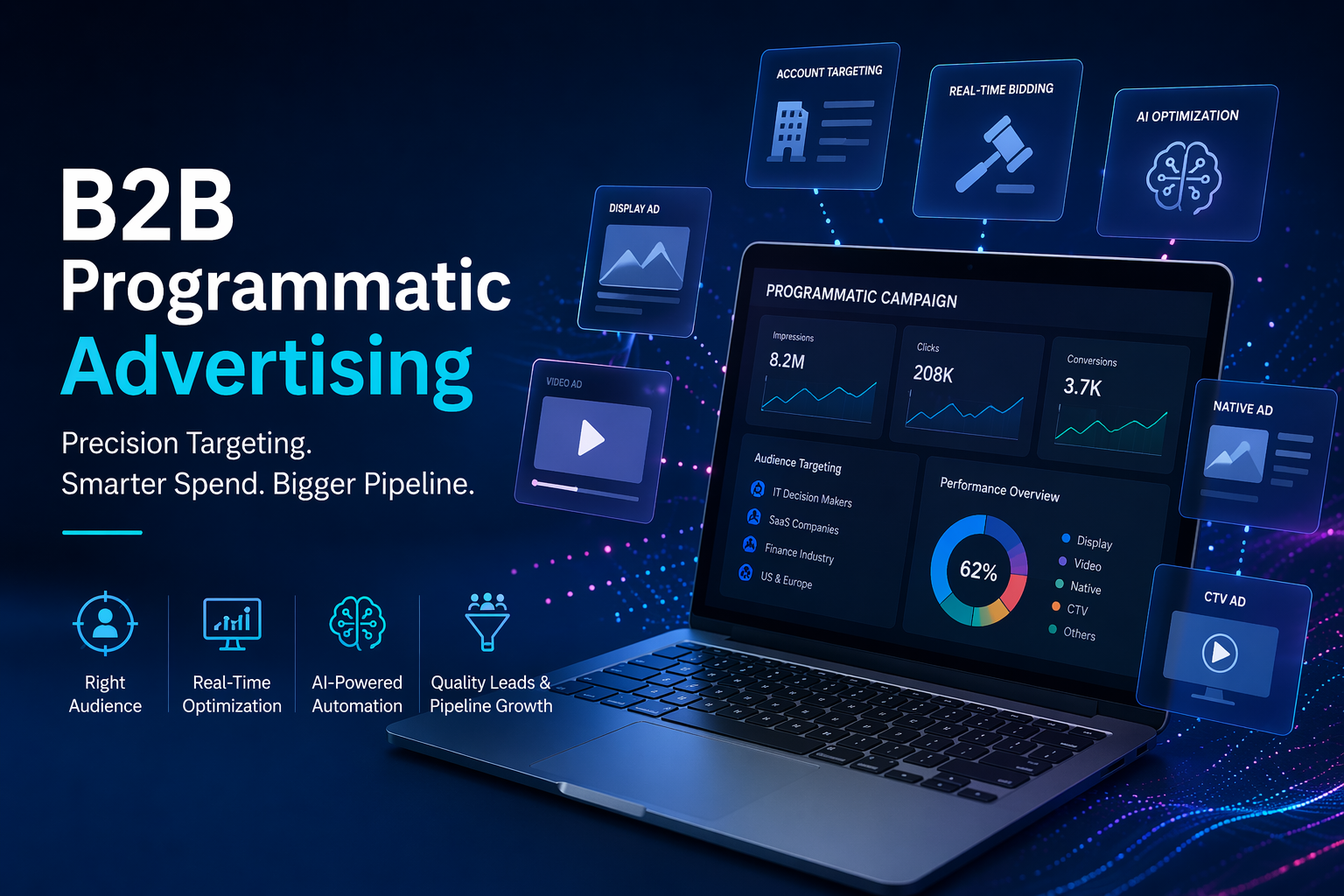
The Rise of B2B Programmatic Advertising: Precision, Performance, and Pipeline
 Vansh Banthia,
7 months ago
4 min read
Vansh Banthia,
7 months ago
4 min read
Introduction: Why Programmatic is No Longer Optional
B2B marketing has undergone a massive transformation over the last few years. Gone are the days when broad targeting and manual media buying could deliver consistent results. Today, precision, personalization, and performance define success—and this is exactly where B2B programmatic advertising is making its mark.
Programmatic advertising, powered by automation and real-time data, allows marketers to buy and place ads with unmatched efficiency. But in the B2B world—where decision-making cycles are longer and audiences are more niche—programmatic has evolved into something far more strategic than just automated media buying.
In 2026, B2B programmatic advertising is not just about impressions. It’s about influencing the right accounts, engaging high-intent buyers, and driving measurable pipeline impact.
What is B2B Programmatic Advertising?
At its core, B2B programmatic advertising refers to the automated buying and selling of digital ad inventory using AI, machine learning, and real-time bidding systems. However, unlike B2C, B2B programmatic focuses heavily on account-based targeting, intent signals, and multi-touch engagement strategies.
Instead of targeting broad demographics, B2B marketers can now reach specific companies, job roles, and decision-makers across platforms—ensuring that every ad impression is meaningful.
Why B2B Programmatic is Gaining Momentum
1. Precision Targeting at Scale
One of the biggest advantages of programmatic advertising is its ability to combine scale with precision. Marketers can target audiences based on firmographics, technographics, behavioral signals, and even buying intent.
This means your ads are not just reaching more people—they’re reaching the right people.
2. Real-Time Optimization
Traditional campaigns often rely on post-campaign analysis. Programmatic flips this model by enabling real-time optimization.
Algorithms continuously analyze performance data and adjust bidding, placements, and targeting parameters to maximize ROI. This ensures that your budget is always being used effectively.
3. Alignment with Account-Based Marketing (ABM)
B2B programmatic advertising works seamlessly with account-based marketing strategies. By integrating with ABM platforms, marketers can run highly targeted campaigns for specific accounts, delivering personalized messaging across channels.
This alignment ensures a consistent and impactful buyer journey.
4. Data-Driven Decision Making
Programmatic platforms provide deep insights into campaign performance, audience behavior, and engagement patterns. These insights allow marketers to refine their strategies, improve targeting, and create more effective campaigns over time.
In a landscape where data is everything, this level of visibility is invaluable.
Key Channels in B2B Programmatic Advertising
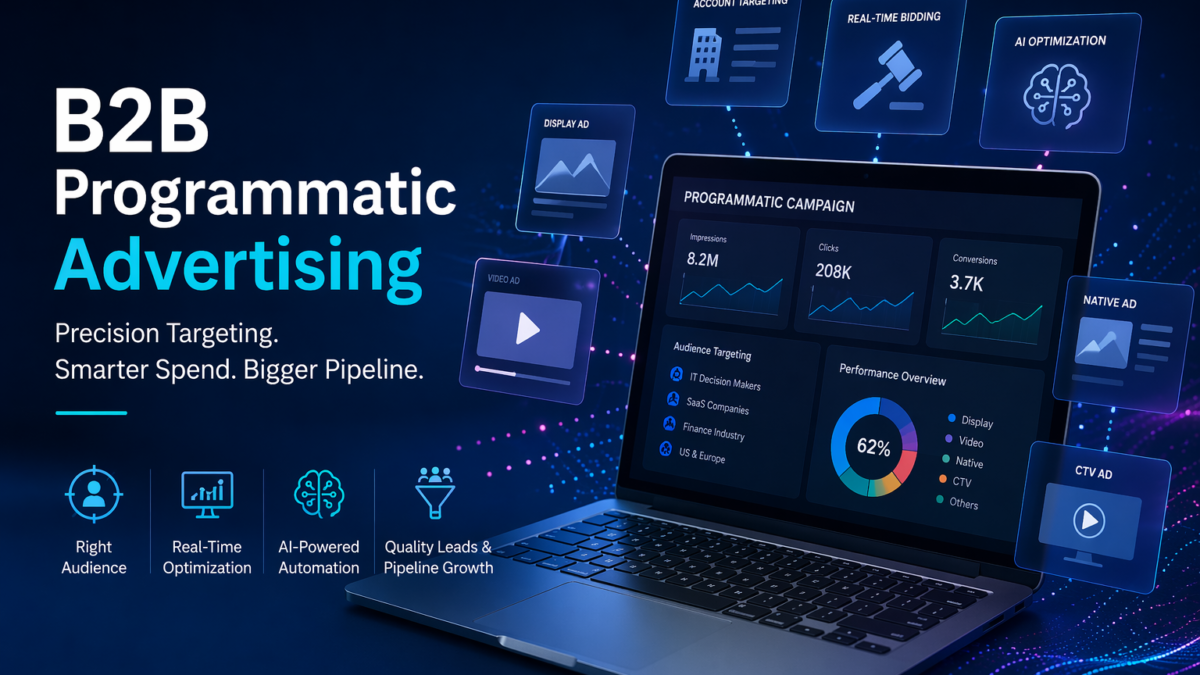
B2B programmatic is no longer limited to display ads. It spans multiple channels, including:
- Display Advertising: For brand awareness and retargeting
- Native Advertising: Seamless integration within content environments
- Video Advertising: High-impact storytelling and engagement
- Connected TV (CTV): Reaching decision-makers beyond traditional screens
This multi-channel approach ensures that your brand stays visible throughout the buyer’s journey.
Challenges Marketers Must Address
While programmatic offers immense potential, it’s not without its challenges.
1. Data Quality Issues
Poor data can lead to wasted spend and ineffective targeting. Ensuring clean, accurate, and up-to-date data is critical for success.
2. Ad Fraud and Brand Safety
Programmatic ecosystems can sometimes expose brands to fraudulent traffic or unsafe environments. Leveraging trusted platforms and verification tools is essential.
3. Complexity of Execution
Managing programmatic campaigns requires expertise in data, technology, and strategy. Without the right skills or partners, campaigns can become inefficient.
Best Practices for B2B Programmatic Success
To maximize the impact of your programmatic efforts, consider these best practices:
- Leverage Intent Data: Identify and target accounts actively researching your solutions
- Align Sales and Marketing: Ensure both teams are working with the same data and goals
- Focus on Personalization: Tailor messaging to specific industries, roles, and pain points
- Test and Optimize Continuously: Use A/B testing to refine creatives and targeting
- Measure What Matters: Go beyond clicks—track pipeline, opportunities, and revenue
The Future of B2B Programmatic Advertising
As AI and machine learning continue to evolve, programmatic advertising will become even more sophisticated. Predictive analytics, deeper personalization, and tighter integration with CRM and sales platforms will redefine how B2B marketers approach digital advertising.
We are also seeing a shift toward privacy-first advertising, where first-party data and contextual targeting will play a larger role. This will require marketers to rethink their data strategies and invest in building strong data ecosystems.
Conclusion: From Impressions to Impact
B2B programmatic advertising has moved far beyond automation—it is now a strategic driver of growth. By combining precision targeting, real-time optimization, and data-driven insights, it enables marketers to reach the right audiences and drive meaningful business outcomes.
In 2026, the question is no longer whether to adopt programmatic advertising. It’s how effectively you can use it to build pipeline, accelerate deals, and stay ahead in an increasingly competitive landscape.
For B2B marketers looking to scale their efforts without compromising on quality, programmatic advertising is not just an option—it’s a necessity.