Why Google Pixel Phones Are Booming in 2026: The Rise of AI-First Smartphones
 Vansh Banthia,
6 months ago
4 min read
Vansh Banthia,
6 months ago
4 min read
Introduction
In a market long dominated by Apple and Samsung, Google’s Pixel lineup is finally having its moment.
In 2026, Pixel phones are not just gaining attention—they are gaining serious market traction. From increasing shipment projections to stronger brand recall, the shift is visible across regions. What was once considered a niche Android alternative is now becoming a serious contender in the premium smartphone space.
The question is no longer whether Pixel can compete. It is why it is suddenly winning.
The Growth Story Behind Pixel
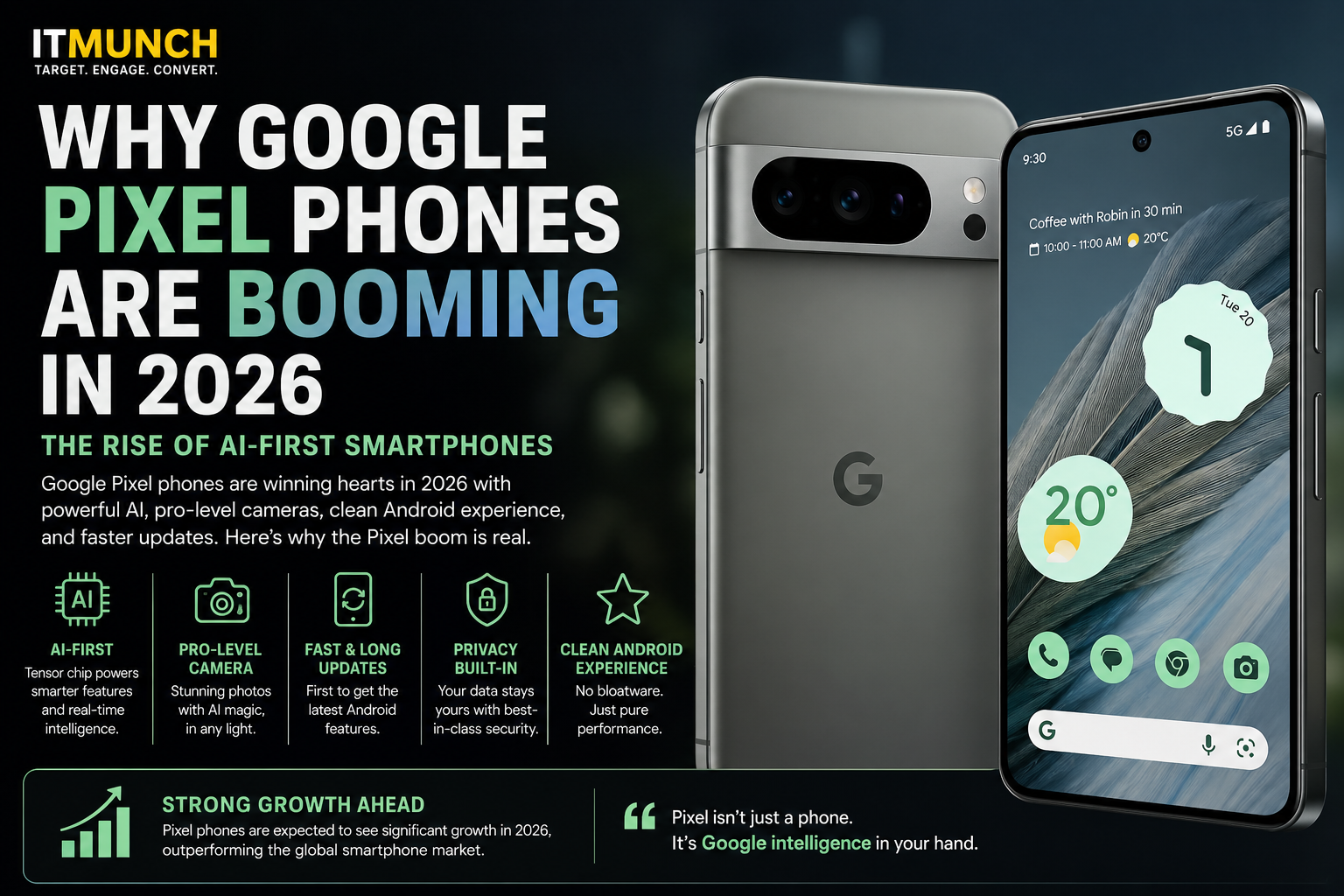
Recent market insights suggest that Pixel phones are expected to see significant growth in 2026, even as the global smartphone market faces a slowdown.
While overall shipments are projected to decline due to rising component costs, Google’s Pixel lineup is moving in the opposite direction. This growth is largely attributed to Google’s long-term investment in hardware, software integration, and AI capabilities.
Unlike many competitors, Google is not just selling a phone. It is selling an ecosystem powered by intelligence.
The AI-First Advantage
What truly sets Pixel apart is its AI-first approach.
At the center of this strategy is Google’s custom Tensor chipset, designed specifically to handle on-device AI tasks. Instead of focusing purely on raw performance benchmarks, Pixel devices prioritize real-world usability—smarter photography, better voice recognition, and contextual assistance.
This shift reflects a broader industry trend where smartphones are becoming intelligence platforms rather than just hardware devices.
With advancements in Android updates and ongoing testing of new OS versions like Android 17, Pixel devices are increasingly positioned as the first to experience cutting-edge features and optimizations.
For users, this means faster updates, smarter features, and a more seamless experience.
Camera Innovation Still Leads the Way
One of the biggest reasons behind Pixel’s popularity continues to be its camera.
Google has consistently focused on computational photography rather than hardware-heavy upgrades. Features like AI-enhanced image processing, real-time adjustments, and advanced HDR capabilities allow Pixel devices to compete with, and often outperform, rivals.
Even mid-range models like the Pixel 10a offer high-end camera capabilities, including a 48 MP primary sensor and advanced image stabilization.
This democratization of premium features is a key driver of adoption.
Users no longer need to spend top-tier prices to get flagship-level photography.
Expanding Market Presence
Another reason for Pixel’s boom is its expanding global footprint.
Historically, Pixel phones were limited in availability, with strong presence mainly in the U.S. and Japan. In recent years, Google has aggressively expanded into new markets, including India and parts of Europe.
This increased accessibility, combined with competitive pricing in mid-range segments, has made Pixel devices more attractive to a broader audience.
At the same time, brand perception has improved. Pixel is no longer seen as an experimental product—it is now viewed as a reliable, premium alternative.
Challenges Still Exist
Despite its growth, the Pixel lineup is not without issues.
Recent reports highlight performance concerns such as lag, boot issues, and battery drain affecting multiple Pixel models.
While Google has acknowledged these problems and is actively working on fixes, they underline an important reality: rapid innovation often comes with growing pains.
Additionally, competition remains intense. Other manufacturers continue to push boundaries in areas like battery technology, hardware innovation, and design.
Pixel’s challenge will be maintaining its momentum while addressing these concerns.
What This Means for Marketers (The iTMunch Angle)
The rise of Pixel phones is not just a hardware story. It is a signal of how consumer expectations are changing.
Users today value:
- Intelligence over raw specs
- Experience over features
- Personalization over standardization
For B2B marketers, this shift mirrors what is happening in digital engagement.
Just as Pixel succeeds by delivering smarter, more contextual experiences, platforms like iTMunch help brands connect with audiences in a more intelligent and intent-driven way.
The lesson is clear. Whether it is smartphones or marketing, success in 2026 depends on understanding user behavior and responding in real time.
Conclusion
Google Pixel’s rise in 2026 is not accidental. It is the result of years of focused investment in AI, user experience, and ecosystem integration.
By prioritizing intelligence over traditional metrics, Google has carved out a unique position in a crowded market.
As the smartphone industry continues to evolve, Pixel’s approach offers a glimpse into the future—one where devices are not just tools, but intelligent companions.
And if current trends are any indication, this is only the beginning of Pixel’s growth story.