5 Benefits of Modular Switches and Sockets in Modern Electrical Design
 Vansh Banthia,
2 hours ago
4 min read
Vansh Banthia,
2 hours ago
4 min read
Electrical design has evolved beyond simple functionality. Modern spaces demand systems that balance safety, adaptability, visual order, and long-term service efficiency. Architects, engineers, and facility managers must select electrical equipment that supports changing load requirements while maintaining structural integrity and operational continuity.
The shift toward smarter layouts and scalable installations has increased the need for components that can be configured, replaced, and maintained with minimal disruption. But a vital question that decision makers often ask is, are modular switches and sockets future-ready? Continue reading to explore how this approach enhances performance and supports sustainable electrical design outcomes, and makes them future-ready.
Key Benefits of Modular Switches and Sockets in Electrical Planning
Modular electrical planning improves adaptability, safety oversight, service efficiency, and lifecycle control across modern residential and commercial environments.
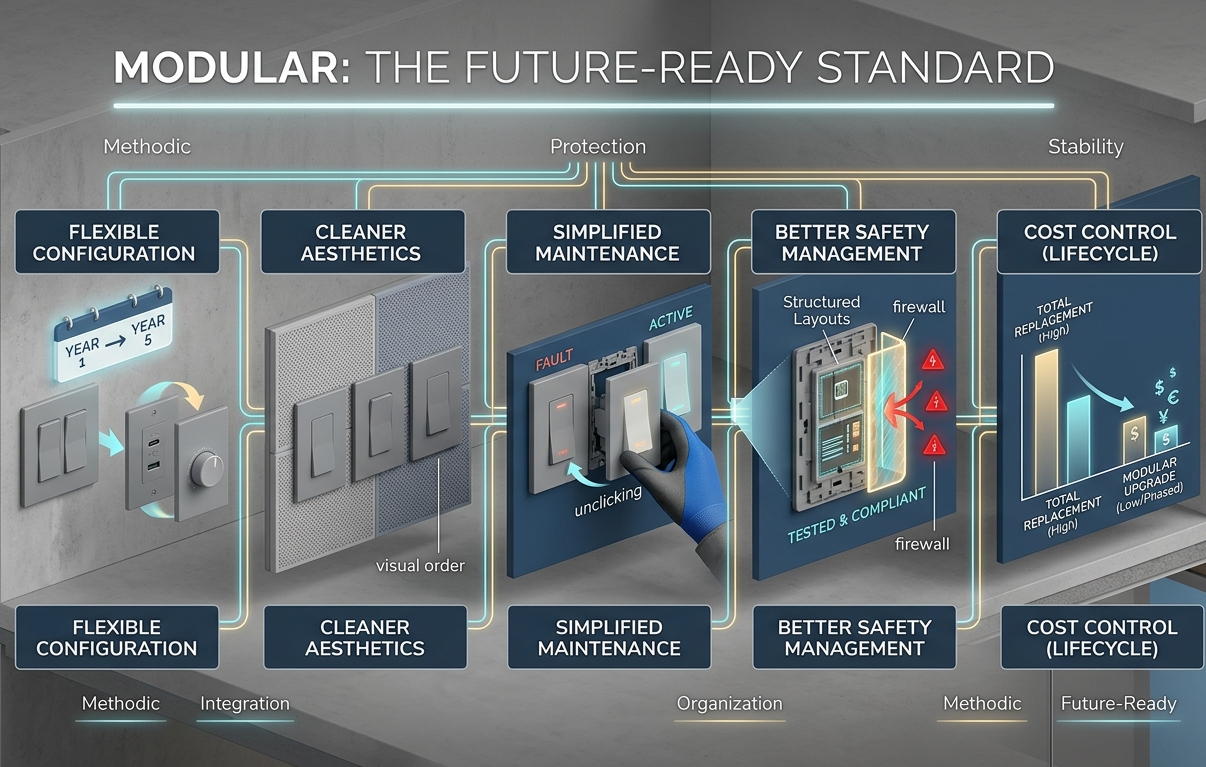
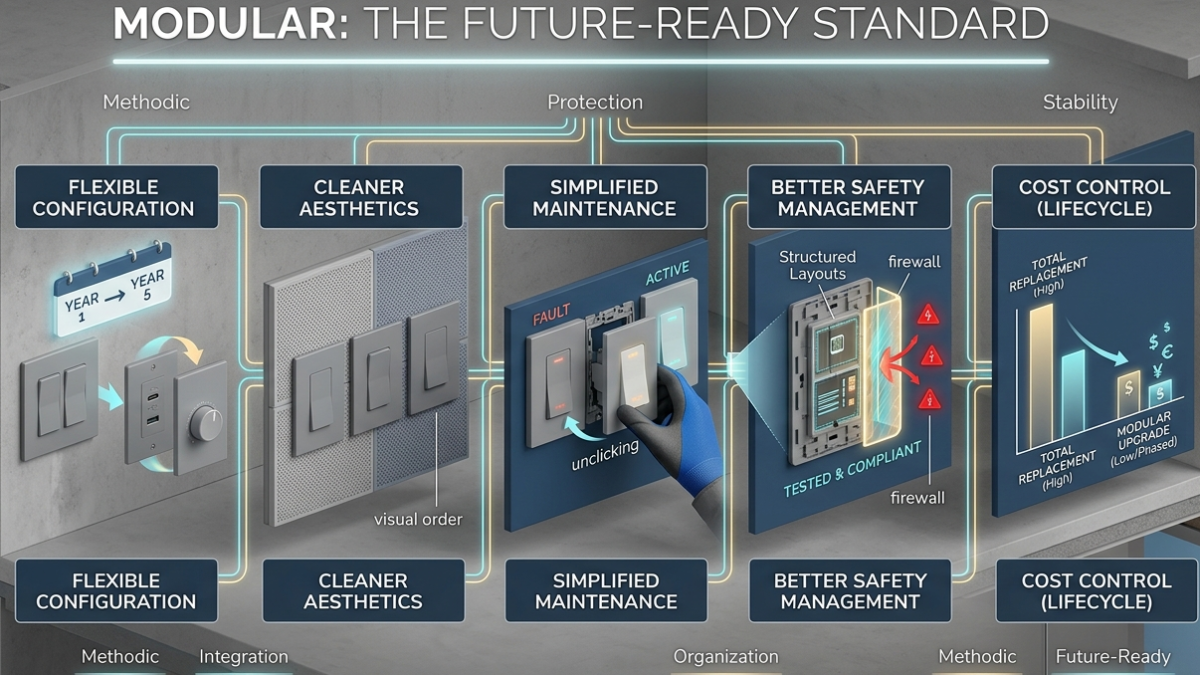
- Flexible Configuration for Changing Requirements
Electrical needs rarely remain static. A home office becomes a study space, a retail unit changes tenants, or a hospital wing is reconfigured to support new devices. Modular switches and sockets make it easier to adjust layouts by swapping modules or reassigning points without redesigning the entire plate.
This flexibility supports planned expansions, improved zoning, and better alignment with evolving loads. By allowing teams to incorporate new devices with minimal disruption, modular switches and sockets help maintain operational continuity while supporting design updates.
- Cleaner Aesthetics With Organized Wiring Outcomes
Electrical design is technical, and it must align with architectural intent. With standardized modules and consistent faceplate geometry, modular switches and sockets help create uniform alignment across walls and work surfaces.
The result is a cleaner visual finish, especially in open areas where fittings remain in view. From a practical standpoint, this standardization supports better labeling and clearer segregation of circuits during installation.
When installers employ consistent module placement, modular switches and sockets can contribute to tidier back-box organization and fewer avoidable rework cycles.
- Simplified Maintenance and Faster Replacement
Maintenance efficiency directly affects building uptime and safety outcomes. When a single unit fails, technicians should be able to isolate and replace it quickly. Modular switches and sockets are designed for targeted replacement, allowing a single module to be serviced without removing the entire assembly.
This reduces labor time, limits disturbance to adjacent fittings, and supports safer troubleshooting. In many environments, service teams must restore power points quickly to keep essential devices running.
By supporting rapid changeouts, modular switches and sockets help reduce downtime and improve the overall service experience.
- Better Safety Management Through Standardization
Safety performance depends on proper selection, correct installation, and consistent inspection routines. Standardized designs make it easier to train technicians, conduct checks, and document compliance.
Modular switches and sockets support structured layouts where circuit identification, load distribution, and point usage can be planned with clarity. This is particularly useful in commercial spaces that require systematic testing and preventive maintenance.
When teams deploy electrical instruments that follow consistent specifications, it becomes simpler to identify wear indicators and replace components before failures occur. With disciplined selection and installation, modular switches and sockets can support a stronger safety management approach across varied site conditions.
- Cost Control Across the Product Lifecycle
Upfront pricing is only one part of electrical planning. Long-term cost is shaped by service frequency, replacement time, and the ease of upgrading spaces. Modular switches and sockets can help control lifecycle expense by reducing the need for full-plate replacement and limiting repair time during faults.
They also support planned upgrades in phases, which helps facility managers allocate budgets with less disruption. For larger sites, standardizing on modular switches and sockets can simplify spares inventory, reduce procurement complexity, and support consistent training for technicians who service multiple locations.
Reducing Operational Risk With Consistent Specifications and Testing
Even the best design can underperform if electrical devices are sourced without due diligence. Project teams benefit from working with reputable energy brands that maintain strong quality controls, transparent technical documentation, and dependable after-sales support.
Reliable providers deliver consistent specifications, disciplined testing, and product assistance that protect installed electrical equipment. When modular switches and sockets are deployed across a property portfolio, this approach supports standardization and reduces operational risk.
This strengthens long-term maintainability, ensuring modular switches and sockets deliver safety, serviceability, and durability.
5 Benefits of Modular Switches and Sockets in Modern Electrical Design