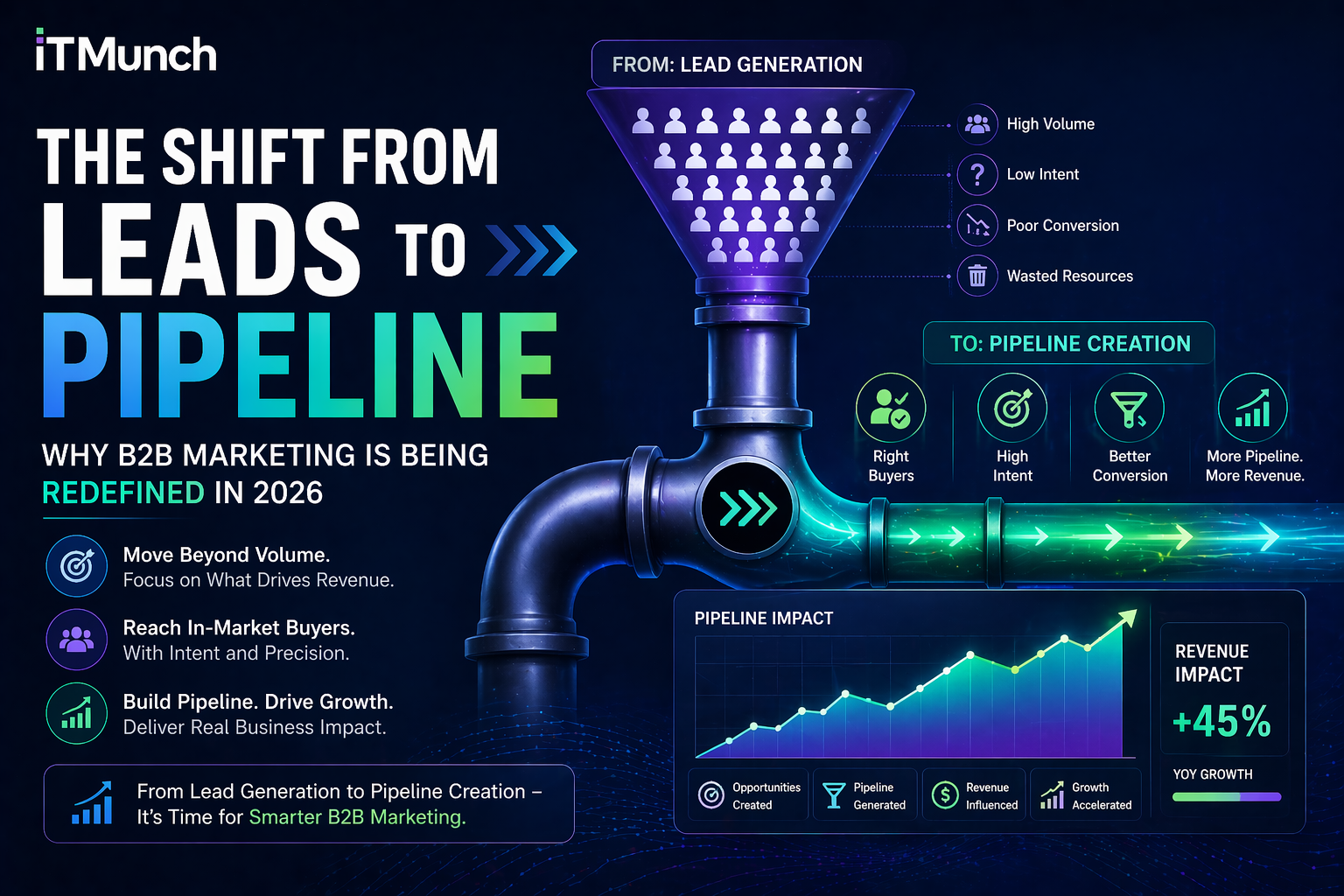
The Shift from Leads to Pipeline: Why B2B Marketing is Being Redefined in 2026
 Vansh Banthia,
6 months ago
5 min read
Vansh Banthia,
6 months ago
5 min read
Introduction: The Metric That Lost Its Meaning
For years, lead generation was the centerpiece of B2B marketing.
Weekly reports highlighted the number of leads acquired. Campaign success was measured by volume. Targets were built around how many contacts entered the funnel.
On paper, everything made sense.
But over time, a gap began to appear.
Marketing teams were generating thousands of leads, yet sales teams were struggling to convert them into actual opportunities. Pipelines weren’t growing at the same pace as lead counts. Revenue impact remained inconsistent.
This disconnect forced a difficult realization: not all leads are valuable, and not all activity translates into growth.
In 2026, this realization is reshaping how B2B marketing is defined.
Why the Lead-Centric Model is Breaking Down
The traditional lead generation model was built on the assumption that more leads would naturally lead to more sales.
That assumption worked when markets were less crowded and buyers relied more heavily on vendors for information. Today, neither of those conditions exists.
Buyers now conduct extensive research on their own. They engage with content across multiple channels, compare options independently, and often reach out only when they are close to making a decision.
This means that many of the leads captured through traditional campaigns are either too early in their journey or not relevant at all.
As a result, sales teams spend time filtering rather than selling.
The outcome is inefficiency across the entire funnel.
The Rise of Pipeline-Focused Thinking
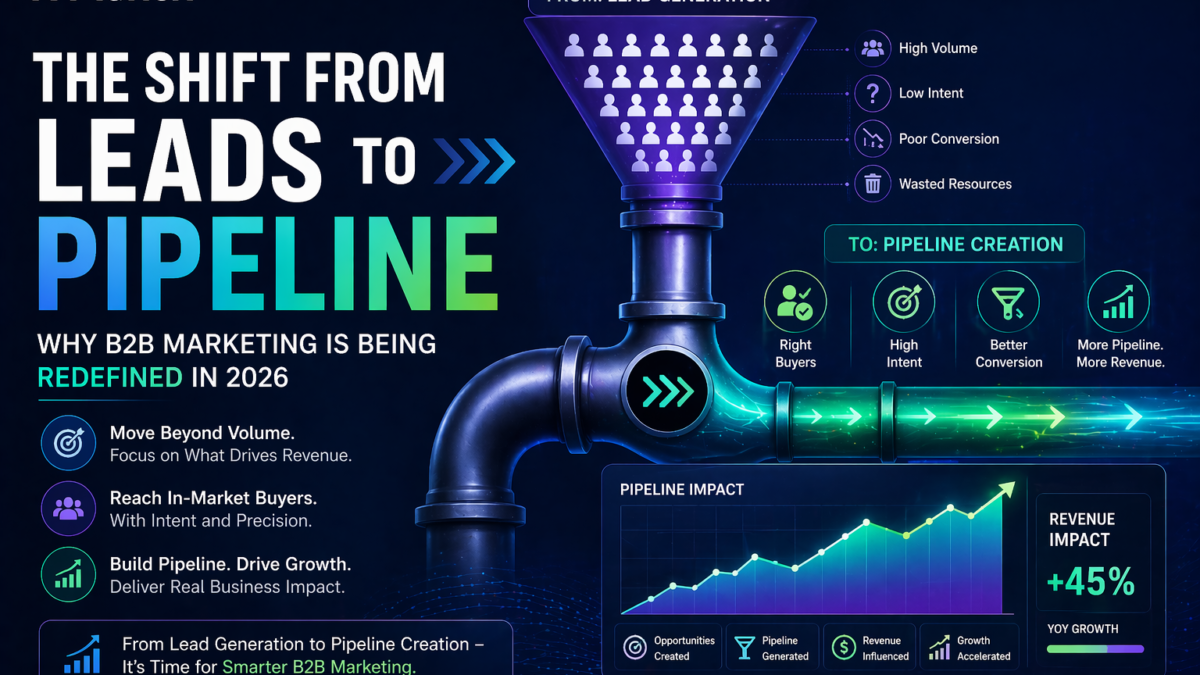
To address this, organizations are shifting their focus from leads to pipeline.
This may sound like a subtle change, but it represents a fundamental shift in mindset.
Instead of asking, “How many leads did we generate?” teams are asking, “How many real opportunities did we create?”
This changes how success is measured.
Marketing is no longer evaluated purely on activity, but on its contribution to revenue. Campaigns are judged based on how effectively they move prospects toward a decision, not just how many contacts they attract.
This shift brings marketing and sales closer together, aligning both teams around a shared objective.
What Defines a Pipeline-Driven Strategy
A pipeline-driven approach is built on precision and alignment.
It starts with identifying the right audience—not just based on demographics, but based on intent. Companies that are actively researching or showing signs of interest become the priority.
Engagement is then designed to match the buyer’s stage in the journey. Early-stage prospects receive educational content, while those closer to a decision are presented with more specific, solution-oriented information.
The goal is to guide prospects forward, not just capture their information.
This requires a more coordinated effort across channels, with consistent messaging and clear context at every touchpoint.
The Role of Intent and Timing
One of the most important elements of pipeline-driven marketing is timing.
Reaching a prospect at the right moment can significantly increase the likelihood of engagement.
Intent data plays a key role here, helping identify when a company is actively exploring a solution. This allows marketers to focus their efforts where they are most likely to have an impact.
Instead of broad outreach, campaigns become more targeted and responsive.
This not only improves efficiency but also enhances the experience for the buyer, who receives relevant information when it matters most.
Why Content Alone Is Not Enough
Content remains a critical component of B2B marketing, but its effectiveness depends heavily on distribution and context.
Even the most well-crafted asset will fail if it does not reach the right audience or if it is delivered at the wrong time.
In a pipeline-driven model, content is used strategically to support progression. It is not just created—it is placed, timed, and aligned with specific objectives.
This is where targeted distribution channels and platforms become essential, ensuring that content reaches high-value prospects rather than being lost in a crowded digital environment.
Where iTMunch Fits Into This Shift
As B2B marketing evolves toward pipeline-focused strategies, platforms like iTMunch are becoming increasingly relevant.
Rather than emphasizing lead volume, iTMunch is built around connecting brands with in-market buyers through intent-driven content distribution and targeted engagement.
This approach aligns with the core principles of pipeline generation—precision, timing, and relevance.
By focusing on quality over quantity, it helps bridge the gap between marketing activity and actual business outcomes.
The Impact on Teams and Execution
This shift is not just changing strategy—it is changing how teams operate.
Marketing and sales must work more closely, sharing insights and aligning efforts throughout the buyer journey. Data becomes more central, guiding decisions and measuring performance.
At the same time, expectations are increasing.
It is no longer enough to run campaigns and report metrics. Teams are expected to deliver tangible results, with clear visibility into how their efforts contribute to revenue.
This creates both a challenge and an opportunity.
Organizations that adapt quickly can build more efficient, effective systems. Those that don’t risk falling behind.
Conclusion: A More Accountable Future
The shift from leads to pipeline reflects a broader trend in B2B marketing—greater accountability.
Businesses are no longer satisfied with activity alone. They want outcomes. They want clarity. They want growth that can be measured and sustained.
This requires a different approach, one that prioritizes quality, alignment, and strategic execution.
In 2026, success in B2B marketing is not defined by how much you do.
It is defined by how much impact you create.
And that impact is measured not in leads, but in pipeline.