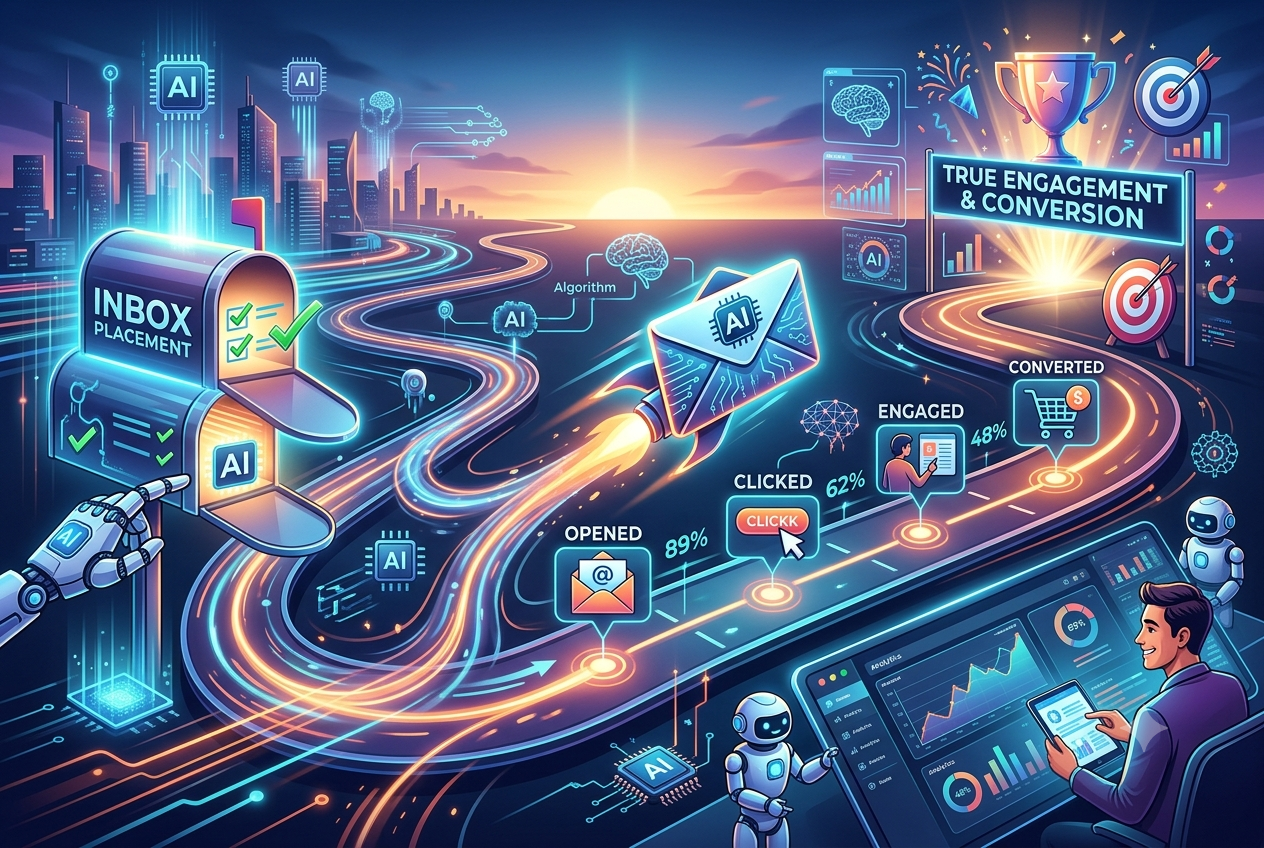
Email Marketing Services in the Age of AI: Why Inbox Placement Is No Longer the Finish Line
 Purva Wankhade,
3 months ago
5 min read
Purva Wankhade,
3 months ago
5 min read
For years, marketers celebrated a simple victory: if an email landed in the recipient’s inbox instead of the spam folder, the campaign was considered successful. Deliverability was the benchmark, open rates were the scorecard, and every optimization revolved around getting that coveted inbox placement.
That definition of success is rapidly changing.
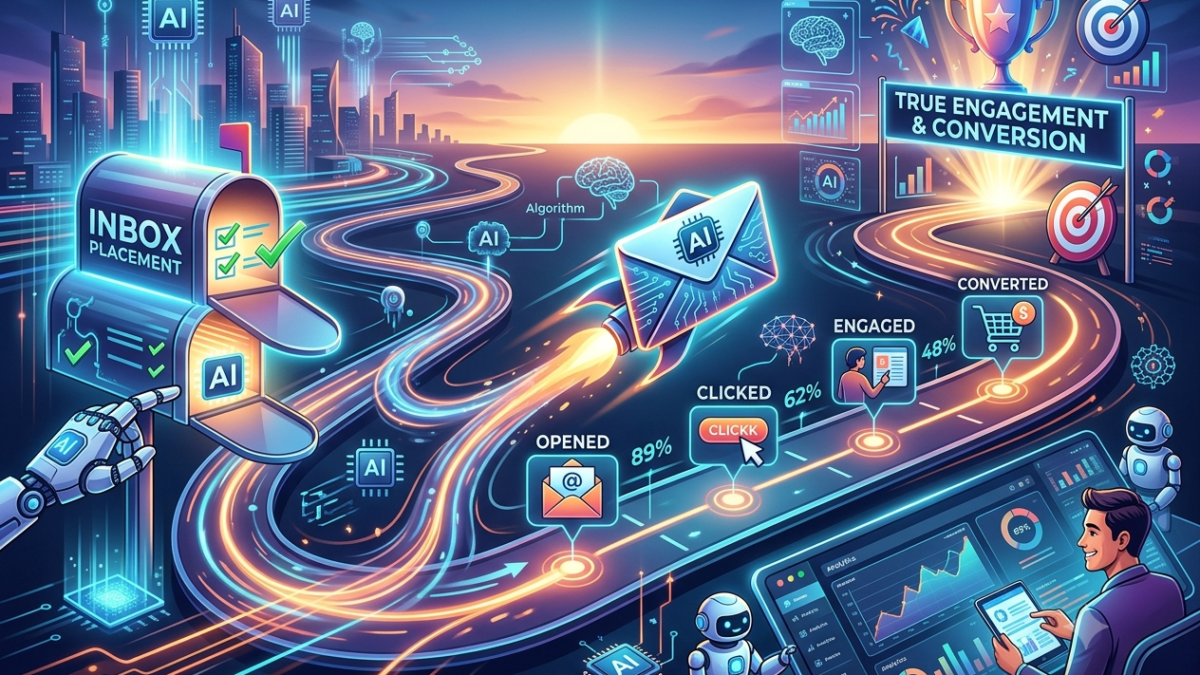
Today, Email Marketing exists in an ecosystem shaped by artificial intelligence, increasingly sophisticated spam detection, evolving privacy regulations, and inboxes that are becoming smarter than ever before. Landing in the inbox is no longer the final destination it’s merely the beginning of the customer’s journey.
For B2B decision-makers, this shift presents an important strategic challenge. As AI transforms how recipients interact with email and how providers evaluate it, organizations must rethink what truly defines an effective email strategy.
AI Is Reshaping the Inbox Before Your Customer Even Opens the Email
The inbox has become far more intelligent than most marketers realize.
Email providers are no longer relying solely on traditional spam filters or keyword detection. Machine learning models now evaluate sender reputation, engagement history, recipient behavior, authentication standards, content quality, and contextual relevance before deciding how prominently a message should appear. Similar to how machine learning is improving SEO by helping search engines better understand user intent and content quality, email providers are using intelligent algorithms to reward relevant, trustworthy communications with better inbox placement.
In many cases, AI is determining whether an email deserves attention before the recipient ever sees it.
This evolution comes at a time when major email platforms continue investing heavily in AI-powered experiences. Features such as automated email summaries, intelligent categorization, priority inboxes, contextual recommendations, and AI-assisted responses are changing how professionals consume information. Instead of reading every message individually, users increasingly rely on AI to surface the emails that appear most valuable.
This creates a new reality for enterprise marketers.
An email may technically reach the inbox, yet still receive little visibility if AI systems determine that other messages better match the recipient’s interests or priorities.
The challenge is no longer avoiding spam filters.
It’s becoming worthy of AI-driven attention.
This is where Email Marketing is evolving from a delivery exercise into an experience strategy. Every campaign must provide genuine value, clear relevance, and contextual timing rather than relying solely on promotional messaging.
Engagement Has Become the New Deliverability
The metrics that once defined successful campaigns are gradually losing their dominance.
In email marketing, open rates have already become less reliable due to privacy updates introduced across major platforms, making them an imperfect measure of audience interest. At the same time, AI-generated previews and automated email summaries mean recipients can sometimes understand a message without ever opening an email in the traditional sense.
As a result, organizations are shifting their attention toward richer engagement signals.
The questions now sound different.
Did the email encourage a meaningful conversation?
Did it help move a buying committee closer to a decision?
Did it answer a question before the prospect needed to ask it?
Did it establish trust rather than simply generate a click?
For B2B organizations with complex sales cycles, these outcomes matter far more than vanity metrics.
Modern Email Marketing is increasingly integrated with CRM systems, customer data platforms, website behavior, and buying intent signals. AI can analyze these inputs to determine not only who should receive an email, but also when it should be delivered, what content should be included, and how messaging should evolve based on previous interactions.
This represents a significant departure from traditional batch-and-blast campaigns.
Instead of broadcasting the same message to thousands of contacts, enterprises are creating adaptive communication journeys that feel more like ongoing conversations than isolated campaigns.
The result is greater personalization – but not personalization in the superficial sense of inserting a first name into the subject line. Instead, AI enables relevance based on industry challenges, buying stage, organizational priorities, and real-time behavioral signals.
The Future of Email Marketing Is Built on Trust, Intelligence, and Timing
One of the biggest misconceptions surrounding AI is that it will replace human creativity in marketing.
The opposite is proving true.
As AI automates segmentation, scheduling, optimization, and performance analysis, the competitive advantage shifts toward strategy, storytelling, and customer understanding. Technology can determine the best time to send an email, but it cannot replace authentic insight into what business leaders genuinely care about.
This is particularly important in B2B markets, where purchasing decisions often involve multiple stakeholders, lengthy evaluation processes, and significant investments.
Every email becomes an opportunity to educate rather than interrupt.
Organizations that consistently share research, industry insights, practical guidance, and valuable perspectives are more likely to build long-term credibility than those relying solely on promotional messaging.
AI can help deliver the right content to the right audience, but trust still has to be earned.
Looking ahead, the role of email marketing services will continue expanding beyond campaign execution. They will become increasingly intelligent communication channels capable of responding to customer behavior, integrating with broader revenue operations, and supporting personalized buyer journeys across every stage of the sales funnel.
Success will no longer be measured simply by whether an email reached someone’s inbox.
It will be measured by whether it reached the right person with the right message at the right moment—and whether that interaction contributed to a meaningful business relationship.
For B2B decision-makers, this shift requires a new mindset. Rather than viewing email as a standalone marketing tactic, it should be seen as part of a broader trust-building ecosystem where AI enhances relevance but human expertise shapes the conversation.
The future belongs to organizations that understand this balance.
In an age where inboxes are becoming smarter and attention is increasingly filtered by algorithms, the brands that thrive won’t necessarily be those sending the most emails. They’ll be the ones creating communications that AI recognizes as valuable and recipients genuinely want to engage with.
Because in the next chapter of Email Marketing, inbox placement isn’t the finish line, it’s simply the invitation to begin a conversation.