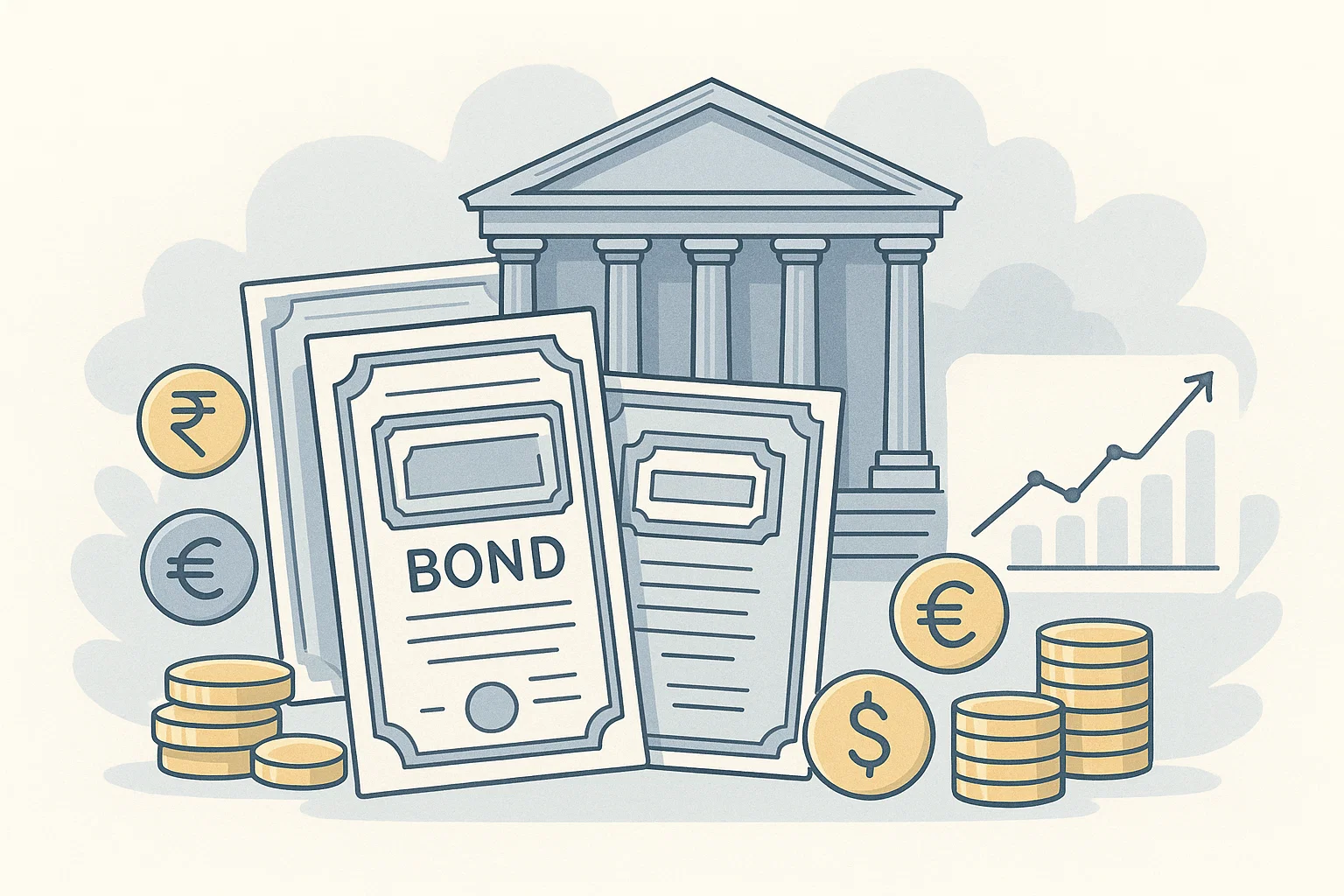
What Are Bonds? A Beginner’s Guide for Fintech Investors
 Gaurav Uttamchandani,
9 months ago
4 min read
Gaurav Uttamchandani,
9 months ago
4 min read
Table of Contents
Introduction
As fintech reshapes how we manage money, traditional investment options like bonds are gaining new relevance—and accessibility. Once the domain of seasoned investors or institutions, bonds are now just a few taps away through apps like Zerodha, INDmoney, and Wint Wealth.
But what exactly are bonds, and why should modern investors care? Whether you’re new to investing or looking to diversify your portfolio beyond stocks and crypto, understanding bonds is essential. This beginner-friendly guide will walk you through the basics of bonds, their benefits, and how fintech platforms are making them more approachable than ever.
What Are Bonds?
A bond is essentially a loan you give to a government, corporation, or other entity. In return, the issuer promises to pay you regular interest (called a coupon) and return your initial investment (principal) after a fixed period (maturity).
Think of it this way: stocks make you an owner, bonds make you a lender.
Key Bond Terms:
- Principal: The amount you invest or lend.
- Coupon Rate: The interest the issuer pays you, usually annually or semi-annually.
- Maturity: The period after which your principal is returned.
- Issuer: The entity borrowing your money.
Types of Bonds
There are several types of bonds, each with different risk levels and purposes:
- Government Bonds: Issued by national governments. For example, RBI’s G-Secs in India or U.S. Treasury Bonds. These are considered low-risk.
- Corporate Bonds: Issued by companies to raise capital. Riskier than government bonds, but offer higher returns.
- Municipal Bonds: Issued by state or local governments. Often come with tax benefits.
- Green Bonds: Used to fund environmentally sustainable projects.
Why Should You Invest in Bonds?
For many fintech-first investors, bonds offer a stable, predictable, and lower-risk complement to riskier assets like equities and crypto.
Benefits Include:
- Steady Income: Coupon payments provide regular returns.
- Lower Risk: Compared to equities, bonds are more secure.
- Diversification: Bonds help balance a stock-heavy portfolio.
- Tax Advantages: Some government or municipal bonds are tax-exempt.
How Fintech Is Changing Bond Investing
Fintech platforms are democratizing access to bonds by removing paperwork, lowering investment minimums, and providing educational resources.
Popular Platforms in India:
- Zerodha + GoldenPi: Offers curated bonds with ratings and yield data.
- INDmoney: Tracks your bond and debt investments alongside other assets.
- Wint Wealth: Specializes in high-yield secured bonds, starting from ₹10,000.
These platforms let users:
- Browse bonds like shopping online.
- View real-time Yield to Maturity (YTM).
- Filter by tenure, credit rating, or issuer.
- Invest with just a few taps—no brokers or forms.
Steps to Start Investing in Bonds (via Fintech)
- Choose a platform (e.g., Wint Wealth, Zerodha).
- Complete digital KYC.
- Browse bonds by interest rate, credit rating, or sector.
- Invest via UPI, net banking, or wallet.
- Track returns through the app’s dashboard.
Tip: Look for bonds rated “AA” or above to reduce default risk.
The Future: Tokenized Bonds on Blockchain
Blockchain is also redefining how bonds are issued and traded.
Tokenized bonds represent traditional bonds issued on blockchain platforms, making them:
- Faster to settle
- Cheaper to trade
- Accessible to global investors
Examples include the European Investment Bank’s Ethereum-based bond and platforms like BondEvalue, which fractionalize bond investments for retail investors.
Risks to Consider
Like all investments, bonds carry risks:
- Interest Rate Risk: Bond prices fall when interest rates rise.
- Credit Risk: Issuer may default (especially with low-rated corporate bonds).
- Liquidity Risk: Some bonds may be hard to sell before maturity.
Always check credit ratings (e.g., from CRISIL, ICRA) and understand lock-in periods before investing.
Final Thoughts
With the rise of fintech platforms, bond investing is no longer limited to wealth managers or banks. Whether you’re building a long-term portfolio or seeking safer alternatives to volatile assets, bonds offer a compelling mix of stability and returns.
And the best part? With tools like Wint Wealth or INDmoney, you can start small, learn as you go, and grow confidently.
Ready to get started with bond investing through fintech?
Explore top-rated bond platforms, compare yields, and take your first step toward a more balanced portfolio today.
See Also: The Future of Debit Cards: From Plastic to Digital Powerhouses