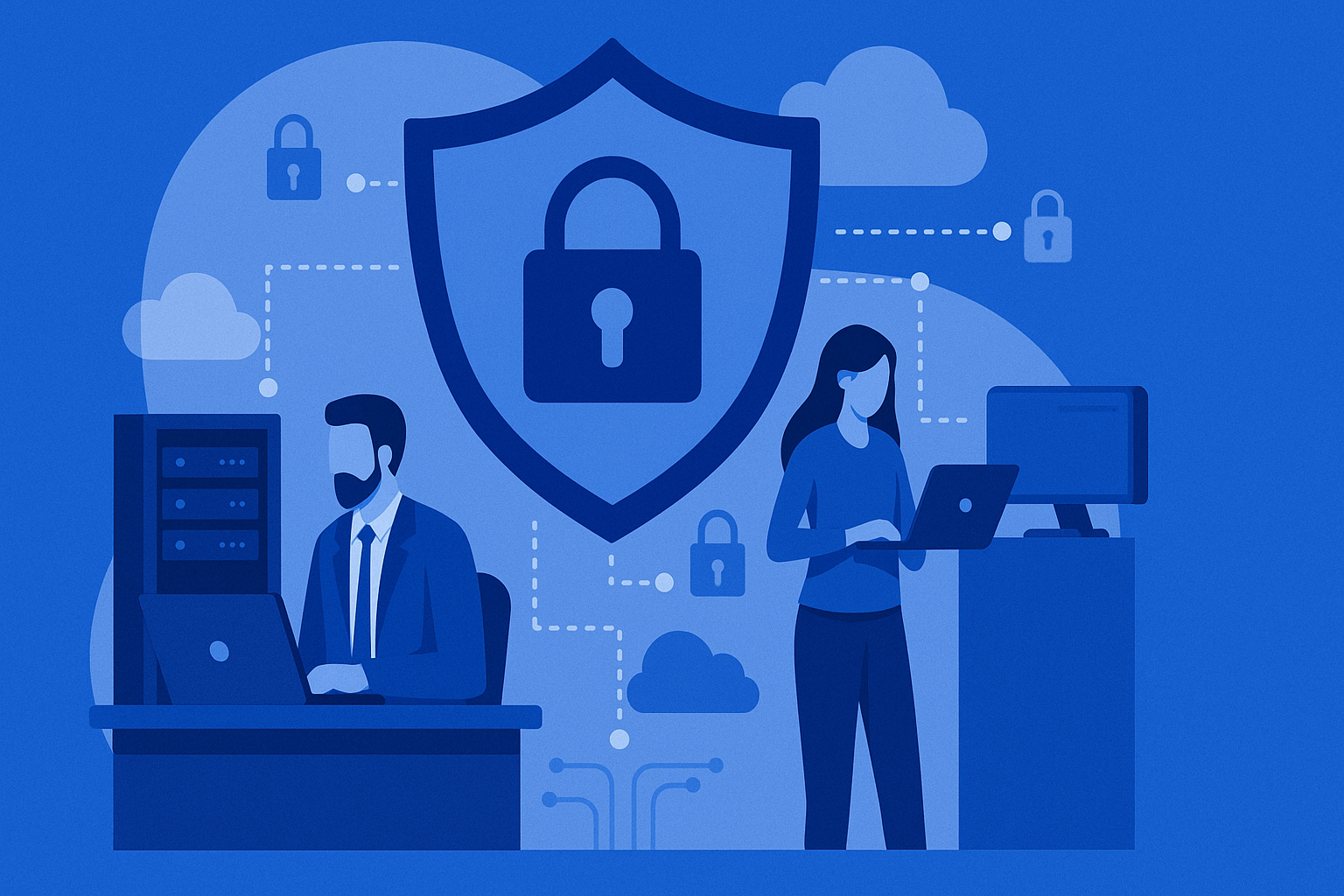
Cybersecurity for Hybrid Workforces: IT Teams’ New Reality
 Gaurav Uttamchandani,
12 months ago
4 min read
Gaurav Uttamchandani,
12 months ago
4 min read
Table of Contents
Introduction
The workplace has fundamentally changed. With the hybrid model now mainstream, employees split their time between home and office. While this flexibility drives productivity and satisfaction, it also creates a new cybersecurity battleground.
For IT teams, traditional perimeter-based security no longer works. Instead, they must secure users, devices, and data everywhere—on-premises, in the cloud, and at home. This blog explores how IT departments are adapting to the complex cybersecurity challenges of hybrid work and why a multi-layered approach is the new standard.
The Security Risks Unique to Hybrid Work
Hybrid work introduces new vulnerabilities:
- Inconsistent network security: Home Wi-Fi setups vary greatly in strength and protection.
- Device proliferation: Employees often use both personal and company devices.
- Cloud dependency: More tools = more login points = more risk.
- Phishing and social engineering: Increased email and chat use creates more exposure.
With employees dispersed, cyber attackers have a broader attack surface and often target the weakest link—human error. The growing popularity of collaboration tools also means that a single compromised credential could potentially unlock multiple systems.
Zero Trust: The New Security Standard
The response to perimeter-less work is Zero Trust Architecture (ZTA). It operates under a simple principle: never trust, always verify.
Key components of Zero Trust:
- Identity verification at every access point
- Multi-factor authentication (MFA) as default
- Least privilege access to minimize exposure
- Continuous monitoring to detect anomalies
IT teams are shifting from VPN-centric models to context-aware access, ensuring that only the right users, under the right conditions, access sensitive data. By integrating identity governance and real-time behavioral analytics, Zero Trust helps enforce policies even in highly dynamic work environments.
Securing Endpoints & BYOD Devices
Endpoints—including laptops, phones, and tablets—are now frontline assets.
To secure them:
- Use Endpoint Detection and Response (EDR) tools
- Enforce mobile device management (MDM) policies
- Segment personal and work environments on BYOD devices
- Apply remote wipe and auto-encryption protocols
Platforms like Microsoft Intune, VMware Workspace ONE, and CrowdStrike Falcon are widely adopted to manage endpoint visibility and control. These tools provide centralized dashboards that allow IT teams to push updates, block malicious apps, and monitor suspicious activity across thousands of devices.
Cloud Security & SaaS Management
Hybrid workforces rely heavily on SaaS platforms like Google Workspace, Zoom, Slack, and Salesforce.
Securing these cloud-based tools requires:
- Single sign-on (SSO) and MFA integrations
- CASBs (Cloud Access Security Brokers) to monitor shadow IT
- Regular audit trails and compliance reports
- Secure APIs for third-party integrations
Solutions like Okta, Netskope, and Zscaler help enforce consistent security across cloud tools. These platforms offer risk-based access policies and anomaly detection, helping teams respond faster to threats in a decentralized architecture.
Training: Building a Human Firewall
Technology alone isn’t enough. Human behavior is a major risk factor in hybrid settings.
IT teams must:
- Run regular phishing simulations
- Conduct security awareness training
- Offer real-time threat alerts through internal comms
- Promote a culture of shared responsibility
By making cybersecurity a company-wide initiative, organizations empower employees to report issues proactively, recognize social engineering attempts, and maintain secure digital hygiene—even outside the office network.
Compliance, Risk & Governance
Hybrid work complicates compliance with regulations like GDPR, HIPAA, PCI DSS, and SOC 2.
To stay compliant:
- Document and update security policies regularly
- Perform continuous risk assessments
- Classify and protect sensitive data across platforms
- Partner with legal and compliance teams for audits
Security governance must scale with the hybrid model—supporting productivity without exposing the business to fines or breaches. This involves automated policy enforcement and ongoing training tailored to regulatory needs.
Final Thoughts: Hybrid Work Is Here to Stay—So Is the Cyber Risk
Cybersecurity in a hybrid world isn’t just an IT issue—it’s a business imperative. The decentralized nature of work demands a proactive, layered defense strategy that blends people, processes, and technology.
From Zero Trust frameworks to cloud-native security tools and employee training, IT teams must build resilience into every digital touchpoint. As hybrid work becomes the norm, securing it must become second nature. Proactive IT leaders will not only defend against threats but also empower employees to work securely—anytime, anywhere.
Call-to-Action (CTA)
Want deeper insights into hybrid IT strategy and security innovation?
You May Also Like: Julius AI: Your Ultimate AI Data Analyst for Effortless Insights