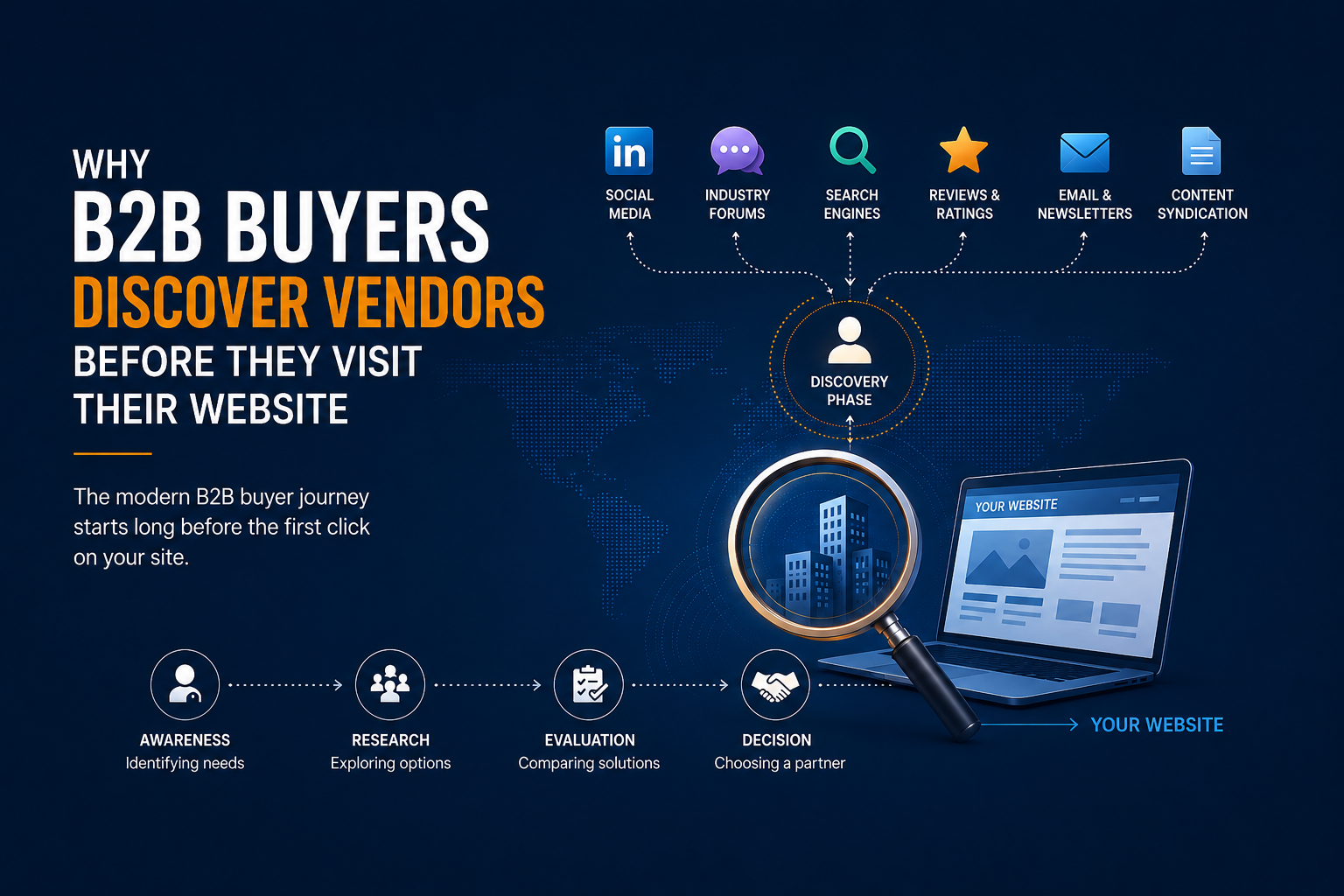
Why B2B Buyers Discover Vendors Before They Visit Their Website
 Purva Wankhade,
3 months ago
5 min read
Purva Wankhade,
3 months ago
5 min read

For years, marketers viewed a company website as the beginning of the buyer journey. Traffic arrived through search engines, visitors explored product pages, downloaded resources, and gradually moved through the sales funnel. Website analytics became the primary lens through which businesses measured awareness and engagement.
That journey is rapidly evolving.
Today, many B2B buyers have already formed an opinion about a vendor long before they ever land on its website. They encounter brands through AI-generated search results, LinkedIn discussions, analyst reports, industry newsletters, podcasts, online communities, review platforms, executive interviews, and trusted third-party publications. By the time they click a company’s homepage, much of their research has already taken place elsewhere. This is why content syndication plays a critical role in shaping perceptions. Understanding the impact of content syndication is essential for modern marketers. The essence of effective outreach lies in recognizing the importance of content syndication in today’s digital landscape.
This shift is changing how enterprises think about visibility. Instead of asking, “How do we drive more website traffic?” forward-looking organizations are asking a more important question: “Where are buyers discovering us before they reach our website?”
That is where content syndication is becoming increasingly relevant not simply as a lead generation tactic, but as a strategy for ensuring valuable insights appear wherever modern buyers consume information. Embracing content syndication can transform how businesses engage with their audience, leading to stronger connections and improved outcomes.
The Modern B2B Buying Journey Begins Outside Your Website
The traditional marketing funnel assumed that buyers actively searched for vendors and visited websites early in their research process. Today’s enterprise purchasing behavior tells a different story.
Decision-makers often begin by asking AI-powered search engines broad business questions rather than searching for specific companies. They explore discussions on LinkedIn, read independent industry publications, compare vendors through review platforms, and seek recommendations from peers in professional communities. Many also consume thought leadership through newsletters, webinars, podcasts, and digital events before considering a vendor directly.
This fragmented discovery process has become even more pronounced with the rise of AI-driven search experiences. Instead of presenting only a list of links, AI search tools increasingly summarize information from multiple trusted sources, giving buyers quick answers without requiring them to visit individual websites immediately.
For enterprise brands, this changes the rules of visibility.
If valuable insights exist only on a corporate website, they may never become part of the conversations where buyers are actually researching solutions. Organizations need their expertise to appear across the wider digital ecosystem.
This is where Content syndication plays a strategic role.
Rather than limiting high-value content to owned channels, businesses are increasingly distributing research reports, executive perspectives, industry insights, and educational resources across trusted third-party platforms where their audience is already engaged.
The objective isn’t simply to increase reach.
It’s to ensure expertise becomes discoverable wherever buying decisions begin.
Trust Is Built Across Multiple Digital Touchpoints
Enterprise purchasing decisions rarely depend on a single interaction.
A technology leader evaluating new software may first encounter a company’s research in an industry publication. Weeks later, they might hear an executive speak on a podcast, read customer perspectives on LinkedIn, discover the brand through AI-generated search results, and only then decide to visit the company’s website.
Each interaction strengthens familiarity.
Each trusted mention reduces uncertainty.
Collectively, these touchpoints create digital credibility long before a sales conversation begins.
This is why modern B2B marketing is shifting away from thinking exclusively about channels and toward thinking about influence ecosystems.
The most successful organizations aren’t necessarily producing the largest volume of content. They’re ensuring their expertise appears consistently across multiple trusted environments where decision-makers naturally seek information.
Effective Content syndication supports this approach by extending the life and reach of valuable assets. Instead of publishing an insightful report once and hoping buyers discover it organically, enterprises are finding ways to distribute that knowledge through industry media, partner publications, professional networks, and relevant platforms that align with buyer interests.
Importantly, this strategy also reflects changing buyer expectations.
Business leaders are becoming increasingly skeptical of purely promotional messaging. They prefer educational content that helps them understand market trends, emerging technologies, regulatory changes, and operational challenges before engaging with vendors.
Organizations that consistently contribute meaningful insights across trusted platforms position themselves as credible industry voices rather than companies simply seeking attention.
Visibility Is No Longer About Owning Attention – It’s About Earning Presence
One of the biggest shifts in B2B marketing is that discoverability is becoming decentralized.
Buyers no longer consume information from one place.
They move fluidly between AI search experiences, social platforms, analyst research, newsletters, communities, review websites, industry publications, webinars, and podcasts throughout their decision-making journey.
This creates both a challenge and an opportunity.
Brands that rely exclusively on their own websites risk becoming less visible in an increasingly distributed digital landscape. Conversely, organizations that embrace broader knowledge distribution can remain present throughout the buyer journey without interrupting it.
This doesn’t mean publishing content everywhere indiscriminately.
It means understanding where target audiences seek trusted information and ensuring valuable expertise is available in those environments.
That is why Content syndication is evolving beyond lead generation campaigns. It is becoming a broader strategy for expanding thought leadership, increasing brand discoverability, and supporting the way modern buyers actually research enterprise solutions.
Artificial intelligence is reinforcing this trend rather than replacing it. AI systems increasingly surface information that has been validated, discussed, and referenced across multiple reputable sources. Content that exists only within a company’s own ecosystem may have fewer opportunities to influence these broader knowledge networks.
For B2B decision-makers, this changes the marketing conversation.
Instead of measuring success solely through website visits, organizations should evaluate how frequently their expertise appears before buyers ever arrive at their digital doorstep.
Because by the time a prospect reaches your website, the most important part of the evaluation may already be underway.
The future of B2B marketing belongs to organizations that recognize this shift. They understand that trust is built long before a homepage visit, authority is established across multiple digital environments, and meaningful relationships begin wherever buyers choose to learn.
In that future, Content syndication is no longer just about distributing content more widely. It is about ensuring valuable expertise reaches the right audience at the right stage of the buying journey often well before they ever decide to visit your website.