AI Digital Twins: How Virtual Replicas Are Transforming Business and Technology
 Vansh Banthia,
4 weeks ago
4 min read
Vansh Banthia,
4 weeks ago
4 min read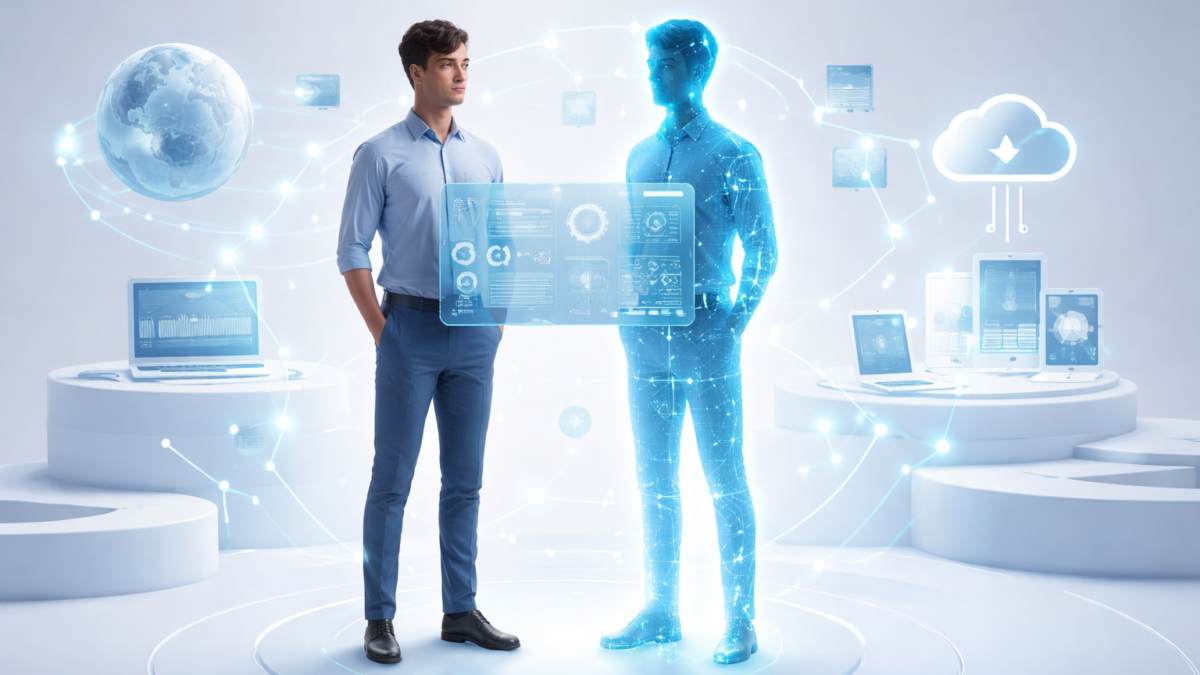
As businesses increasingly adopt advanced technologies to improve efficiency and decision-making, digital twin technology powered by artificial intelligence is gaining significant attention.
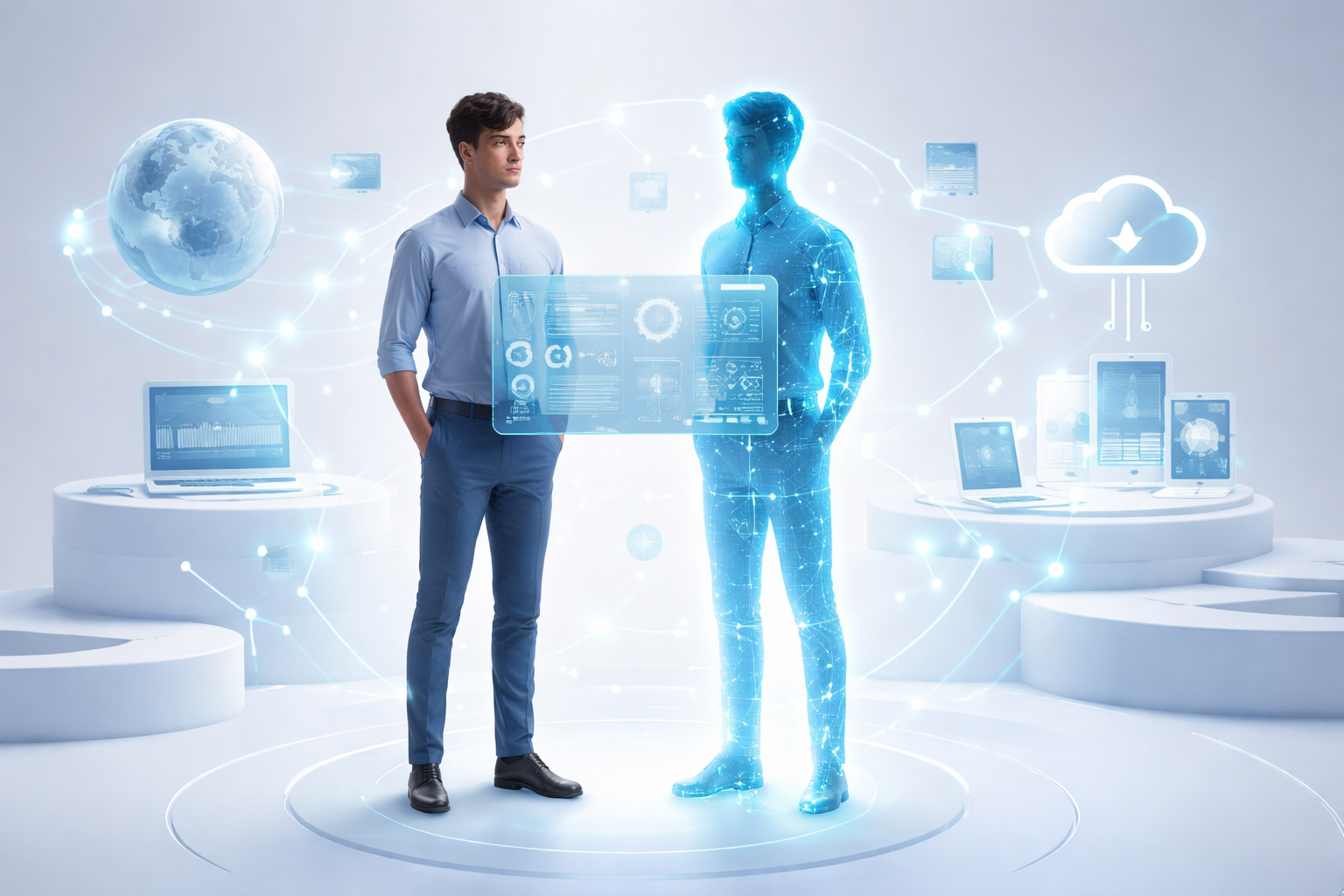
An AI digital twin is a virtual replica of a physical system, process, or object that can simulate real-world conditions in a digital environment. By combining real-time data, machine learning algorithms, and simulation tools, AI digital twins allow organizations to analyze performance, predict outcomes, and optimize operations.
This technology is rapidly transforming industries by enabling companies to test scenarios, identify potential issues, and make data-driven decisions without affecting real-world systems.
As digital transformation accelerates across sectors, AI digital twins are becoming a critical component of modern technological innovation.
As digital transformation accelerates across sectors, AI digital twins are becoming a critical component of modern technological innovation.
What Are AI Digital Twins?
A digital twin is a virtual model that represents a physical object, system, or environment.
When integrated with artificial intelligence, digital twins become far more powerful. AI enables these virtual models to learn from data, adapt to changing conditions, and simulate complex scenarios.
For example, a digital twin of a manufacturing machine can continuously receive sensor data from the real machine. The AI model can then analyze this data to predict potential failures or recommend performance improvements.
This combination of simulation and AI-driven analysis allows businesses to better understand how systems behave over time.
Key Benefits of AI Digital Twins
AI digital twins offer several advantages for organizations seeking to improve operational efficiency and strategic planning.
Predictive Maintenance
One of the most valuable applications of digital twins is predictive maintenance.
By analyzing data from sensors and equipment, digital twins can detect patterns that indicate potential failures before they occur. This helps companies prevent costly downtime.
Improved Decision-Making
Digital twins allow businesses to simulate different scenarios and evaluate their outcomes before implementing changes in the real world.
This capability enables leaders to make more informed decisions.
Operational Optimization
Organizations can analyze system performance through digital twins and identify opportunities to improve efficiency, reduce waste, and increase productivity.
Applications of AI Digital Twins Across Industries
Digital twin technology is being adopted across a wide range of industries.
Manufacturing
Manufacturers use digital twins to monitor equipment performance, optimize production lines, and simulate manufacturing processes.
Healthcare
In healthcare, digital twins can model patient health conditions, helping doctors simulate treatment options and predict outcomes.
Smart Cities
Urban planners use digital twins to simulate traffic patterns, infrastructure performance, and energy consumption in smart cities.
Aerospace and Engineering
Engineers use digital twins to simulate aircraft performance, test design improvements, and enhance safety.
Technologies Enabling Digital Twins
Several advanced technologies make digital twin systems possible.
Internet of Things (IoT) sensors provide real-time data from physical systems, while cloud computing platforms store and process large volumes of information.
Artificial intelligence and machine learning algorithms analyze this data to identify patterns and generate predictive insights.
Together, these technologies create dynamic digital models that continuously evolve alongside their real-world counterparts.
Challenges in Implementing Digital Twins
Despite their advantages, implementing digital twin technology can present challenges.
Building accurate digital models requires large volumes of high-quality data. Organizations must also invest in infrastructure capable of processing and analyzing real-time data streams.
Security is another important consideration, as digital twins often rely on sensitive operational data.
Companies must implement strong cybersecurity measures to protect their systems.
The Future of Digital Twin Technology
Digital twin technology is expected to grow significantly as industries continue adopting AI-driven solutions.
Future digital twins may become more sophisticated, enabling real-time simulations of entire ecosystems, including factories, cities, and transportation networks.
Advances in AI will allow digital twins to perform deeper analysis, automate decision-making, and continuously optimize systems without human intervention.
Why AI Digital Twins Matter
AI digital twins represent a powerful step forward in how organizations monitor, analyze, and improve complex systems.
By creating virtual replicas of real-world environments, businesses can test strategies, predict outcomes, and optimize performance with greater accuracy.
As digital transformation continues to reshape industries, AI-powered digital twins will play an increasingly important role in driving innovation and operational efficiency.