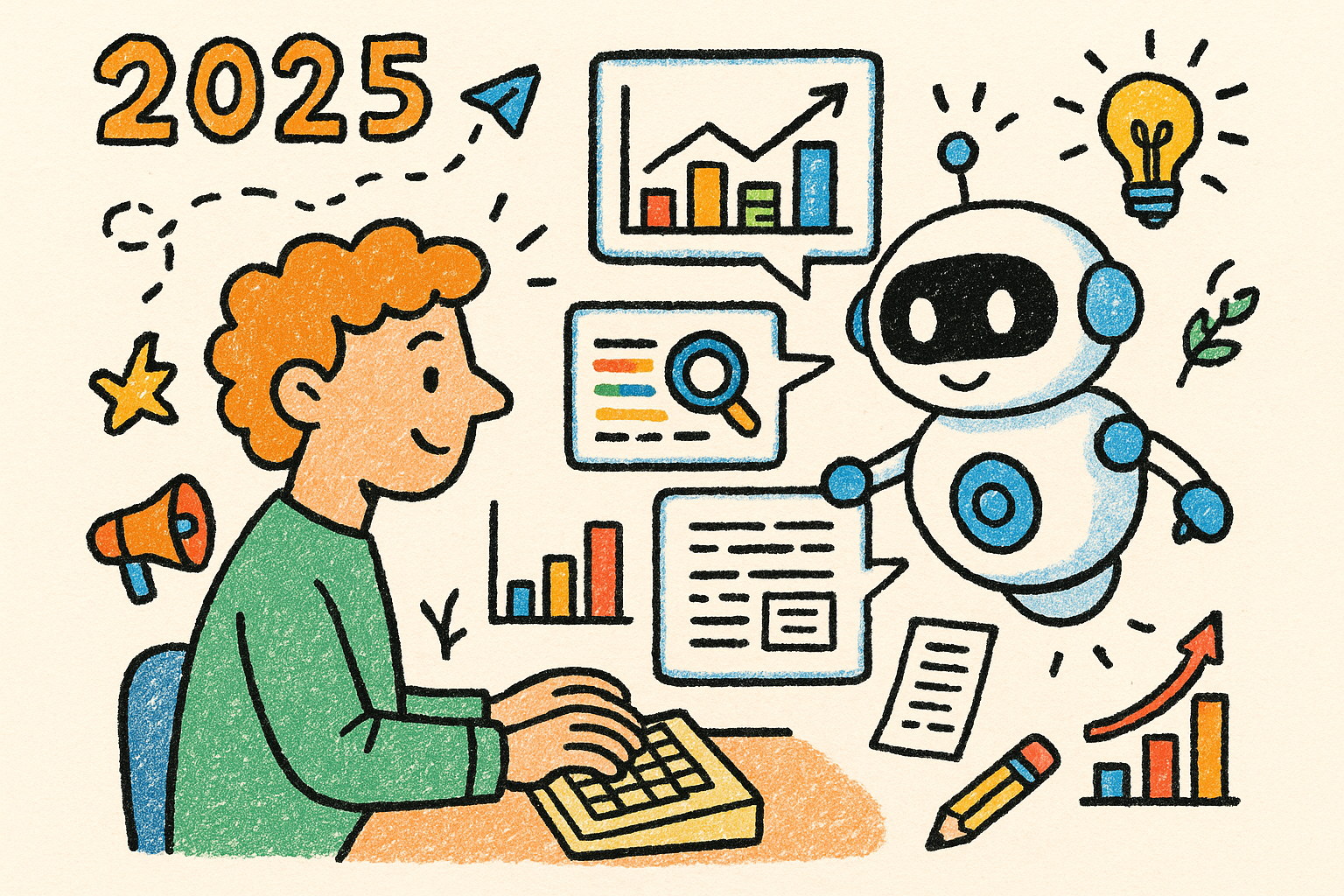
The Quiet Revolution: How AI Is Reshaping B2B Content in 2025
 Gaurav Uttamchandani,
9 months ago
4 min read
Gaurav Uttamchandani,
9 months ago
4 min read
Table of Contents
Introduction
In 2025, artificial intelligence is no longer just a buzzword in B2B marketing. It’s the silent engine behind smarter content, faster distribution, and deeper personalization. The changes are subtle, but the impact is massive. AI isn’t replacing content marketers—it’s reshaping how they work, what they create, and how their content performs.
Welcome to the quiet revolution of B2B content powered by AI.
Content Creation Gets Supercharged
Generative AI tools like ChatGPT, Jasper, Copy.ai, and Notion AI are transforming how B2B content is produced. Instead of spending days drafting a whitepaper or eBook, marketers can now:
- Generate outlines and drafts in minutes
- Rewrite content for different buyer personas
- Adapt tone and complexity for diverse audiences
- Create multilingual versions of assets
This doesn’t mean replacing human creativity. Instead, it means:
“Writers become editors. Strategists become orchestrators.”
Marketers are now focusing more on strategy, value, and storytelling while letting AI handle the heavy lifting of structure and repetition. The result? A faster turnaround on campaigns and more time for creativity.
You May Also Like: How AI Is Transforming B2B Content Syndication in 2025
Personalized Content at Scale
AI enables personalization at levels that were previously unscalable:
- Product pages adjust based on a visitor’s industry or intent
- Emails adapt in real time to CRM data
- Blogs offer dynamic CTAs based on user behavior
- Case studies and testimonials are personalized by industry
Tools like Mutiny, Clearbit, 6sense, and PathFactory are enabling hyper-targeted personalization. AI segments audiences not just by firmographics, but also by intent signals and engagement patterns.
This shift is helping B2B marketers achieve what B2C brands mastered years ago: relevancy. The difference in 2025 is that this is now scalable without hiring massive teams.
Smarter Distribution and SEO
AI isn’t just for content creation—it’s reshaping how content gets discovered.
- AI-based SEO tools (Surfer, Clearscope, MarketMuse, NeuralText) recommend keywords, tone, and structure
- Predictive analytics forecast which content will perform best before it’s published
- AI-generated summaries and meta descriptions improve click-through rates
- Auto-scheduling tools recommend the best time to post content across platforms
The result: smarter distribution strategies that drive better ROI.
Additionally, SGE (Search Generative Experience) is redefining how content ranks. AI helps format your blogs into snippet-friendly structures with lists, FAQs, and schema markup.
Interactive & Generative Content Experiences
AI is enabling B2B marketers to create experiences, not just assets:
- Interactive whitepapers and quizzes personalized by role or buyer stage
- Chatbots that deliver case studies, not just answers
- Dynamic video content generated from blog posts or transcripts
- Auto-narrated podcasts and audiograms from written content
- B2B content is no longer static. It adapts. It listens. It responds.
These experiences drive higher engagement, time-on-site, and lead conversions. With AI, the user journey is more interactive and intuitive.
Better Analytics & Content Intelligence
AI tools now go beyond measuring clicks and bounce rates. They deliver:
- Content scoring based on engagement quality
- Sentiment analysis from social comments and reviews
- Predictive ROI for gated assets
- Audience journey maps across multiple touchpoints
Platforms like HubSpot AI, StoryChief, and Pathmonk are using AI to analyze how users interact with content across the funnel. The insights help teams:
- Create more of what works
- Improve weak content
- Justify ROI to stakeholders
Ethical Use of AI in B2B Content
As with all revolutions, ethics matter. Transparency, bias, and source credibility are growing concerns.
Forward-thinking B2B brands are:
- Disclosing AI-generated content
- Fact-checking with human editors
- Using AI to enhance, not replace, human expertise
- Avoiding AI hallucinations by verifying sources
Some even include a “Created with AI Assistance” badge to build trust with audiences.
Ethical AI usage is not just responsible—it’s a competitive advantage in 2025.
Cross-Team Alignment and Automation
AI doesn’t just help marketers. It connects teams across sales, support, and product through:
- Shared content dashboards
- Smart alerts for content gaps and trends
- Automated handoff of leads based on content interactions
This alignment reduces silos and improves the entire buyer experience. When AI-driven insights are shared across the org, every team benefits.
Final Thoughts: The Future of B2B Content Is Augmented
The future of B2B content isn’t about AI replacing marketers. It’s about creating more meaningful, data-driven, and audience-first content with the help of AI.
In 2025, B2B brands that embrace this quiet revolution will:
- Reduce production time
- Increase personalization
- Improve ROI with content intelligence
As businesses adapt, those who learn to co-create with AI will outpace those still stuck in the old model of “one-size-fits-all” content.
The B2B content game hasn’t ended. It just got upgraded.
Want more on B2B content and AI? Visit iTMunch.com