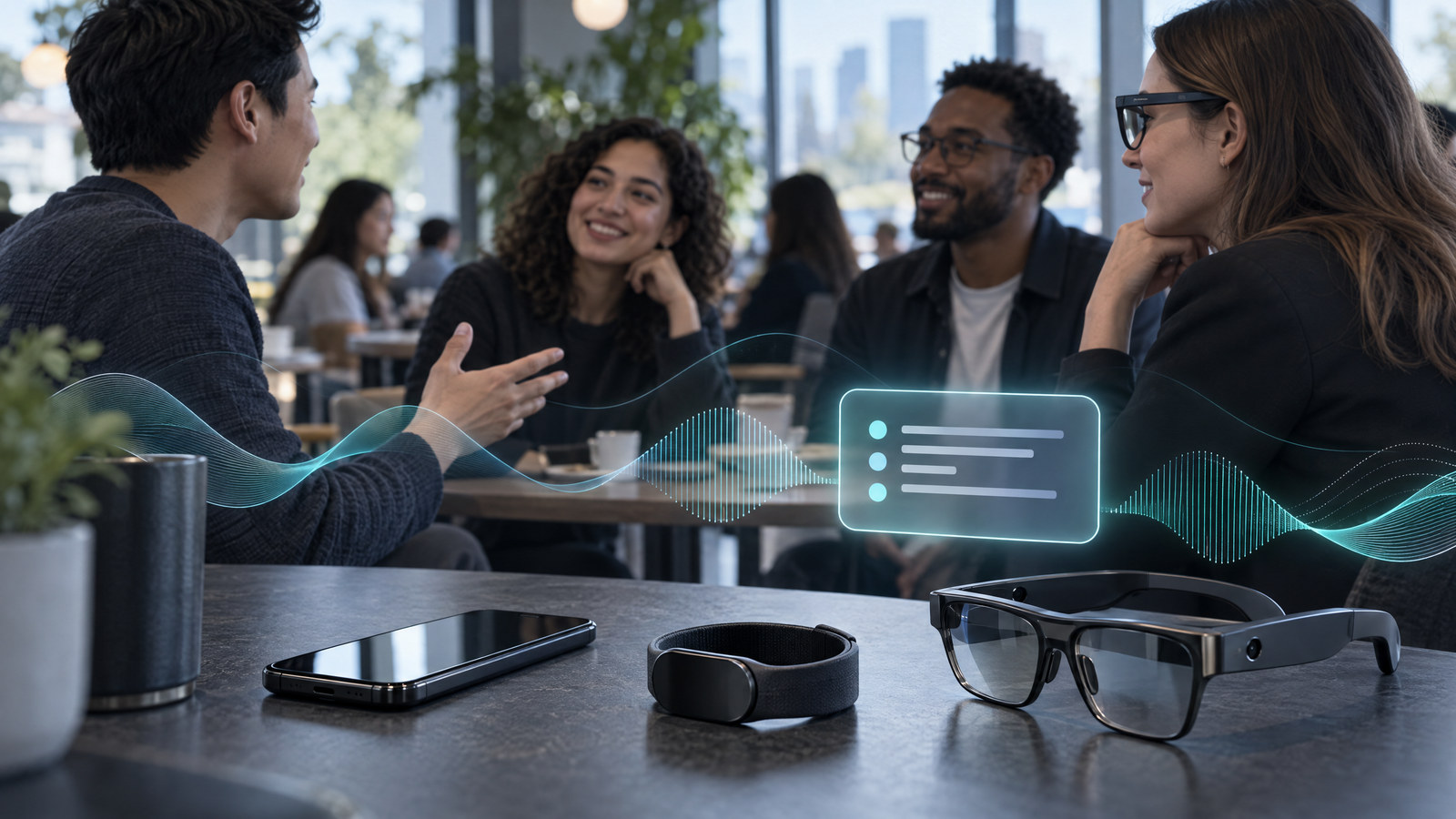
AI Wearables Can Summarize Conversations. What About Everyone Else’s Privacy?
 Nadin Lasko,
2 hours ago
5 min read
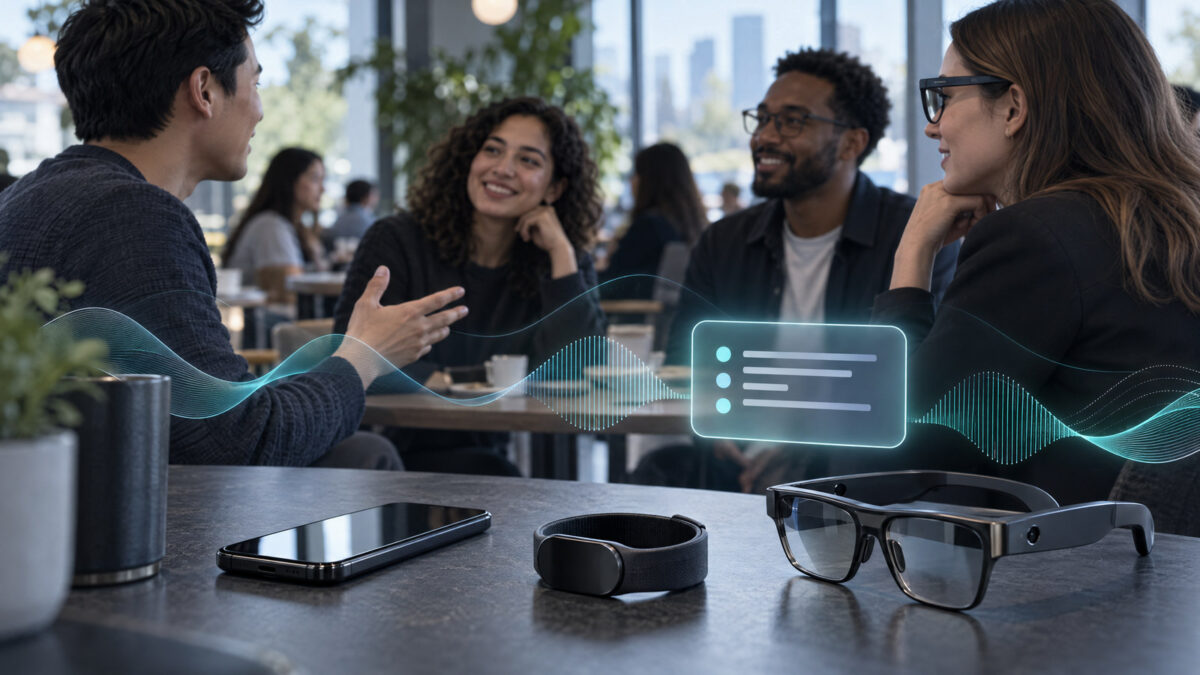
Short answer: AI wearables do not all work the same way. Some features are opt-in or require deliberate activation, and some companies say they process audio without retaining the raw recording. But that does not settle the separate question of whether people nearby know their conversation may be analyzed.
That bystander question is becoming harder to ignore as smartwatches, glasses and personal AI devices turn everyday conversations into summaries, reminders and searchable notes. A recent CNBC report on AI wearables and privacy law describes a legal issue that experts say remains largely untested: can a device’s processing of speech raise interception concerns even when it does not keep an audio file?
New AI wearables use different listening controls
Amazon’s new Bee Frontier wearable and Bee Eclipse phone attachment are designed to turn conversations into summaries and reminders. Amazon says the devices process audio in real time and delete it afterward. The company also says users control when audio processing starts with a button, a visible light indicates when a device is active, and the system asks for permission from call participants when a recording starts. These are Amazon’s claims about its own products, not an independent audit of every use case. Amazon’s announcement explains Bee’s controls and data handling.
Apple’s Watch features have different controls. Apple says Audio Intelligence features are opt-in. Siri Recap runs when the user chooses and can be scheduled by time or location; Live Rewind requires a deliberate double-press and displays a short text snippet of the previous 15 seconds. Apple says raw audio is not recorded or stored, and that Siri Recap creates a high-level summary rather than a full transcript. Apple’s support page describes the features, privacy protections and activation settings.
Those differences matter. “AI wearable” is not a single recording behavior. A wearer may have to press a button, enable a feature, or set a schedule. Still, once a feature is active, nearby people may not know whether speech is being interpreted, what kind of summary is produced, or whether any text is saved.
Why deleting raw audio may not answer the consent question
Privacy protections often focus on what happens to collected data: whether audio is saved, sent to a server, reviewed by people or shared. The bystander issue starts earlier. If a device analyzes speech in the moment and produces a recap, people in the conversation may still care that their words were processed—even if the raw audio is deleted.
The legal question is not settled. The CNBC report quotes privacy and law experts who say existing U.S. wiretap statutes may raise questions about devices that continuously interpret conversations. Massachusetts provides one example of how a state law is written: its statute defines “interception” around secretly hearing or recording communication contents through an intercepting device without prior authority from all parties. Whether that language applies to a particular AI feature is a legal question, not something established by the statute alone. The report describes this new technology question as largely untested, and laws differ by jurisdiction. Read Massachusetts General Laws, Chapter 272, Section 99.
This is not a claim that AI wearables are illegal, or that every user faces legal exposure. The concern reported by CNBC is that, in some U.S. states, the person wearing a device could potentially have obligations toward other participants. The practical outcome depends on the device, how it is used, the setting and the law that applies. This article is general information, not legal advice.
The everyday test: would the other person expect this?
The social test can be simpler than the legal one. Would someone at a private meeting, dinner or medical appointment reasonably expect that their words might be turned into an AI summary? If the answer is uncertain, tell them what the device is doing and ask before enabling it.
For wearers, check the device’s recording and AI settings rather than assuming all features behave alike. Look for a physical control or visible indicator. Pause processing in sensitive conversations, and review what the manufacturer stores, how long it keeps summaries and whether connected apps can access them. For teams, schools and businesses, clear rules for recording-capable devices can prevent awkward surprises and protect trust.
For bystanders, it is reasonable to ask whether a nearby wearable is recording or summarizing, and to request that it be switched off during a private conversation. A visible indicator helps, but it cannot replace a clear explanation.
Frequently asked questions
Are AI wearables always recording?
No single rule covers every device. Amazon says Bee audio processing is controlled by the user and signaled with an indicator light. Apple says its Watch Audio Intelligence features are opt-in; Siri Recap can be scheduled, while Live Rewind requires a deliberate gesture. Check the settings and current documentation for the specific model and feature.
Does deleting the raw audio solve the privacy problem?
It can reduce the risk of a stored audio recording, according to the manufacturers’ descriptions, but it does not by itself answer whether other people knew their speech was being processed or summarized.
Could using an AI wearable break wiretap laws?
It depends on the jurisdiction and circumstances. Experts quoted by CNBC say how existing U.S. laws apply to new AI features is an unsettled question. Do not treat this article as a legal determination; consult a qualified lawyer for advice about a specific situation.
What should I do before using one in a meeting?
Check which feature is active, explain what it does, and ask participants before processing a private conversation. If anyone is uncomfortable, turn it off.
The convenience is clear: a wearable can help its owner remember what was said. The unresolved part is how that convenience works for everyone else in the room. As AI devices become more capable, making processing visible—and asking first—may be just as important as deciding where the raw audio is stored.
Sources: CNBC’s October 18 reporting; Amazon’s Bee announcement; Apple Support on Audio Intelligence; Massachusetts General Laws, Chapter 272, Section 99.
ChatGPT is a trademark of OpenAI. This independent iTMunch article is not affiliated with or endorsed by OpenAI.
AI Wearables Can Summarize Conversations. What About Everyone Else’s Privacy?