Email Marketing Services Are Becoming an Intelligence Layer – Not Just a Communication Channel
 Purva Wankhade,
2 months ago
5 min read
Purva Wankhade,
2 months ago
5 min read
For years, businesses viewed email as a straightforward communication tool. Campaigns were planned, newsletters were scheduled, promotions were sent, and performance was measured through familiar metrics such as open rates, click-through rates, and conversions. While those indicators still have value, they no longer capture the full strategic role that email plays in modern B2B organizations.
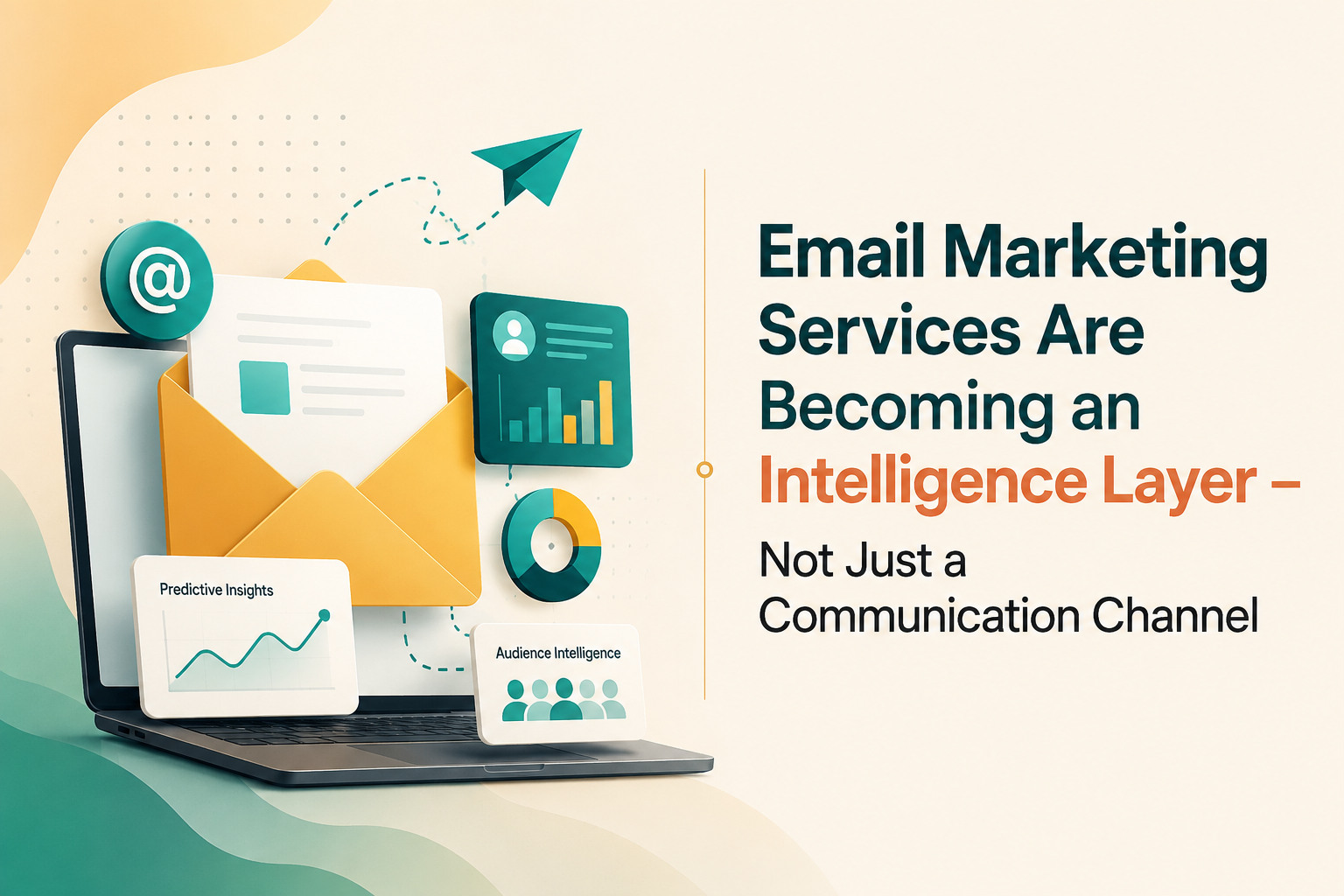
Today, Email Marketing is evolving into an intelligence layer that connects customer behavior, business insights, artificial intelligence, and revenue strategy. Every interaction with an email provides signals about buyer intent, content preferences, purchasing readiness, and engagement patterns. Rather than simply delivering messages, modern email ecosystems are helping organizations understand their audiences in ways that influence decisions far beyond marketing.
This transformation is happening alongside broader changes in enterprise technology. AI-powered automation, privacy-first data strategies, first-party customer data, and increasingly personalized digital experiences are redefining how organizations engage buyers. As these trends continue to mature, email is becoming one of the richest sources of actionable business intelligence available to marketing and sales teams.
For B2B decision-makers, the opportunity is no longer limited to improving campaign performance. It lies in using email data to create more informed, agile, and customer-centric business strategies.
Email Is Becoming a Source of Business Intelligence
Every email interaction tells a story. The resources a prospect downloads, the content they repeatedly engage with, the timing of their responses, and the topics they ignore all contribute to a more complete understanding of buyer behavior.
Modern Email Marketing platforms are increasingly combining these behavioral signals with CRM data, website activity, customer support interactions, event participation, and product usage information. This unified approach allows organizations to identify patterns that traditional reporting often overlooked.
Rather than evaluating individual campaigns in isolation, businesses are analyzing customer journeys across multiple touchpoints. AI-powered analytics can detect changes in engagement, identify accounts showing increased buying intent, recommend personalized content, and even forecast which opportunities are more likely to convert.
Recent advancements in AI are accelerating this evolution. Major marketing platforms continue introducing intelligent features capable of optimizing subject lines, recommending send times, generating personalized content, predicting customer engagement, and identifying audience segments based on behavioral similarities rather than static demographic data.
At the same time, growing emphasis on first-party data has increased the strategic importance of email. As organizations adapt to evolving privacy regulations and changes in digital tracking technologies, direct customer relationships have become significantly more valuable. Email provides one of the few communication channels where businesses maintain consistent, permission-based access to audience insights.
This shift means email is no longer just measuring marketing performance, it is helping organizations understand customer intent in real time.
AI Is Redefining Personalization and Decision-Making
Artificial intelligence is transforming how businesses approach customer communication. Personalization has progressed far beyond inserting a recipient’s first name into an email.
Today’s AI systems analyze behavioral patterns, industry trends, purchase history, engagement frequency, and content preferences to create highly relevant communication experiences. Instead of building static campaigns, organizations are increasingly developing adaptive customer journeys that evolve based on individual interactions.
This evolution makes Email Marketing an essential component of enterprise decision-making rather than a standalone marketing function.
Sales teams benefit from richer account intelligence before engaging prospects. Customer success teams identify engagement declines that may indicate retention risks. Product teams discover which feature announcements generate the strongest interest. Marketing leaders gain clearer visibility into emerging customer priorities, allowing them to adjust messaging and campaign strategies accordingly.
Another important trend shaping enterprise email strategies is predictive intelligence. Rather than reacting to historical performance reports, organizations are using AI to anticipate customer behavior before it occurs. Predictive engagement scoring, churn forecasting, lifecycle recommendations, and automated content selection are becoming standard capabilities across enterprise marketing ecosystems.
These advancements also require stronger governance. As businesses collect and analyze increasing amounts of customer information, transparency, consent management, and responsible AI practices are becoming central to long-term success. Organizations are balancing intelligent automation with customer trust, recognizing that personalization must always respect privacy expectations and regulatory requirements.
The result is a more sophisticated approach where automation supports human decision-making instead of replacing it.
The Future of Email Marketing Is Connected Intelligence
Perhaps the most significant change occurring across enterprise organizations is the integration of email into broader digital ecosystems. Modern marketing platforms no longer treat email as an isolated communication channel. Instead, it operates alongside customer data platforms, CRM systems, analytics environments, AI assistants, sales enablement tools, and business intelligence platforms.
This interconnected environment allows organizations to transform communication data into strategic business insights.
Leadership teams increasingly evaluate Email Marketing not only through campaign metrics but also through its contribution to revenue forecasting, customer retention, pipeline acceleration, and long-term relationship building. Email engagement data influences account prioritization, content strategies, product messaging, and even executive decision-making across multiple departments.
Another emerging trend is the growing role of email in AI-powered customer journeys. Intelligent systems can now determine the optimal message, timing, audience, and communication sequence while continuously learning from every interaction. Rather than relying on fixed workflows, organizations are building adaptive engagement models that improve over time.
This evolution reinforces a broader reality. Customer expectations continue to rise. Buyers expect relevant, timely, and valuable communication that reflects their needs rather than generic promotional messaging. Organizations capable of translating engagement signals into meaningful customer experiences will be better positioned to build lasting relationships in increasingly competitive markets.
Ultimately, Email Marketing is no longer defined by the messages businesses send. Its greatest value lies in the intelligence it generates.
As AI, first-party data strategies, and customer expectations continue to reshape digital engagement, email will increasingly serve as an enterprise intelligence layer that connects marketing, sales, customer success, and executive leadership through shared insights. Organizations that recognize this shift will move beyond measuring campaigns and begin using email as a strategic asset for understanding customers, improving decisions, and driving sustainable business growth.