Agentic AI in B2B Marketing: The Shift from Tools to Autonomous Growth
 Vansh Banthia,
5 months ago
4 min read
Vansh Banthia,
5 months ago
4 min read
Introduction
For years, artificial intelligence in marketing has been framed as a tool—something that assists with specific tasks like content generation, analytics, or automation. Marketers still made the decisions, while AI supported execution.
In 2026, that dynamic is changing.
We are now entering the era of agentic AI, where systems do not just assist but act. These AI agents can analyze data, make decisions, and execute actions with minimal human intervention. The shift is subtle but significant. It is not about using AI anymore. It is about working alongside systems that think and operate independently.
For B2B marketing, this represents a fundamental transformation.
What is Agentic AI?
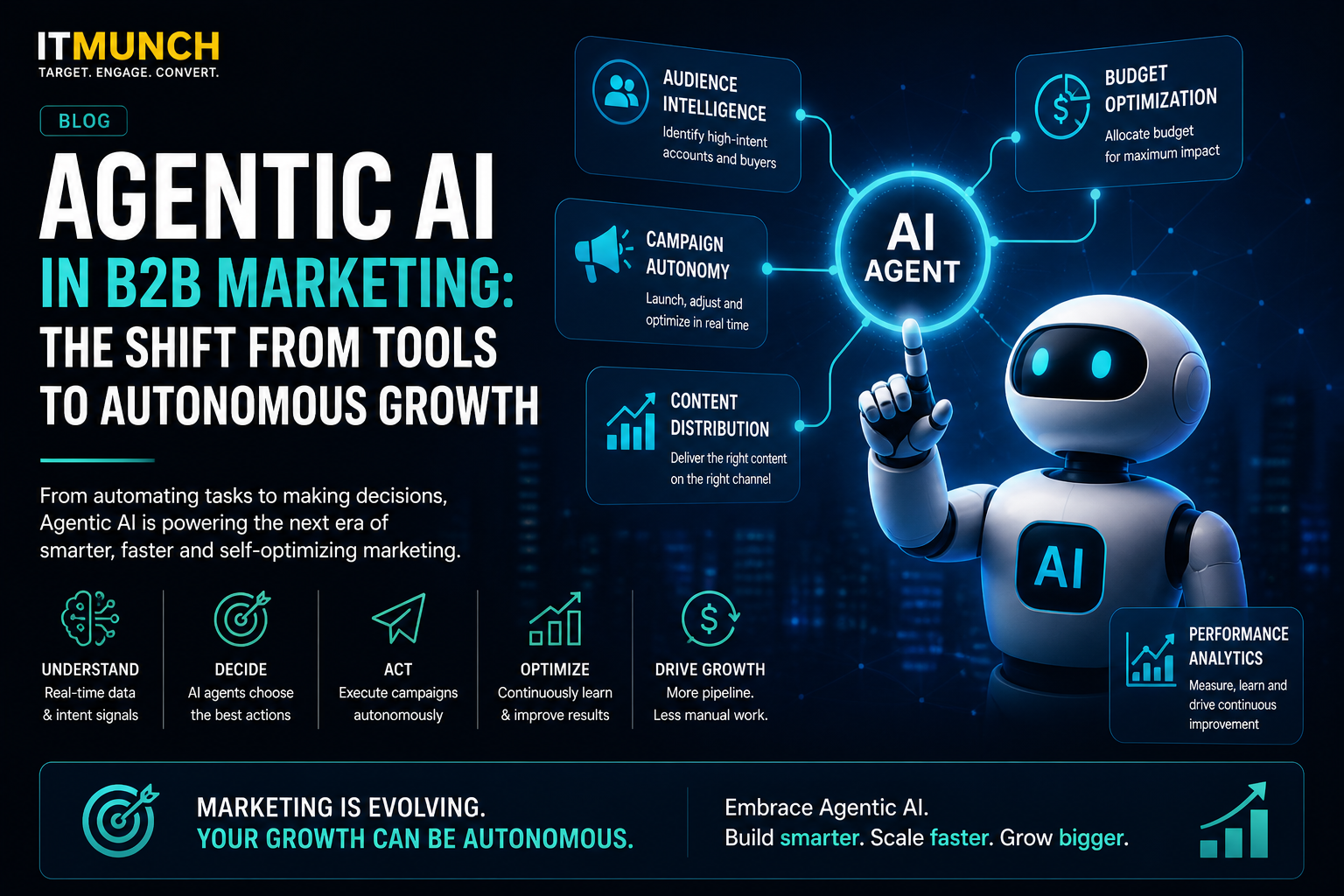
Agentic AI refers to systems designed to operate with a degree of autonomy. Unlike traditional automation, which follows predefined rules, agentic systems adapt based on context, data, and outcomes.
In a marketing environment, this means AI can:
- Identify high-intent audiences
- Adjust campaign targeting in real time
- Optimize content distribution
- Allocate budget dynamically
- Trigger personalized engagement at the right moment
Instead of static workflows, marketing becomes a continuously evolving system.
Why This Shift Matters Now
The growing complexity of B2B marketing is the primary driver behind the rise of agentic AI.
Buyer journeys are no longer linear. Prospects interact across multiple channels, consume content in different formats, and make decisions collaboratively. Managing this complexity manually is not only inefficient but increasingly ineffective.
At the same time, data volumes have exploded. Every interaction generates signals, but extracting meaningful insights from that data requires speed and precision.
Agentic AI addresses both challenges. It processes large datasets in real time and translates them into actionable decisions, enabling marketers to respond faster and more effectively.
From Automation to Autonomy
Traditional marketing automation relies on predefined sequences. Emails are sent based on triggers, campaigns follow scheduled timelines, and targeting rules are set in advance.
While effective to an extent, this approach lacks flexibility.
Agentic AI introduces adaptability. Campaigns are no longer static; they evolve based on performance and changing conditions. If a particular segment shows higher engagement, the system can automatically shift focus. If a channel underperforms, resources can be reallocated without manual intervention.
This creates a more responsive and efficient marketing ecosystem.
The Impact on Demand Generation
Demand generation is one of the areas where agentic AI has the most immediate impact.
Instead of casting a wide net, AI agents can identify accounts that show real buying intent. They can analyze behavior patterns, engagement signals, and contextual data to prioritize opportunities with higher conversion potential.
This leads to more focused campaigns and better use of resources.
Content distribution also becomes more intelligent. Rather than pushing the same message across all channels, agentic systems tailor content delivery based on audience preferences and behavior.
The result is not just higher engagement, but more meaningful engagement.
Challenges and Considerations
Despite its potential, agentic AI is not without challenges.
One of the primary concerns is control. As systems become more autonomous, marketers must ensure that decisions align with brand strategy and objectives. Transparency and oversight remain critical.
Data quality is another key factor. AI systems are only as effective as the data they rely on. Inaccurate or incomplete data can lead to suboptimal decisions.
There is also the question of trust. Organizations need to build confidence in AI-driven decisions, which requires clear visibility into how those decisions are made.
Addressing these challenges is essential for successful adoption.
How iTMunch Aligns with the Agentic Future
Platforms like iTMunch are well-positioned within this shift toward intelligent, adaptive marketing.
By focusing on intent-driven content distribution and targeted audience engagement, iTMunch already reflects many of the principles that underpin agentic systems. It connects brands with the right audiences based on relevance and behavior, rather than broad assumptions.
As marketing continues to evolve, such platforms can integrate more deeply with AI-driven workflows, enabling smarter campaign execution and more efficient pipeline generation.
In this sense, iTMunch is not just a tool, but part of a broader ecosystem that supports autonomous growth.
Conclusion
Agentic AI marks a turning point in how marketing operates.
The shift from tools to autonomous systems changes the role of marketers from executors to strategists. Instead of managing every detail, they focus on guiding and refining systems that handle execution at scale.
In 2026, the competitive advantage lies in speed, precision, and adaptability. Agentic AI delivers all three.
For B2B organizations, the question is no longer whether to adopt AI, but how quickly they can embrace this new model of marketing.
Those who do will not just keep up with change. They will define it.