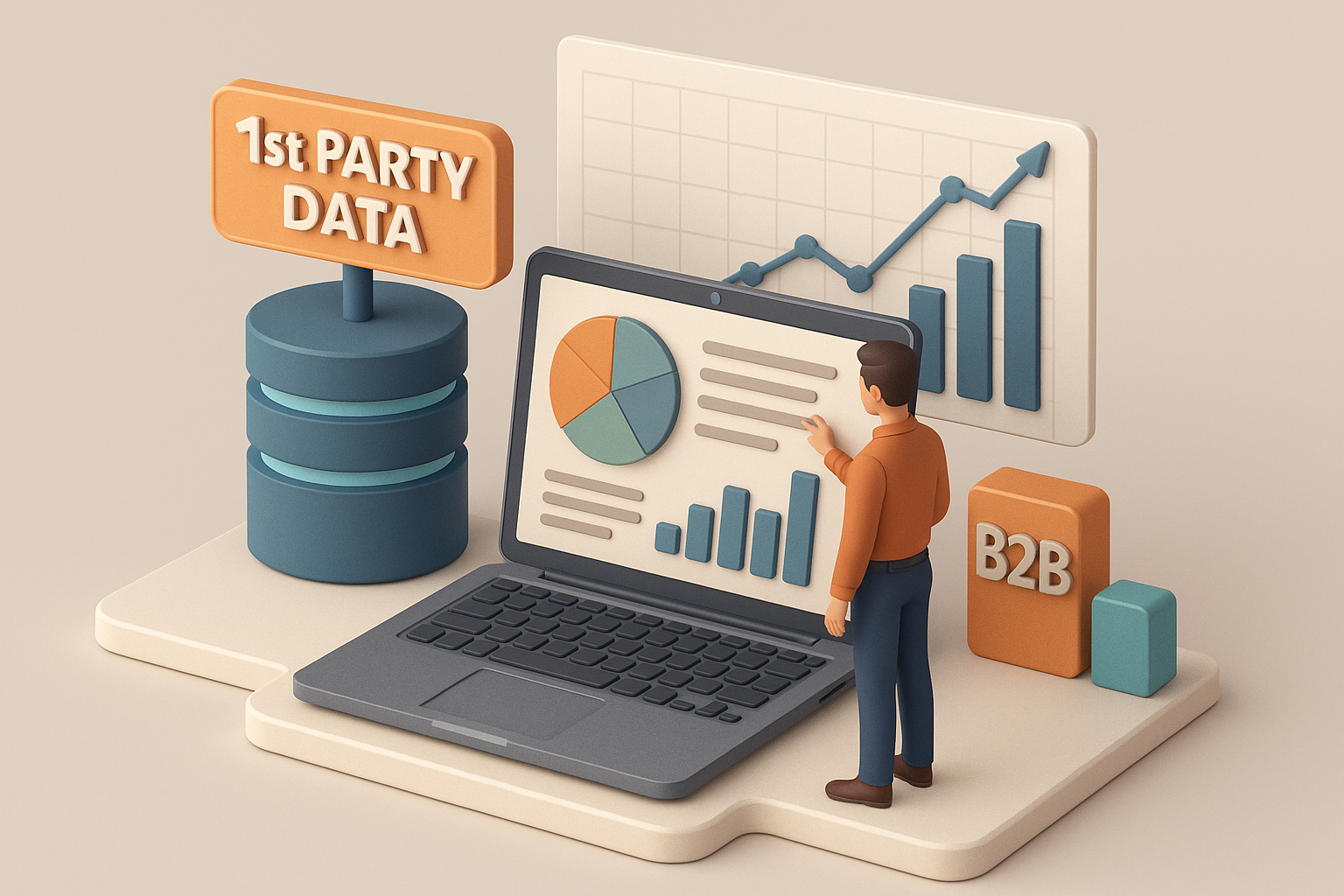
Why First-Party Data Is the Future of B2B Marketing in 2025
 Gaurav Uttamchandani,
10 months ago
5 min read
Gaurav Uttamchandani,
10 months ago
5 min read
Table of Contents
The digital marketing landscape is undergoing a dramatic shift in 2025. With the decline of third-party cookies, stricter privacy regulations, and evolving buyer expectations, B2B marketers can no longer depend on external data or broad audience targeting to drive results. Instead, first-party data has emerged as the most valuable, accurate, and future-proof asset for modern B2B marketing teams.
As businesses prioritise trust, transparency, and precision, first-party data offers unmatched insights for creating personalized buyer journeys, improving lead quality, and maximizing ROI. In this blog, we break down why first-party data matters, how it powers B2B growth, and the strategies you need to succeed in 2025.
What Is First-Party Data?
First-party data is information collected directly from your audience through owned channels. This includes:
- Website interactions
- CRM entries
- Email engagements
- Form submissions
- Content downloads
- Event registrations
- Product usage data
- Customer surveys
Unlike third-party data bought from external vendors, first-party data is trusted, permission-based, and highly accurate, making it the most reliable foundation for modern marketing.
Why First-Party Data Matters More Than Ever in 2025
1. The Death of Third-Party Cookies
With Google phasing out third-party cookies and global privacy laws tightening, marketers are losing access to the data they once relied on. This shift forces B2B companies to build strategies based on data they own and control.
First-party data ensures:
- Higher reliability
- Full transparency
- Compliance with privacy laws
- Better audience understanding
2. Buyers Expect Personalization
B2B buyers evaluate brands across multiple touchpoints before engaging with sales. They expect highly relevant, personalized experiences—not generic ads or messages.
First-party data helps personalize:
- Email campaigns
- Content offers
- Website experiences
- Product recommendations
- Account-based marketing (ABM) journeys
This level of personalization significantly improves engagement and conversions.
3. AI and Automation Amplify Its Value
AI-driven tools now transform first-party data into actionable insights by:
- Predicting buyer intent
- Scoring leads more accurately
- Identifying high-value accounts
- Recommending personalized content
- Automating outreach
The combination of AI + first-party data results in faster decision-making and smarter campaigns.
4. Higher Accuracy and Lower Costs
Third-party data is often outdated or incomplete. First-party data comes directly from your customers, making it significantly more accurate.
Plus, it reduces costs:
- No need to buy expensive data sets
- Better targeting = lower CPL
- Improved campaign relevance = more conversions
How First-Party Data Improves B2B Marketing Performance
1. Better Lead Qualification & Scoring
With real behavioral data—what users click, download, or explore—you can prioritize high-intent leads. This makes your sales team more efficient and improves close rates.
2. Stronger Account-Based Marketing (ABM)
First-party data provides insights into:
- Key decision-makers
- Product interests
- Buying stage
- Engagement history
This enables precise ABM campaigns tailored to each target account.
3. More Effective Content Syndication & Lead Gen
B2B content syndication platforms rely heavily on first-party engagement data to:
- Identify ideal customer profiles (ICP)
- Target the right industries
- Deliver qualified leads
4. Improved Sales & Marketing Alignment
With unified first-party data in a CRM or CDP, both teams gain a shared understanding of:
- Buyer intent
- Lead quality
- Pipeline stages
This improves forecasting, campaign planning, and win rates.
How to Build a Strong First-Party Data Strategy in 2025
1. Optimize Data Collection Across All Touchpoints
Add or improve:
- Lead magnets
- Content download forms
- Newsletter signup prompts
- Webinar registrations
- On-site behavioral tracking
The more quality data you collect, the more personalized your marketing becomes.
2. Use AI Tools to Clean, Segment & Enhance Data
AI can:
- Remove duplicates
- Enrich contact details
- Identify buying patterns
- Segment audiences by industry, intent, or behavior
This boosts accuracy and campaign performance.
3. Implement a Customer Data Platform (CDP)
A CDP unifies all your first-party data into a single source of truth, enabling:
- Multi-channel personalization
- Better audience segmentation
- Real-time insights
4. Create Value-Driven Content to Encourage Data Sharing
Offer gated assets such as:
- Whitepapers
- eBooks
- Research reports
- Tools & templates
- Case studies
- Webinars
The more value you offer, the more willingly prospects share their information.
5. Build Trust Through Transparency
Communicate clearly:
- What data you collect
- How it will be used
- Your commitment to privacy
Trust is a competitive advantage in 2025.
The Future of First-Party Data in B2B Marketing
Going forward, first-party data will integrate with:
- Advanced AI agents
- Real-time personalization engines
- Predictive analytics
- Multi-channel automation
- ABM orchestration tools
Companies that invest now will gain a long-term competitive edge as data becomes the backbone of every successful B2B marketing strategy.
Conclusion
First-party data isn’t just a replacement for third-party cookies—it is the foundation of modern B2B marketing. With superior accuracy, higher ROI, and the ability to power AI-driven personalization, first-party data helps businesses understand their audience better, target more effectively, and generate predictable revenue.
As B2B buyers become more demanding and privacy regulations continue to evolve, organizations that master first-party data will lead the next era of digital growth.
Expand into global B2B markets with data-driven syndication.
You May Also Like: How Content Syndication Maximizes Whitepaper ROI: A Complete Guide for B2B Marketers