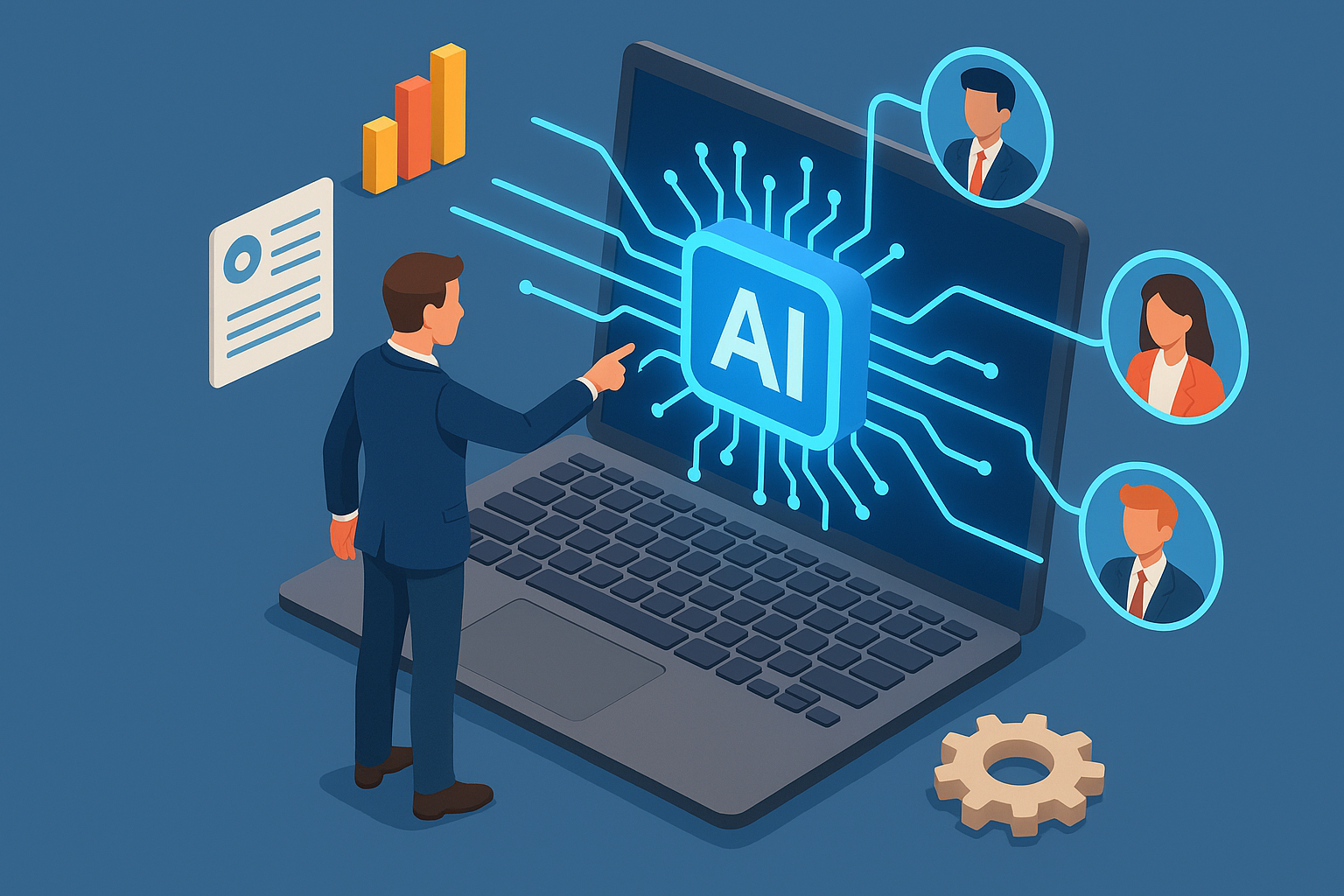
How Generative AI Is Transforming B2B Lead Generation in 2025
 Gaurav Uttamchandani,
4 months ago
5 min read
Gaurav Uttamchandani,
4 months ago
5 min read
Table of Contents
B2B lead generation has evolved more in the past two years than it did in the last decade. Traditional outbound tactics, static email campaigns, and broad targeting are no longer enough to attract high-quality leads in a competitive, privacy-first environment. In 2025, generative AI has become the backbone of modern lead generation—offering unmatched accuracy, personalization, and automation capabilities.
Generative AI doesn’t just accelerate lead gen; it redefines how marketing and sales work together, enabling brands to attract, engage, and convert prospects with precision and scale.
What Is Generative AI in B2B Lead Generation?
Generative AI uses large language models (LLMs) to create content, analyze intent signals, automate workflows, and simulate human-like interactions. In lead generation, generative AI supports:
- Predictive lead scoring
- Automated outreach
- Hyper-personalized messaging
- Data enrichment
- Buyer intent identification
- Conversational engagement (chatbots, AI agents)
Instead of manual prospecting, generative AI turns lead generation into a strategic, intelligent, and automated process.
Why Generative AI Matters for B2B Lead Generation in 2025
1. Buyers Expect Immediate, Personalized Interactions
Generic templates and delayed responses no longer work. AI creates personalized emails, landing pages, and outreach sequences based on:
- Industry
- Role
- Pain points
- Website behavior
- Content consumption
This increases open rates, engagement, and conversions.
2. Manual Prospecting Is Too Slow
Sales teams used to spend hours:
- Finding data
- Researching accounts
- Crafting outreach
- Following up manually
Generative AI automates all of this—reducing research time by 80% and boosting productivity.
3. Privacy Regulations Demand Smarter Targeting
In a cookieless world, businesses rely on:
- First-party data
- Predictive intent signals
- AI-driven targeting models
Generative AI ensures campaigns remain compliant while still reaching the right audience.
Top Ways Generative AI Is Transforming Lead Generation
1. Hyper-Personalized Email Campaigns
AI analyzes thousands of data points to generate customized emails for each lead. It adapts tone, structure, and value propositions automatically.
Benefits:
- Higher response rates
- Higher conversions
- Stronger prospect engagement
2. AI-Powered Account Research
Instead of spending hours reviewing LinkedIn profiles and websites, AI tools automatically extract:
- Company information
- Trends
- Pain points
- Key decision-makers
- Buying triggers
This supports powerful ABM (Account-Based Marketing) campaigns.
3. Predictive Lead Scoring
Generative AI predicts which prospects are most likely to convert using:
- Behavior analytics
- Demographics
- Firmographics
- Content engagement
- Website interactions
Sales teams focus on the most promising leads.
4. Conversational AI Agents
AI agents now:
- Answer complex questions
- Qualify leads
- Schedule demos
- Recommend resources
- Guide prospects through buying journeys
They deliver 24/7 lead generation without human intervention.
5. AI-Generated Content for Every Buyer Stage
Generative AI creates content instantly:
- Landing pages
- Case studies
- Whitepapers
- Ads
- Thought leadership blogs
- Product descriptions
This helps businesses scale campaigns without increasing workload.
6. Automated Sales Sequences
AI tools design and execute outreach sequences with ideal timing, tone, and messaging to improve reply rates.
Features include:
- Multi-channel outreach
- Follow-up reminders
- Real-time message optimization
How to Use Generative AI in Your Lead Generation Strategy
Step 1: Integrate AI Tools Into Your CRM
AI becomes more powerful with centralized data.
A clean CRM = stronger insights + smarter predictions.
Step 2: Build AI-Powered Buyer Personas
AI analyzes patterns in:
- Past deals
- Customer feedback
- Website analytics
- Content interactions
Result: highly accurate personas that guide targeting.
Step 3: Automate Personalization Across Channels
This includes:
- Social media
- Landing pages
- Chatbots
- Retargeting campaigns
Step 4: Train AI With High-Quality Content
The better your inputs, the more accurate the AI outputs.
Provide:
- Case studies
- Product documents
- Customer segments
- Brand guidelines
Step 5: Implement AI Agents for Lead Qualification
AI agents handle:
- Initial conversations
- Data capture
- Lead filtering
- Booking demos
This frees up sales teams to close more deals.
Real-World Examples of AI in B2B Lead Gen
Example 1: SaaS Company Increases Leads by 60%
Using AI to personalize outreach for each buyer segment.
Example 2: IT Services Firm Reduces CPL by 40%
AI-powered content syndication targeting high-intent industries.
Example 3: Marketing Agency Automates 70% of Manual Tasks
AI agents qualify leads before handing them to sales teams.
Benefits of Using Generative AI for B2B Lead Generation
- Higher-quality leads
- Lower acquisition costs
- Better targeting
- Faster sales cycles
- Higher team productivity
- Predictable pipeline
- Scalable personalization
Generative AI doesn’t replace marketers—it elevates them.
The Future of Generative AI in B2B Lead Generation
By 2026, generative AI will power:
- Autonomous sales agents
- Predictive content personalization
- Real-time account insights
- Full-funnel automation
- Intent-driven messaging systems
Early adopters will win the next decade of B2B marketing.
Conclusion
Generative AI is transforming the way B2B companies attract and convert leads. From hyper-personalized outreach to automated qualification and predictive analytics, AI is making lead generation smarter, faster, and more efficient than ever. Companies that embrace these innovations in 2025 will gain a major competitive advantage in an increasingly crowded digital landscape.
Ready to amplify your content reach and attract high-intent B2B leads?
Partner with iTMunch for data-driven, precision-led content syndication today.
You May Also Like: How Enterprise Content Syndication Helps You Reach Decision-Makers Faster