How Gaming and Virtual Reality Are Reshaping the Future of Digital Experiences
 Vansh Banthia,
2 months ago
4 min read
Vansh Banthia,
2 months ago
4 min read
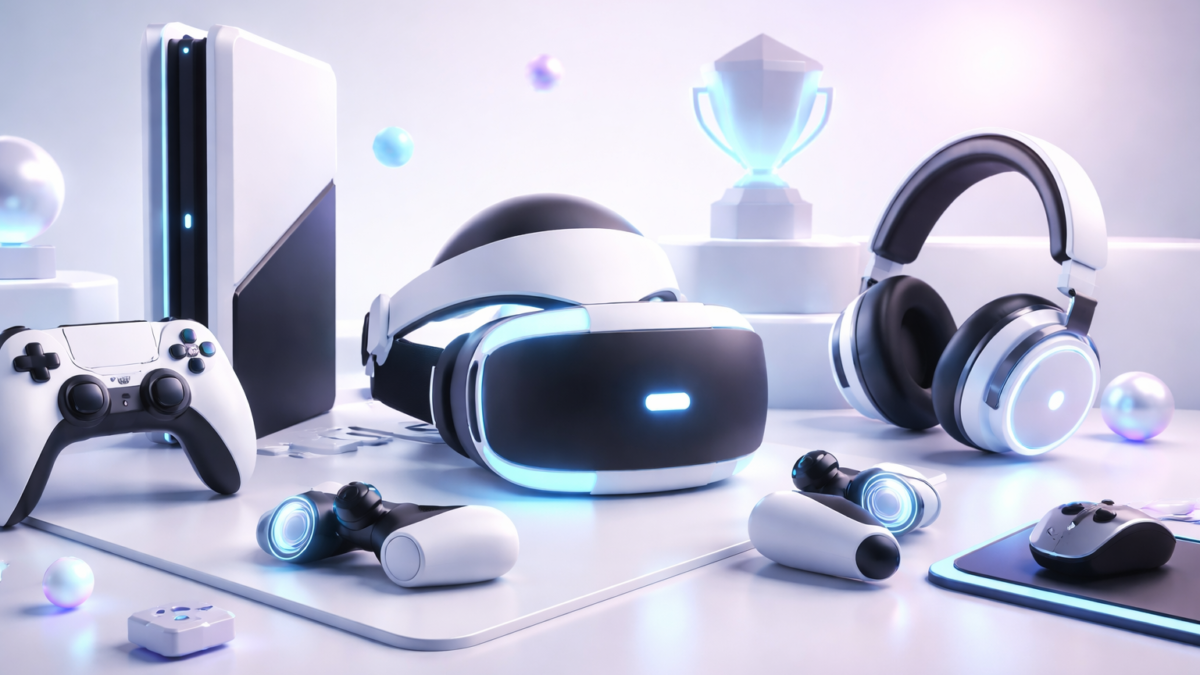
The gaming industry has long been a testing ground for advanced technology—but today, its influence extends far beyond entertainment. Innovations in gaming and virtual reality (VR) are now shaping how businesses think about immersive experiences, real-time engagement, and digital interaction at scale.
As hardware improves and software ecosystems mature, gaming and VR are emerging as powerful drivers of innovation across industries such as training, marketing, collaboration, and simulation. What was once niche technology is quickly becoming a core component of next-generation digital strategy.
The Evolution of Gaming as a Technology Platform
Modern gaming is no longer defined solely by consoles or PCs. Cloud gaming, real-time rendering engines, and multiplayer infrastructure have transformed games into complex, always-on digital environments.
Game engines such as Unreal Engine and Unity are now used for:
- Virtual production in media and entertainment
- Architectural visualization
- Digital twins for industrial environments
- Interactive product experiences
These platforms are pushing advancements in graphics processing, latency reduction, and real-time physics—capabilities that are increasingly valuable in enterprise use cases.
Virtual Reality Moves Beyond Entertainment
VR as an Immersive Business Tool
Virtual reality has moved past its early limitations of bulky hardware and limited applications. Modern VR systems offer improved resolution, motion tracking, and spatial audio, making them viable for professional environments.
Businesses are now adopting VR for:
- Employee training and onboarding
- Safety simulations in high-risk industries
- Virtual collaboration and design reviews
- Customer experience and product demonstrations
Unlike traditional digital tools, VR creates experiential learning environments that improve retention and engagement.
The Role of Gaming Technology in VR Advancement
Many of VR’s most impactful features are built on gaming technology. Real-time rendering, interactive environments, and physics-based interactions all originate from gaming ecosystems. This crossover has accelerated VR adoption by leveraging proven, scalable frameworks.
The Rise of Mixed Reality and Persistent Worlds
Gaming and VR are also driving the development of mixed reality (MR) and persistent virtual worlds—often discussed in the context of the metaverse. While consumer hype has fluctuated, enterprise applications continue to grow steadily.
Persistent digital environments enable:
- Continuous virtual collaboration
- Scenario modeling and simulations
- Real-time data visualization
These environments are particularly valuable for industries that rely on complex systems, such as manufacturing, healthcare, and logistics.
Infrastructure Challenges Holding Back Adoption
Despite growing interest, gaming and VR technologies still face challenges that limit mass adoption in business environments.
Hardware and Accessibility
High-performance VR hardware remains costly, and not all users are comfortable with immersive devices for extended periods. While lighter, more affordable headsets are emerging, accessibility remains a key consideration.
Network and Latency Constraints
Immersive experiences depend heavily on low latency and high bandwidth. For organizations operating across geographies, delivering consistent VR experiences requires robust network infrastructure and edge computing capabilities.
Content Scalability
Creating high-quality, interactive VR content is resource-intensive. Without standardized frameworks, scaling VR initiatives across departments or regions can be challenging.
How AI Is Accelerating Gaming and VR Innovation
Artificial intelligence is playing a growing role in advancing both gaming and VR experiences. AI-driven NPCs, adaptive environments, and procedural content generation are reducing development complexity while increasing realism.
In enterprise contexts, AI enhances:
- Personalized training simulations
- Intelligent virtual assistants in VR environments
- Real-time behavior analysis and optimization
The convergence of AI, gaming, and VR is unlocking new levels of automation and interactivity.
Why Gaming and VR Matter for B2B Decision-Makers
For B2B leaders, gaming and VR are no longer experimental technologies—they are strategic tools. Organizations that adopt immersive technologies early gain advantages in training efficiency, customer engagement, and innovation speed.
Gaming has proven that large-scale, interactive digital environments can operate reliably and securely. VR builds on this foundation to create experiences that traditional digital interfaces cannot replicate.
Looking Ahead
As hardware becomes more accessible and software ecosystems mature, gaming and VR will play a central role in how digital experiences are designed and delivered. The next phase of growth will focus less on novelty and more on measurable business outcomes.
For B2B organizations, the opportunity lies in understanding where immersive technology delivers real value—and adopting it with a clear, strategic vision.