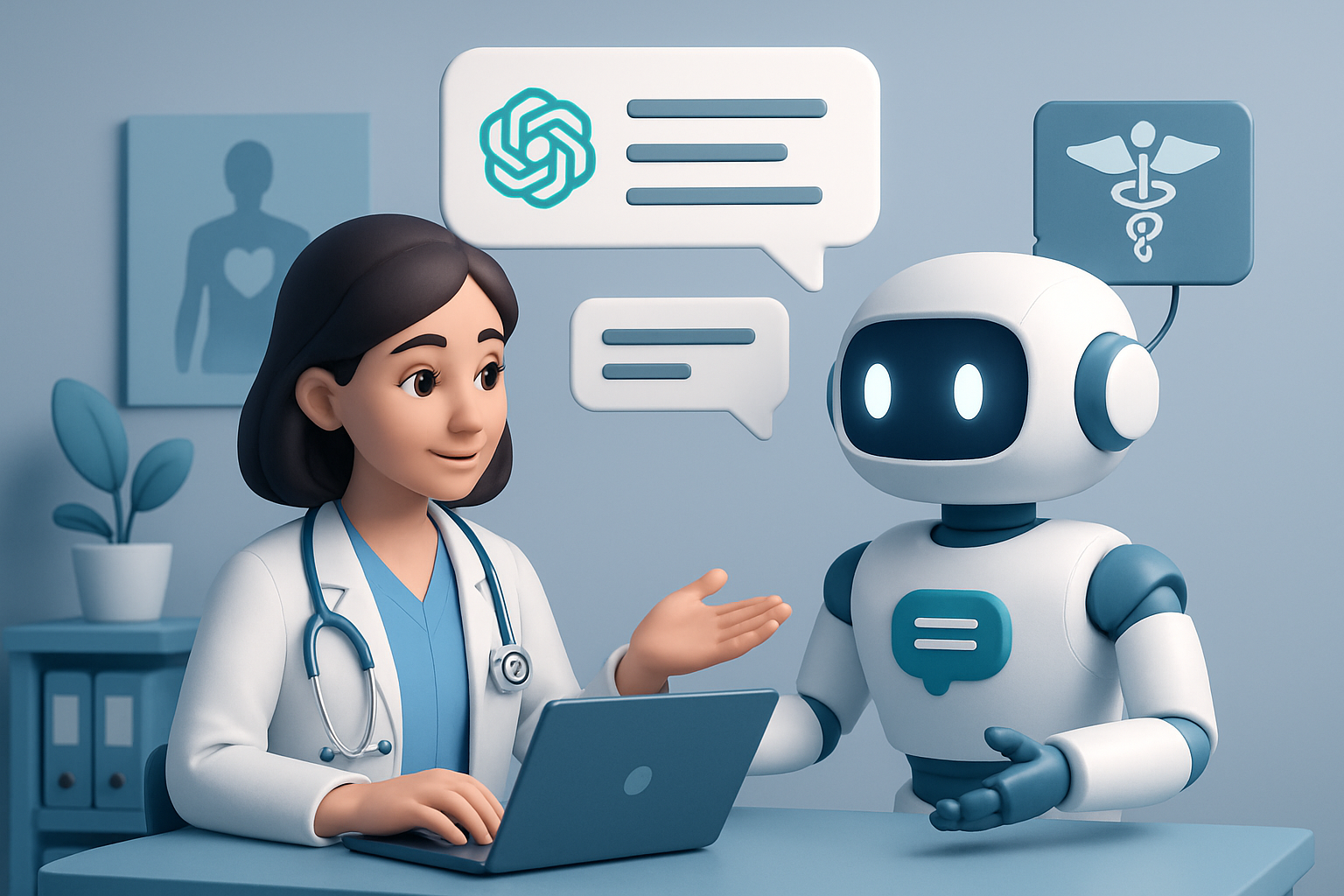
ChatGPT & AI in MedTech: Transforming Healthcare in 2025
 Gaurav Uttamchandani,
5 months ago
3 min read
Gaurav Uttamchandani,
5 months ago
3 min read
Table of Contents
Introduction
The healthcare industry is undergoing a significant transformation in 2025, driven by advancements in artificial intelligence (AI) and natural language processing technologies like ChatGPT. These innovations are not only enhancing patient care but also streamlining operations and improving diagnostic accuracy. In this article, we’ll explore how ChatGPT and AI are reshaping the MedTech landscape, highlighting real-world applications and their impact on the future of healthcare.
1. AI-Powered Diagnostics: Enhancing Accuracy and Speed
AI algorithms are increasingly being utilized to analyze medical images, such as X-rays, MRIs, and CT scans, with remarkable accuracy. These tools assist radiologists in detecting anomalies like tumors or fractures, often identifying issues that may be overlooked by the human eye. For instance, AI systems can analyze thousands of images in a fraction of the time it would take a human, leading to faster diagnoses and treatment plans.
Example: A study published in Nature Medicine demonstrated that an AI model could detect breast cancer in mammograms with greater accuracy than radiologists.
2. ChatGPT in Patient Interaction: Revolutionizing Communication
ChatGPT is being integrated into healthcare systems to facilitate patient interactions, providing instant responses to medical inquiries, appointment scheduling, and medication reminders. This not only enhances patient engagement but also reduces the administrative burden on healthcare providers.
Example: The Mayo Clinic has implemented an AI chatbot powered by ChatGPT to assist patients in navigating their healthcare journey, from symptom checking to post-discharge follow-up.
3. Personalized Treatment Plans: AI-Driven Precision Medicine
AI is playing a pivotal role in the development of personalized treatment plans by analyzing a patient’s genetic makeup, lifestyle, and medical history. This data-driven approach allows for tailored therapies that are more effective and have fewer side effects.
Example: IBM Watson Health has collaborated with various healthcare institutions to create AI-driven platforms that assist oncologists in developing personalized cancer treatment plans based on individual patient data.
4. Operational Efficiency: Streamlining Healthcare Administration
AI and ChatGPT are also being utilized to streamline administrative tasks in healthcare settings, such as billing, coding, and patient data management. By automating these processes, healthcare providers can reduce errors, improve efficiency, and focus more on patient care.
Example: Cedar, a health-tech company, uses AI to simplify medical billing and payment processes, enhancing the patient experience and reducing administrative costs for providers.
5. Remote Monitoring and Telemedicine: Expanding Access to Care
The integration of AI in wearable devices and telemedicine platforms is enabling continuous patient monitoring, allowing for early detection of potential health issues. Patients in remote areas can now access quality healthcare services without the need to travel long distances.
Example: Telehealth platforms like Teladoc Health utilize AI to connect patients with healthcare professionals remotely, providing consultations, diagnoses, and treatment plans via digital platforms.
Conclusion
The convergence of AI and ChatGPT in MedTech is ushering in a new era of healthcare, characterized by enhanced diagnostic accuracy, personalized treatment plans, improved patient engagement, and operational efficiency. As these technologies continue to evolve, the potential for transformative change in the healthcare industry is immense.
Call to Action
Stay ahead in the rapidly evolving MedTech landscape by exploring innovative solutions that integrate AI and ChatGPT technologies.For businesses looking to amplify their content reach and engage with a targeted audience, consider leveraging iTMunch’s B2B Content Syndication Services. This service can help you distribute your content across a network of over 1,500 affiliate platforms, reaching more than 1 million users globally.