The Fastest-Growing Startup Category Isn’t Chatbots – It’s AI Operations
 Purva Wankhade,
2 months ago
5 min read
Purva Wankhade,
2 months ago
5 min read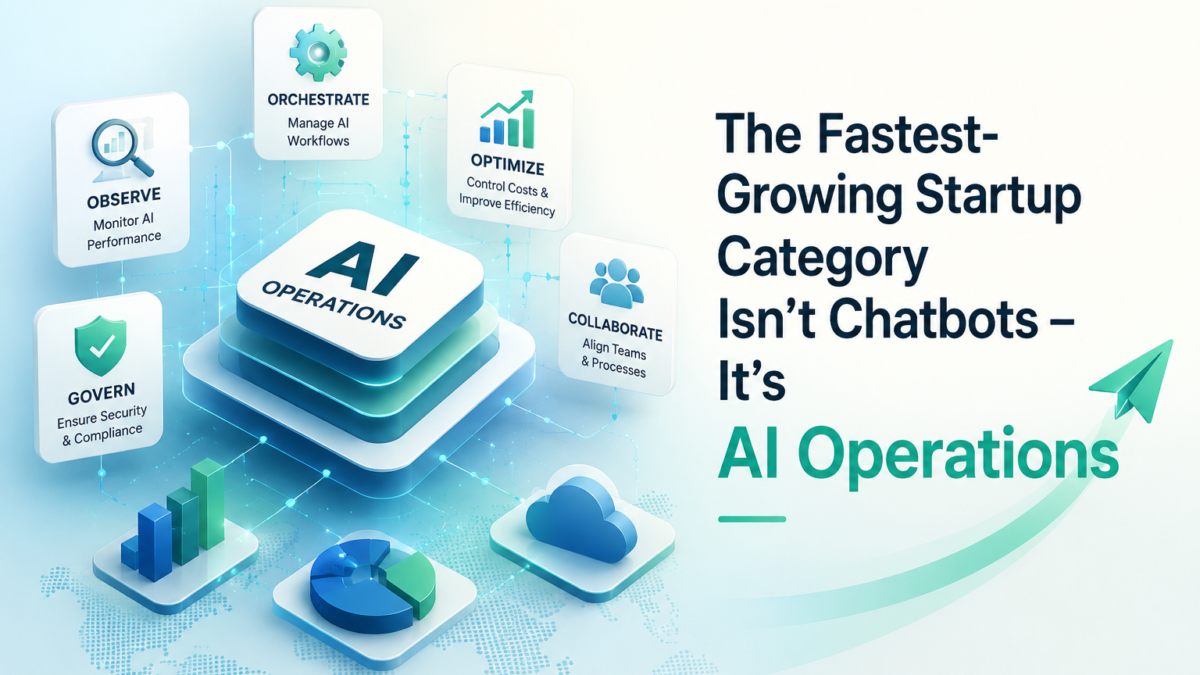
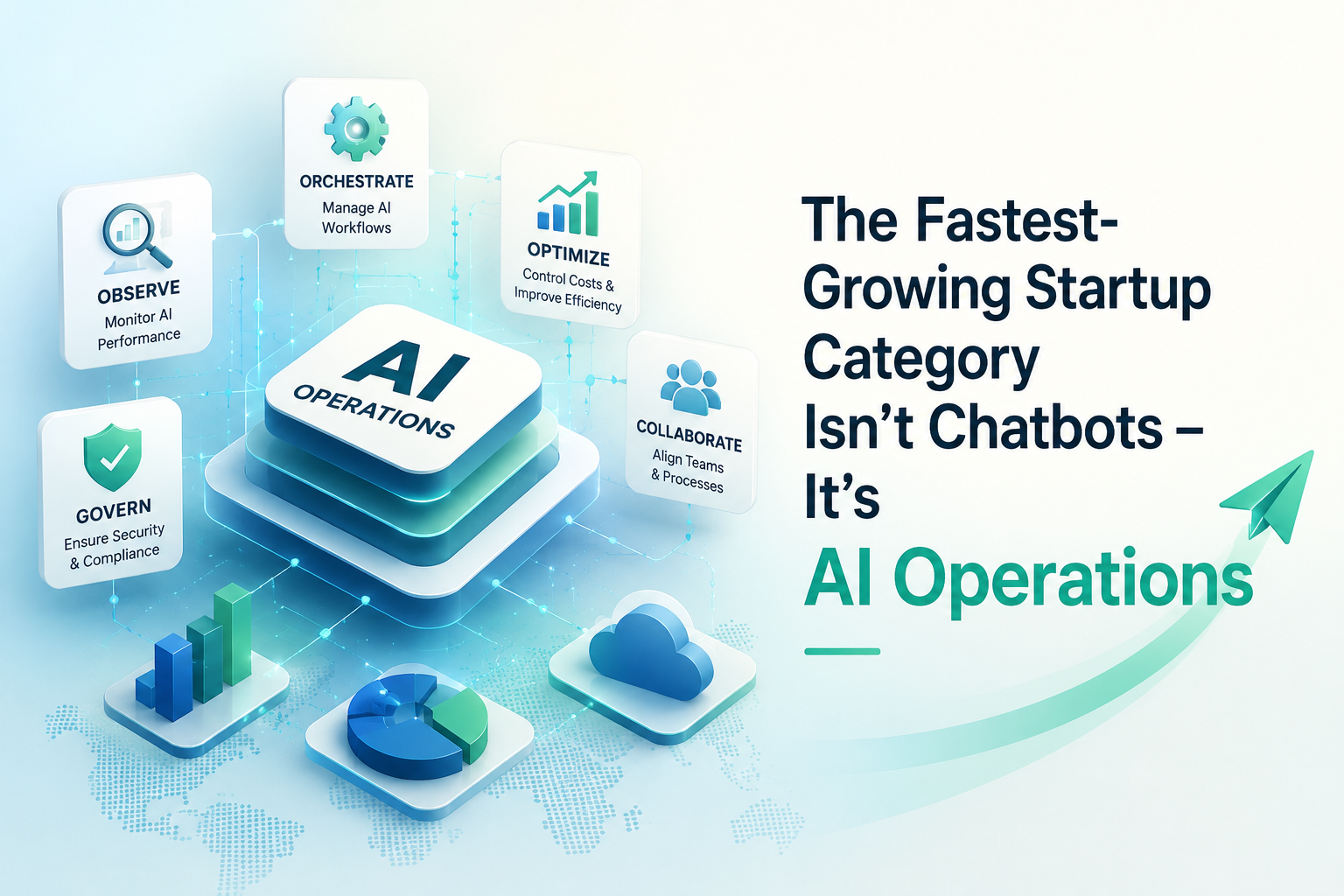
Artificial intelligence has dominated startup conversations for the past few years, with chatbots, content generators, and AI assistants attracting widespread attention. While these applications continue to evolve, a quieter shift is taking place behind the scenes. Investors, enterprise buyers, and technology leaders are increasingly directing their attention toward AI Operations the infrastructure, governance, monitoring, orchestration, and optimization layer that enables AI to perform reliably at scale.
This change reflects the growing maturity of the AI market. Organizations are no longer asking whether they should adopt AI; they are asking how to deploy, manage, secure, and continuously improve AI across the business. As a result, startups building AI Operations platforms are becoming some of the fastest-growing companies in enterprise technology.
For B2B decision-makers, this trend represents more than another software category. It signals the emergence of a new operational foundation for AI-powered businesses.
AI Operations Is Becoming the Backbone of Enterprise AI
The first wave of AI innovation focused on demonstrating what generative AI could accomplish. Businesses experimented with chatbots, copilots, image generation, and workflow automation. Today, many enterprises have moved beyond experimentation and are deploying multiple AI applications across departments, from customer service and finance to marketing, cybersecurity, and software development.
Managing these deployments is becoming increasingly complex. Different AI models require monitoring, governance, security controls, compliance checks, cost optimization, and performance evaluation. Without proper oversight, organizations risk inconsistent outputs, rising infrastructure costs, fragmented data, and regulatory challenges.
This is precisely where AI Operations is creating value.
Rather than building another AI application, startups are developing platforms that help enterprises monitor model performance, manage AI workflows, detect anomalies, enforce governance policies, optimize compute resources, and maintain compliance across increasingly sophisticated AI environments.
Recent industry developments reinforce this direction. Enterprise software providers continue expanding AI management capabilities, while major cloud platforms are introducing new tools for AI observability, model lifecycle management, and operational governance. At the same time, evolving startup funding trends show investors increasingly backing companies that solve enterprise AI infrastructure and operational challenges, alongside organizations preparing for global AI regulations that are driving demand for solutions that make AI deployments more transparent, secure, and accountable.
Instead of asking, “Can AI generate content?” businesses are increasingly asking, “Can we trust AI every day?”
That question is fueling the rapid growth of AI Operations startups.
Investors Are Looking Beyond AI Features Toward AI Infrastructure
Startup funding trends are also reflecting this evolution.
Although generative AI remains a significant investment area, venture capital firms are becoming increasingly selective. Investors now prioritize startups that solve long-term enterprise challenges instead of offering standalone AI features that larger platforms can quickly replicate.
This has shifted attention toward infrastructure startups that enable AI adoption rather than simply showcasing AI capabilities.
The growing demand for AI Operations demonstrates this transition. Organizations adopting multiple AI systems need centralized visibility into model behavior, performance metrics, operational costs, user access, and governance frameworks. Managing dozens or even hundreds of AI services without a dedicated operational layer quickly becomes unsustainable.
Consequently, startups focused on AI observability, orchestration, prompt management, AI security, model evaluation, and intelligent workflow coordination are attracting increasing enterprise interest.
The rise of AI agents further strengthens this opportunity. As autonomous systems begin executing multi-step business processes with minimal human intervention, enterprises require continuous monitoring and policy enforcement to ensure those agents operate safely and consistently. AI Operations provides the operational intelligence that makes large-scale AI adoption practical.
For startup founders, this represents an important lesson. The largest opportunities may no longer exist in building another chatbot. They increasingly exist in solving the operational complexity created by enterprise AI itself.
AI Operations Is Shaping the Next Generation of Enterprise Startups
Enterprise technology has historically followed a familiar pattern. Every transformative platform eventually creates an ecosystem of supporting technologies. Cloud computing created cloud management platforms. Cybersecurity created identity and threat intelligence solutions. Data analytics led to governance and quality platforms. Today, the rapid adoption of AI coding assistants and other enterprise AI applications is driving demand for operational platforms that can manage, monitor, secure, and optimize AI systems at scale.
Artificial intelligence is following the same path.
As organizations deploy more AI across business functions, they need technologies capable of connecting models, managing infrastructure, measuring business impact, and ensuring responsible AI adoption. This growing demand is positioning AI Operations as one of the most strategic categories within the startup ecosystem.
The opportunity extends beyond operational efficiency. AI Operations enables organizations to improve decision-making, reduce infrastructure waste, accelerate deployment cycles, strengthen governance, and create greater confidence in AI-generated outcomes. For B2B leaders, these capabilities directly influence productivity, compliance, customer experience, and competitive advantage.
This shift is also changing enterprise buying behavior. Rather than evaluating AI tools individually, organizations are increasingly seeking unified platforms that provide visibility across their entire AI ecosystem. Startups capable of delivering operational intelligence instead of isolated functionality are well positioned to become long-term enterprise partners.
Looking ahead, AI adoption will continue accelerating as multimodal models, AI agents, industry-specific copilots, and intelligent automation become standard components of digital transformation. Every new deployment will generate additional operational complexity, creating sustained demand for technologies that simplify AI management.
That is why AI Operations is emerging as one of the fastest-growing startup categories in 2026. It addresses the challenges enterprises are experiencing today while preparing them for the increasingly autonomous AI systems of tomorrow.
The future of AI innovation will not be defined solely by the applications users interact with. It will also be shaped by the invisible operational platforms that keep those systems secure, reliable, efficient, and trustworthy. For startups building in this space, the opportunity is no longer about creating the smartest chatbot, it is about becoming the operational foundation that powers enterprise AI at scale.