The Rise of “Dark Intent”: Buyers Signal Interest Before They Ever Convert
 Purva Wankhade,
2 months ago
4 min read
Purva Wankhade,
2 months ago
4 min read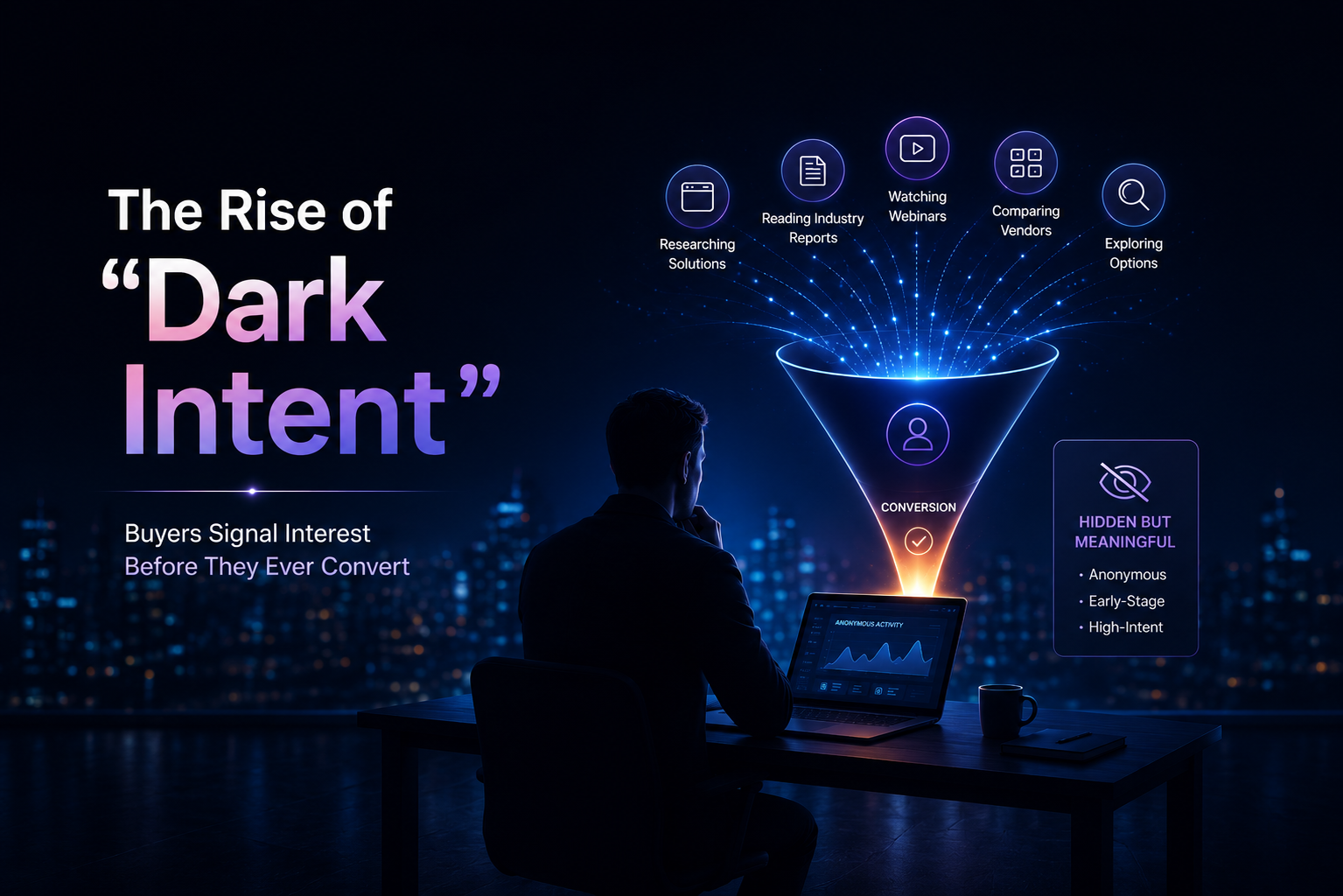
For decades, B2B marketers have relied on visible actions to measure lead generation and understand buyer interest. A form submission, demo request, email response, or sales inquiry was considered a clear signal that a prospect had entered the buying journey.
But modern B2B purchasing behavior is becoming far less obvious.
Today’s buyers are researching, comparing, and evaluating solutions long before they identify themselves. They read industry reports, explore websites, follow expert discussions, watch webinars, and engage with content without ever filling out a form.
This hidden activity is often referred to as dark intent.
The term describes the anonymous signals buyers leave behind before they become known leads. These signals are becoming increasingly valuable as organizations rethink how they approach demand generation and customer acquisition.
For businesses, this shift represents a major change. The challenge is no longer only finding buyers who are ready to talk. It is understanding the early behaviors that indicate future purchase intent.
This is where modern B2B lead generationstrategies are evolving from capturing immediate demand to identifying and nurturing hidden opportunities.
Buyers Are Making Decisions Long Before They Contact Sales
The traditional B2B funnel suggested a predictable journey. A prospect discovered a company, downloaded content, interacted with sales, and eventually became a customer.
However, today’s buying journey is much more complex.
Research from multiple industry studies has consistently shown that B2B buyers spend significant time researching independently before engaging with vendors. They often evaluate market options, compare competitors, and build internal business cases before having direct conversations with sales teams. Recognizing these early research behaviors is essential for effective lead generation, allowing businesses to engage high-intent prospects before they officially enter the sales process.
During this early research phase, buyers generate valuable signals without revealing their identity.
A group of employees from the same company repeatedly visiting specific topics on a website, increased engagement with industry content, or growing interest in certain solution areas can indicate potential demand.
These signals may not look like traditional leads, but they provide important insights into buyer behavior.
Artificial intelligence is making it easier for businesses to analyze these patterns. AI-powered platforms can identify trends across large volumes of data, recognize changes in engagement behavior, and help marketers understand which accounts may be showing early interest.
The goal is not predicting every buyer decision perfectly. It is developing a clearer understanding of where demand is forming.
Why Dark Intent Is Changing the Future of B2B Lead Generation
The rise of dark intent is forcing businesses to rethink what a lead actually means.
In the past, lead generation often focused on collecting contact information. Today, successful strategies are increasingly focused on understanding buying signals, audience behavior, and engagement quality.
Modern B2B lead generation is moving toward a more intelligence-driven approach where businesses combine multiple sources of information to understand potential opportunities.
This shift is also connected to broader changes in the digital ecosystem. Privacy regulations, the decline of third-party cookies, and changing expectations around personalization are encouraging companies to build stronger relationships with audiences through first-party data and meaningful interactions.
Instead of relying only on forms and downloads, organizations are paying closer attention to how prospects interact with content, websites, communities, and digital experiences.
This does not mean traditional lead capture methods are becoming irrelevant. Forms, conversations, and direct inquiries remain valuable. However, they represent only one part of a much larger picture.
The future of demand generation depends on recognizing that interest often appears before a buyer raises their hand.
Companies that understand these early signals can create more relevant experiences, deliver better content, and engage prospects at the right stage of their journey.
Turning Hidden Signals Into Better Buyer Experiences
The biggest opportunity with dark intent is not simply finding more prospects. It is improving how businesses understand and serve potential customers.
When organizations recognize early buyer signals, they can create more personalized experiences instead of sending generic messages to broad audiences.
For example, if a company notices growing interest around a specific business challenge, it can develop educational resources that address that topic. If certain industries show increased engagement, marketing teams can adjust messaging to better reflect their needs.
This approach creates a more customer-focused buying experience.
The future of B2B marketing will increasingly depend on combining human expertise with intelligent technology. AI can help identify patterns, but understanding customer challenges, industry context, and business priorities remains essential.
As digital buying journeys continue to evolve, the organizations that succeed will be those that look beyond obvious conversions and pay attention to the signals happening before them. Leveraging a B2B lead generation service that captures and interprets these early buying signals can help businesses identify high-intent prospects, engage them at the right time, and build stronger sales pipelines.
The biggest opportunities may not always come from buyers who are ready to speak today.
They may come from the ones quietly researching, learning, and building their decisions in the background.
In the era of dark intent, the businesses that understand hidden demand will have a stronger advantage in building meaningful relationships and creating sustainable growth.