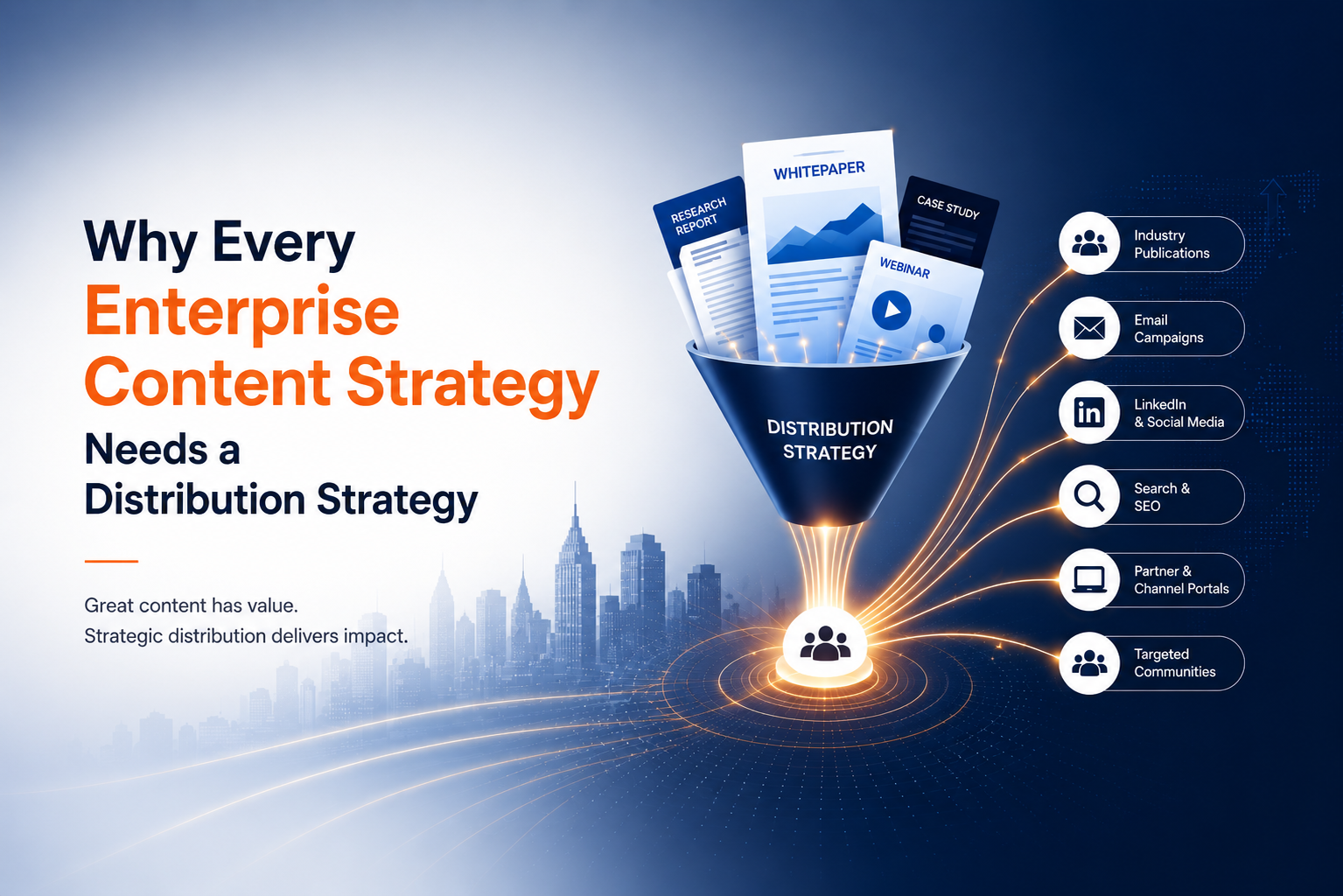
Why Every Enterprise Content Strategy Needs a Distribution Strategy
 Purva Wankhade,
3 months ago
4 min read
Purva Wankhade,
3 months ago
4 min read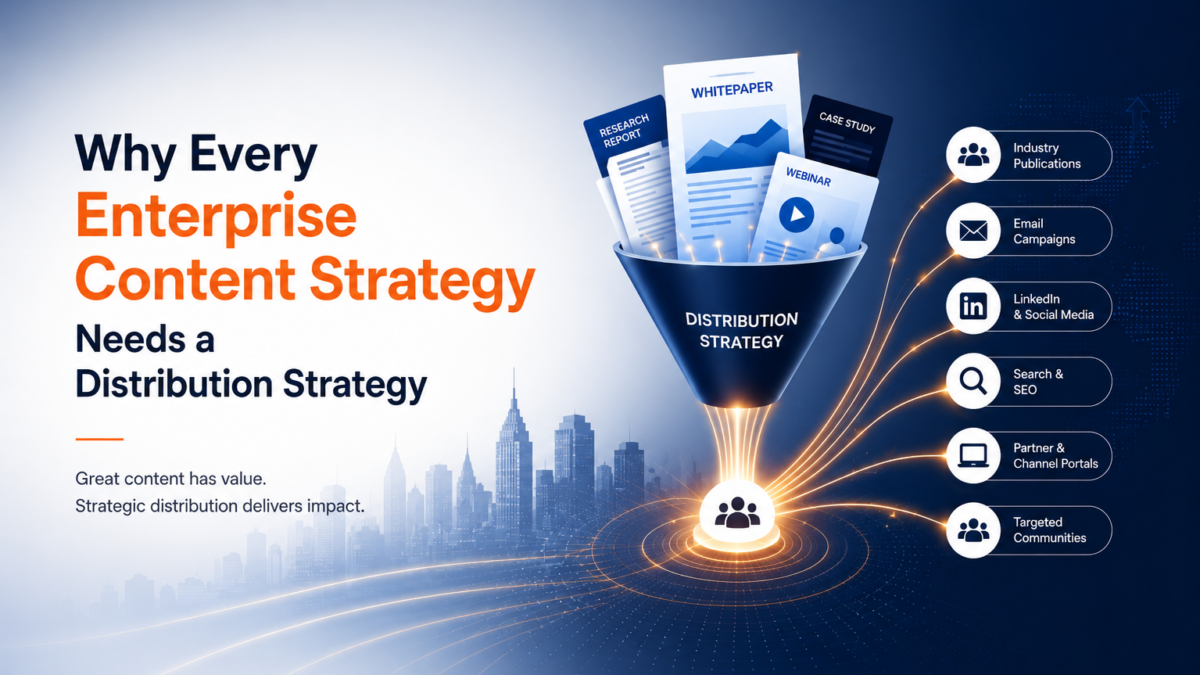
For years, enterprises have invested heavily in creating high-quality content. Research reports, whitepapers, industry insights, case studies, webinars, and thought leadership articles have become essential assets for building brand authority and educating buyers. However, without an effective content syndication strategy, even the most valuable content can struggle to reach the right audience and generate meaningful business impact.
However, creating valuable content is only one part of the equation.
In today’s digital environment, even the most insightful content can struggle to generate impact if the right audience never discovers it. With increasing competition, shorter attention spans, and changing buyer behaviors, enterprises are facing a new challenge: content visibility.
The question is no longer just, “How much valuable content can we create?”
It is, “How effectively can we distribute that content to the audiences that matter?”
This is why distribution has become a critical part of modern enterprise content strategy. Businesses are realizing that content creation and content reach must work together to influence buyers, generate demand, and support revenue growth.
Great Content Without Distribution Often Becomes Invisible
The amount of content published online has grown dramatically. Every industry now has thousands of brands competing for attention, making organic discovery more challenging than ever.
Search engines are also evolving. AI-powered search experiences are changing how users find and consume information by providing direct answers instead of traditional lists of links. While this creates new opportunities, it also increases competition for visibility.
A valuable report or expert article may never reach its intended audience simply because it is competing against countless other resources.
This is where a strategic distribution approach becomes important.
Content syndication plays a vital role in ensuring that valuable insights reach relevant audiences across multiple channels instead of depending on a single source of traffic. For enterprise organizations, this is especially important because B2B buying journeys are complex. Decision-makers often interact with multiple touchpoints before engaging with a brand, making a strong content syndication strategy essential for maximizing visibility and engagement.
A technology leader may discover a company through an industry report, a marketing executive may engage with a research article, and a procurement team may later evaluate the brand based on credibility built through multiple interactions.
Without effective distribution, businesses risk creating valuable content that remains disconnected from the buyers it was designed to influence.
Why Content Syndication Is Becoming More Important in Modern B2B Marketing
As enterprises look for more predictable ways to expand content reach, Content Syndication has become an increasingly important part of digital marketing strategies.
Content Syndication allows businesses to extend the visibility of their content by distributing valuable resources through relevant third-party platforms, industry networks, and trusted channels.
The goal is not simply increasing exposure. It is creating more opportunities for the right audiences to discover and engage with valuable information.
This approach aligns with the changing B2B buyer journey. Modern buyers are conducting more independent research before speaking with sales teams. They are looking for educational resources, expert opinions, and industry insights that help them make informed decisions.
Recent trends in B2B marketing show a stronger focus on first-party data, intent signals, and account-based strategies. As organizations adapt to privacy changes and reduced dependence on third-party tracking, content distribution is becoming a valuable way to build relationships with audiences through meaningful interactions.
Content Syndication also supports broader marketing goals by helping businesses understand which topics resonate with target audiences, which industries show interest, and where potential demand is emerging.
The value comes from connecting content performance with buyer behavior.
The Future of Enterprise Content Is About Creating Influence, Not Just Assets
The biggest shift in enterprise content strategy is moving from an asset-focused mindset to an influence-focused mindset.
Creating a whitepaper, research report, or industry article should not be viewed as the final step. It should be the beginning of a journey where content reaches, educates, and influences potential buyers. Tracking the right whitepaper performance metric along the way helps organizations understand how effectively their content engages audiences and contributes to business goals.
Artificial intelligence is accelerating this shift. AI-powered tools are helping marketers analyze audience behavior, identify content opportunities, and personalize distribution strategies. However, technology alone cannot replace strategic thinking.
Enterprises still need to understand their audience, create meaningful insights, and choose distribution methods that align with buyer expectations.
The brands that succeed will be those that treat content as a business asset rather than a publishing activity. They will focus not only on producing expertise but also on ensuring that expertise reaches the right decision-makers at the right time.
In an increasingly crowded digital ecosystem, visibility has become just as important as quality.
The future of enterprise content marketing will not belong to companies that simply create the most content. It will belong to companies that build smarter systems for distributing, amplifying, and transforming content into meaningful business conversations.
A strong content strategy creates value. A strong distribution strategy ensures that value reaches the people who need it most.