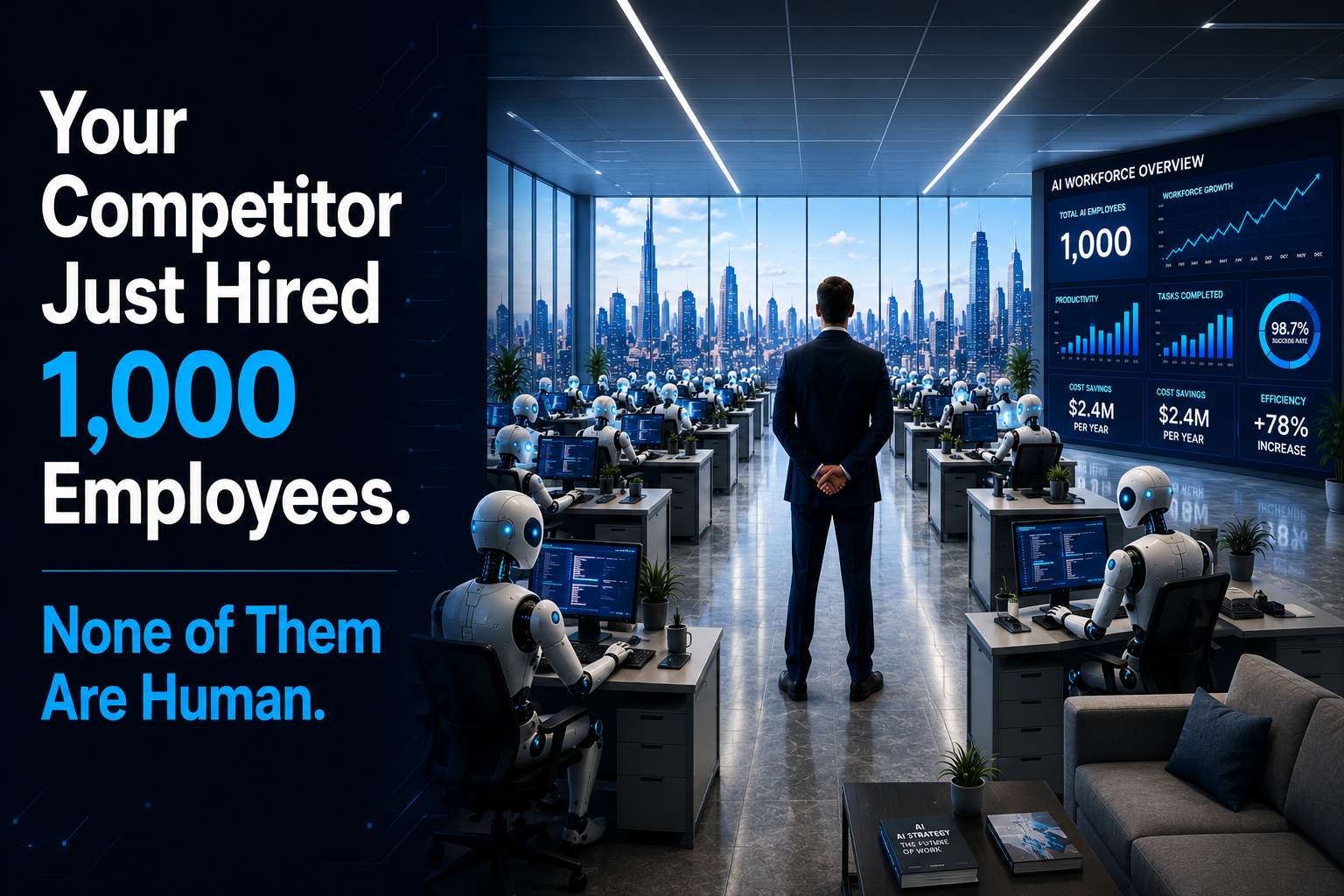
Your Competitor Just Hired 1,000 Employees. None of Them Are Human.
 Purva Wankhade,
2 months ago
10 min read
Purva Wankhade,
2 months ago
10 min read
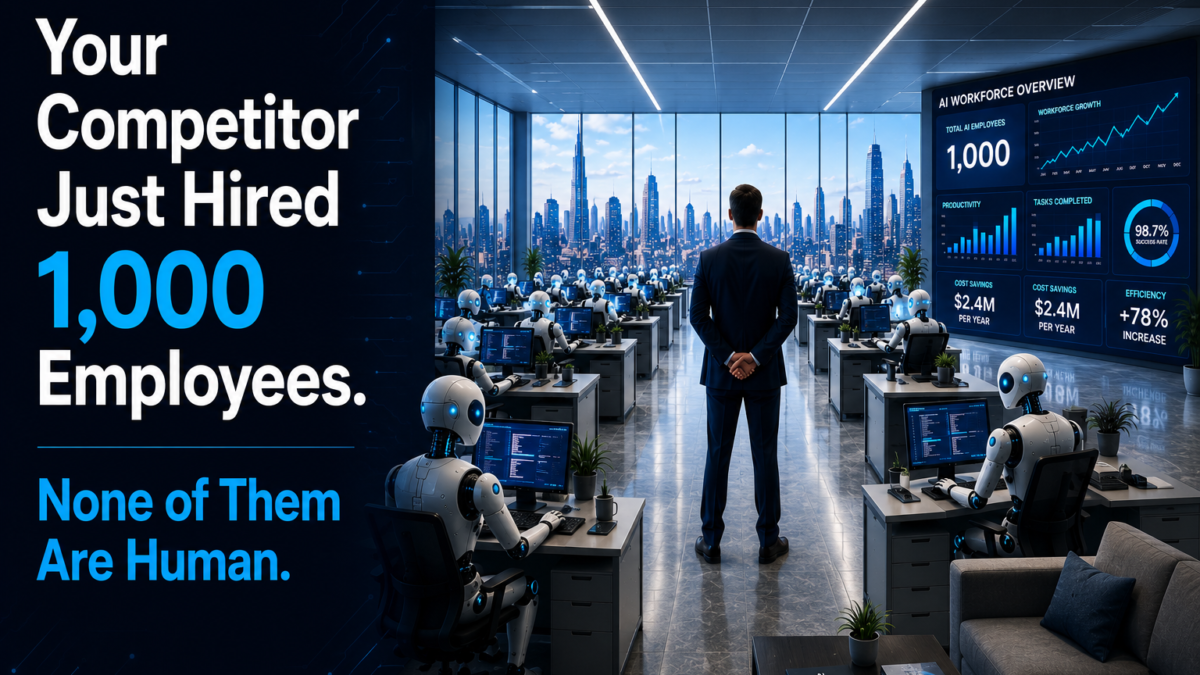
Businesses have always searched for an edge—better talent, faster processes, and smarter technology. In 2026, that competitive advantage is increasingly coming from a workforce that never clocks in, never takes vacations, and never asks for a promotion. Instead of expanding office space, organizations are investing in AI agent services that can plan, execute, analyze, and collaborate across multiple business functions.
The headline may sound dramatic, but it reflects a growing reality. Companies are quietly deploying AI agents to automate tasks that once required entire teams. Customer support, sales outreach, market research, reporting, software development, procurement, and marketing are all being transformed by intelligent digital workers.
The conversation is no longer about replacing people—it’s about redefining how work gets done.
AI Is Moving Beyond Automation
For years, automation relied on rigid rules. If a condition was met, a predefined action followed. These systems improved efficiency but struggled whenever workflows required judgment or adaptation.
Today’s AI agent services represent a significant leap forward. Instead of following fixed instructions, AI agents can understand context, make informed decisions, complete multi-step tasks, and continuously improve their output.
Imagine a sales agent that researches prospects, writes personalized emails, schedules meetings, updates your CRM, and follows up automatically. Or a marketing agent that identifies emerging trends, drafts campaign ideas, analyzes performance metrics, and recommends improvements—all without constant supervision.
Rather than functioning as isolated software tools, AI agents become intelligent collaborators that support business teams every day.
Why Businesses Are Investing in AI Agent Services
Scaling a business traditionally meant hiring more employees. Today, many organizations are discovering that sustainable growth comes from increasing productivity rather than increasing headcount.
That shift explains why AI agent services are becoming a strategic investment across industries.
Unlike conventional software, AI agents work across multiple systems simultaneously. They gather information, analyze data, generate insights, and trigger actions without requiring employees to manage every step manually.
For modern businesses, this creates measurable advantages:
- Faster execution of repetitive workflows
- More consistent decisions using real-time data
- Reduced operational bottlenecks
- Greater scalability without proportional hiring
- More time for employees to focus on innovation and strategy
Instead of replacing experienced professionals, AI agent services eliminate repetitive administrative work, allowing teams to spend more time solving complex business challenges.
Every Department Can Benefit
One common misconception is that AI agent services only benefit technology companies. In reality, nearly every department can use AI agents to improve productivity.
Marketing teams use AI agents to monitor competitors, optimize SEO strategies, generate content ideas, and track campaign performance.
Sales teams automate prospect research, lead qualification, personalized outreach, and pipeline updates.
Customer support teams deploy AI agents to resolve common inquiries instantly while routing complex cases to human specialists.
Finance departments automate invoice processing, reporting, expense validation, and compliance checks.
IT teams rely on AI agents for infrastructure monitoring, documentation, incident detection, and troubleshooting assistance.
As these agents communicate across departments, businesses create connected workflows that reduce manual handoffs and improve operational efficiency.
The Competitive Advantage Is Growing
Technology has always rewarded early adopters, but artificial intelligence is accelerating that advantage faster than previous innovations.
Businesses implementing AI agent services today are responding to customers more quickly, making faster decisions, and streamlining operations that previously consumed valuable employee time.
This doesn’t mean companies without AI are immediately falling behind. However, as competitors deliver better customer experiences, launch products faster, and make data-driven decisions in real time, organizations relying entirely on manual processes may struggle to keep pace.
In many industries, speed has become one of the most valuable competitive advantages—and AI agents are increasingly powering that speed.
AI Works Best Alongside People
Despite the excitement surrounding artificial intelligence, successful businesses understand that technology works best when it complements human expertise.
AI agents excel at handling repetitive tasks, analyzing large datasets, and executing structured workflows.
People remain essential for creativity, strategic thinking, leadership, negotiation, and building meaningful customer relationships.
The companies gaining the greatest value from AI agent services aren’t replacing employees—they’re empowering them. By automating routine work, teams gain more time to innovate, collaborate, and solve higher-value business problems.
The future isn’t humans versus AI. It’s humans working alongside AI.
Preparing for What’s Next
The rise of AI agent services represents more than another software trend. It signals a fundamental shift in how businesses operate.
Just as cloud computing transformed IT infrastructure and mobile technology reshaped customer engagement, AI agents are changing how organizations manage daily operations.
Businesses experimenting with AI today are learning where intelligent automation creates the most value, where human oversight remains essential, and how digital workers can integrate seamlessly into existing teams.
Tomorrow’s market leaders won’t necessarily have the largest workforce—they’ll have the smartest combination of talented people and AI-powered systems.
Final Thoughts
The workplace of the future won’t be defined solely by human employees. It will increasingly include intelligent AI agents working around the clock to analyze information, automate workflows, and support better decision-making.
That is why AI agent services have become one of the most important conversations in enterprise technology. They aren’t about replacing people—they’re about helping organizations achieve more with the teams they already have.
Your competitor may not have literally hired 1,000 new employees overnight.
But if they’ve embraced AI agent services, it might look like they did.
Businesses have always searched for an edge—better talent, faster processes, and smarter technology. In 2026, that competitive advantage is increasingly coming from a workforce that never clocks in, never takes vacations, and never asks for a promotion. Instead of expanding office space, organizations are investing in AI agent services that can think, plan, execute tasks, and collaborate across departments.
The headline might sound exaggerated, but it reflects a growing reality. Companies are quietly deploying hundreds—or even thousands—of AI agents to automate operations that once required entire teams. Customer support, sales outreach, research, software development, marketing, procurement, finance, and IT are all being reshaped by intelligent digital workers. As businesses race to improve efficiency, AI agent services are becoming one of the most valuable investments for organizations looking to scale without dramatically increasing headcount.
The conversation is no longer about replacing people. It is about redefining how work gets done.
AI Is Moving Beyond Automation
Traditional automation relied on fixed rules. If a condition was met, a predefined action followed. While useful, these systems struggled whenever workflows became more dynamic or required judgment.
Modern AI agent services represent an entirely different approach. Instead of simply following instructions, AI agents understand context, analyze information, make decisions, and execute complex, multi-step workflows with minimal human involvement. This is what separates AI agent services from traditional automation platforms.
Imagine a sales agent that researches prospects, writes personalized emails, schedules meetings, updates the CRM, and follows up automatically. Or a marketing agent that identifies trending topics, creates campaign ideas, monitors performance, and recommends optimizations throughout the day.
Rather than functioning as standalone software, AI agents become intelligent teammates that continuously support business operations.
Why Businesses Are Investing in AI Agent Services
For decades, scaling a business meant hiring more people. Today, many organizations are discovering that sustainable growth depends on increasing productivity instead of increasing headcount.
That shift explains why AI agent services are quickly becoming a strategic investment rather than a technology experiment. Across industries, AI agent services are helping businesses reduce manual work while improving speed, consistency, and operational efficiency.
Unlike conventional software, AI agents work across multiple systems simultaneously. They can collect data, analyze information, generate insights, and trigger actions without employees managing every individual step.
For growing organizations, AI agent services deliver several advantages:
- Faster execution of repetitive workflows
- More consistent decisions using real-time data
- Reduced operational bottlenecks
- Greater scalability without proportional hiring
- Increased productivity across departments
Rather than replacing experienced professionals, AI agent services eliminate repetitive administrative work so employees can focus on creativity, innovation, customer relationships, and strategic decision-making.
Every Department Can Benefit
One of the biggest misconceptions surrounding AI agent services is that they only benefit technology companies. In reality, businesses of every size and industry can integrate AI agent services into everyday operations.
Marketing teams use AI agents to monitor competitors, optimize SEO strategies, generate content ideas, and analyze campaign performance.
Sales teams automate lead qualification, account research, personalized outreach, and CRM updates.
Customer support teams deploy AI agents that resolve common customer questions while escalating complex issues to human specialists.
Finance departments automate invoice processing, reporting, expense validation, and compliance monitoring.
IT teams rely on AI agents for infrastructure monitoring, documentation, cybersecurity alerts, and troubleshooting assistance.
When these AI agents communicate across departments, organizations create connected workflows that reduce manual effort and improve collaboration.
The Competitive Advantage Is Growing
Technology has always rewarded businesses that adopt innovation early, but artificial intelligence is accelerating that advantage faster than previous technology shifts.
Organizations implementing AI agent services today are responding to customers more quickly, improving operational efficiency, and uncovering opportunities faster than businesses relying entirely on manual processes. As adoption continues to grow, AI agent services are becoming a long-term competitive advantage rather than a short-term productivity tool.
This doesn’t mean companies without AI are destined to fail. However, as competitors launch campaigns faster, provide better customer experiences, and make data-driven decisions in real time, organizations that delay adoption may struggle to keep pace.
In many industries, speed has become one of the strongest competitive advantages—and AI agents are increasingly powering that speed.
AI Works Best Alongside People
Despite the excitement surrounding artificial intelligence, successful businesses understand that technology works best when it complements human expertise.
AI agents excel at analyzing large amounts of information, automating repetitive tasks, and executing structured workflows. Humans remain essential for creativity, leadership, relationship building, negotiation, and strategic thinking.
The companies achieving the greatest results from AI agent services are not replacing employees—they are empowering them. By allowing AI agent services to manage routine work, organizations give their teams more time to solve complex problems, innovate, and create value.
The future is not humans versus AI. It is humans working alongside intelligent AI agents.
Preparing for the Next Phase of Business
The rise of AI agent services represents more than another software trend. It marks a fundamental shift in how businesses operate.
Just as cloud computing transformed infrastructure and mobile technology reshaped customer engagement, AI agent services are changing how organizations manage daily operations. Businesses experimenting with AI agent services today are learning where intelligent automation creates measurable value, where human oversight remains essential, and how digital workers can integrate seamlessly into existing teams.
The organizations leading tomorrow will not necessarily have the largest workforce. They will have the smartest combination of talented people and intelligent AI systems.
Final Thoughts
The workplace of the future will include both human employees and intelligent digital workers operating around the clock. AI agents will analyze information, automate workflows, accelerate decision-making, and support business growth across every department.
That is why AI agent services have become one of the most important conversations in enterprise technology. AI agent services are not about replacing people—they are about helping organizations accomplish more with the teams they already have while remaining competitive in an increasingly AI-driven world.
Perhaps your competitor didn’t literally hire 1,000 employees overnight.
But if they’ve embraced AI agent services, it might feel like they did.