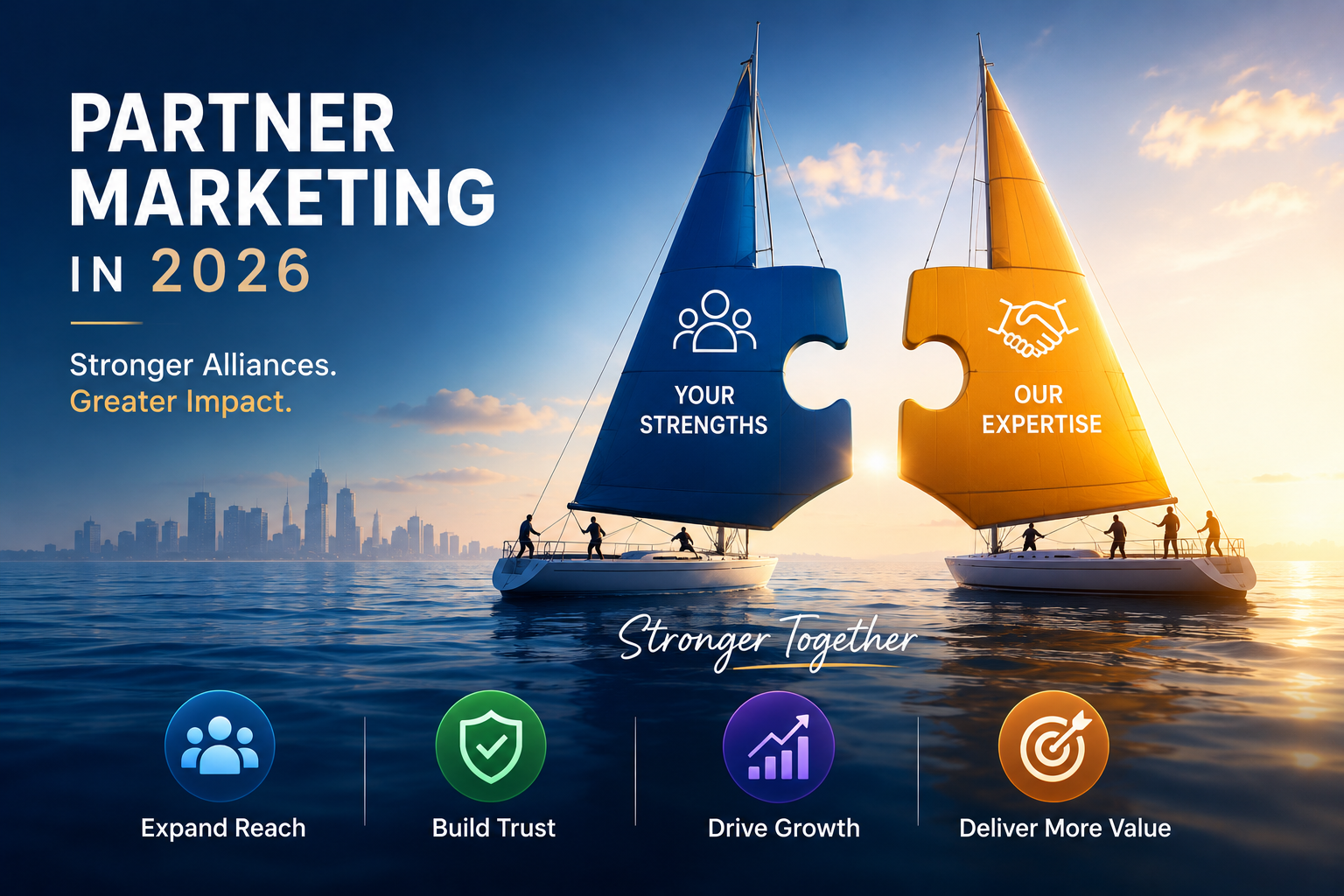
Beyond Lead Generation: The Strategic Value of Partner Marketing Today
 Vansh Banthia,
2 months ago
5 min read
Vansh Banthia,
2 months ago
5 min read
For years, B2B growth strategies revolved around a familiar formula: invest in demand generation, optimize sales processes, and expand market reach through internal efforts.
Today, that formula is changing.
As customer acquisition costs continue to rise, buying committees become larger, and sales cycles grow more complex, business leaders are increasingly looking beyond traditional marketing channels. One strategy gaining significant momentum is partner marketing—a collaborative approach that enables organizations to leverage the audiences, credibility, and expertise of complementary businesses.
What was once viewed as a channel-specific initiative has evolved into a strategic growth function. In 2026, partner marketing is no longer just about co-branded webinars or joint events. It has become a key driver of revenue, market expansion, and customer trust.
The Rise of the Partnership Economy
The modern B2B buyer rarely relies on a single vendor.
Organizations are building interconnected technology stacks, working with multiple service providers, and seeking integrated solutions that solve broader business challenges. As a result, partnerships have become increasingly valuable across industries, from SaaS and cybersecurity to manufacturing and professional services.
Industry analysts have noted that ecosystem-led growth strategies are becoming a central focus for enterprise organizations. Businesses are investing more heavily in alliances, channel partnerships, technology integrations, and co-marketing initiatives because they create opportunities to reach highly relevant audiences without starting from scratch.
The shift is particularly significant as marketing leaders face increasing pressure to demonstrate measurable returns on investment. Partner marketing offers access to qualified prospects through trusted relationships, often reducing the friction associated with traditional outreach efforts.
Why Partner Marketing Matters More Than Ever
Several market trends are accelerating the importance of partner marketing.
Trust Has Become a Competitive Advantage
B2B buyers are conducting extensive research before engaging with vendors. They consume content, consult industry peers, evaluate multiple solutions, and seek validation from trusted sources.
When two respected organizations collaborate, they create an additional layer of credibility that standalone campaigns often struggle to achieve.
Whether through co-authored research reports, industry events, podcasts, or educational content, partnerships help businesses reach audiences in environments where trust already exists.
Customer Acquisition Costs Continue to Rise
Digital advertising costs have increased across most major platforms, while organic visibility has become increasingly competitive.
For many organizations, partner marketing offers a more efficient route to market. Instead of building awareness entirely through paid channels, companies can leverage existing partner communities and customer bases.
This doesn’t replace traditional marketing efforts—it complements them by creating additional pathways to engagement.
Buyers Want Complete Solutions
Today’s decision-makers are less interested in isolated products and more focused on outcomes.
For example, a cybersecurity provider may partner with a cloud infrastructure company. A CRM vendor may collaborate with a marketing automation platform. A consulting firm may work alongside a technology provider.
These partnerships help businesses present more comprehensive solutions to customer challenges while improving the overall buying experience.
The Evolution of Partner Marketing Services
Partner marketing itself is undergoing significant transformation.
Historically, many programs focused on distributing marketing assets to partners and hoping they would be used effectively.
Modern partner marketing services take a much more strategic approach.
Data-Driven Collaboration
Organizations now have access to sophisticated partner relationship management (PRM) platforms, attribution tools, and shared analytics dashboards.
These technologies allow partners to measure campaign performance, identify engagement patterns, and better understand how collaborative initiatives contribute to revenue outcomes.
As a result, partnership decisions are becoming increasingly data-informed rather than relationship-driven alone.
AI-Powered Ecosystem Marketing
Artificial intelligence is beginning to reshape how businesses identify, activate, and optimize partnerships.
Emerging platforms can analyze customer overlap, predict partnership opportunities, recommend co-marketing strategies, and uncover ecosystem relationships that may have previously gone unnoticed.
AI is helping organizations move beyond intuition and toward more scalable partnership programs.
Account-Based Partner Marketing
One of the most interesting developments in 2026 is the convergence of account-based marketing (ABM) and partner marketing.
Rather than running broad campaigns, organizations are increasingly collaborating with partners to target specific high-value accounts.
This approach allows multiple stakeholders to engage prospects through coordinated messaging, increasing relevance while improving efficiency.
What Successful Partner Marketing Looks Like Today
The most effective programs share several characteristics.
Shared Goals
Successful partnerships begin with alignment.
Organizations need a clear understanding of what both parties hope to achieve, whether that’s brand awareness, lead generation, customer retention, market expansion, or thought leadership.
Audience Relevance
Not every partnership creates value.
The strongest collaborations occur when organizations serve similar audiences but offer complementary solutions. This creates natural opportunities for education, engagement, and mutual growth.
Consistent Value Creation
Modern buyers are increasingly resistant to overt sales messaging.
Partnerships that focus on delivering useful insights, industry expertise, research, and practical guidance often generate stronger engagement than those centered solely on promotion.
Long-Term Commitment
The most impactful partnerships are rarely built through a single campaign.
Ongoing collaboration through content programs, events, customer communities, and strategic initiatives typically produces more meaningful business outcomes over time.
Looking Ahead: Ecosystems Will Define Competitive Advantage
As markets become more interconnected, individual companies will find it increasingly difficult to operate in isolation.
Business leaders are recognizing that growth often comes from ecosystems rather than individual efforts. Partnerships enable organizations to expand their reach, strengthen credibility, accelerate innovation, and create more comprehensive customer experiences.
The future of B2B marketing is unlikely to be driven by a single channel, platform, or campaign strategy. Instead, it will be shaped by networks of businesses working together to solve customer challenges more effectively.
For decision-makers evaluating growth opportunities in 2026, partner marketing represents more than a marketing tactic. It reflects a broader shift toward collaborative business models that prioritize shared value, trusted relationships, and long-term success.