US and Tech Giants Strike AI Review Deal — Why This Changes Everything for B2B Marketing
 Vansh Banthia,
6 months ago
5 min read
Vansh Banthia,
6 months ago
5 min read
There was a time when new technology launched first and regulators scrambled to catch up later. That rhythm defined the internet era, social media, even early cloud adoption. Build fast, scale faster, and deal with consequences when they arise.
That rhythm just broke.
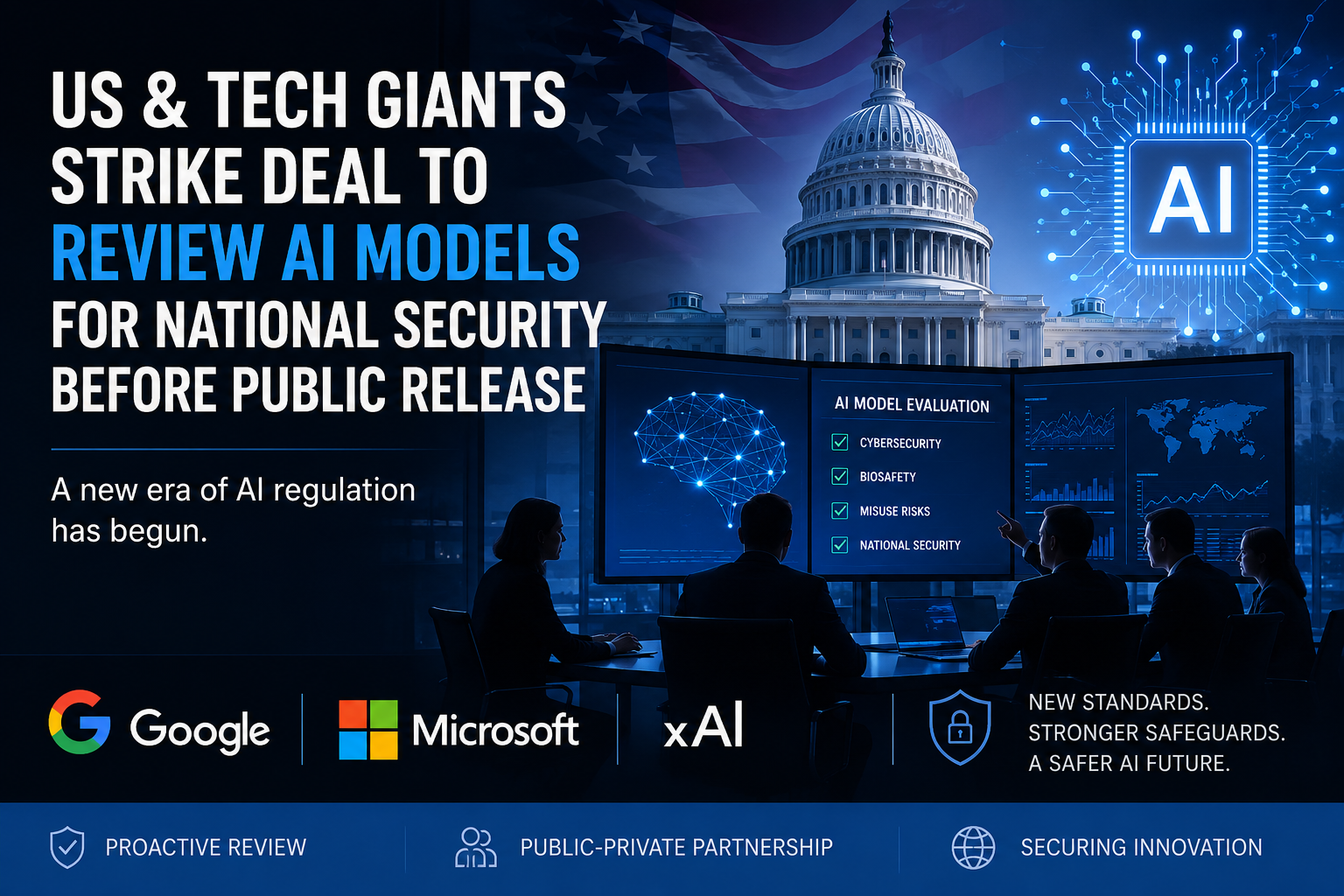
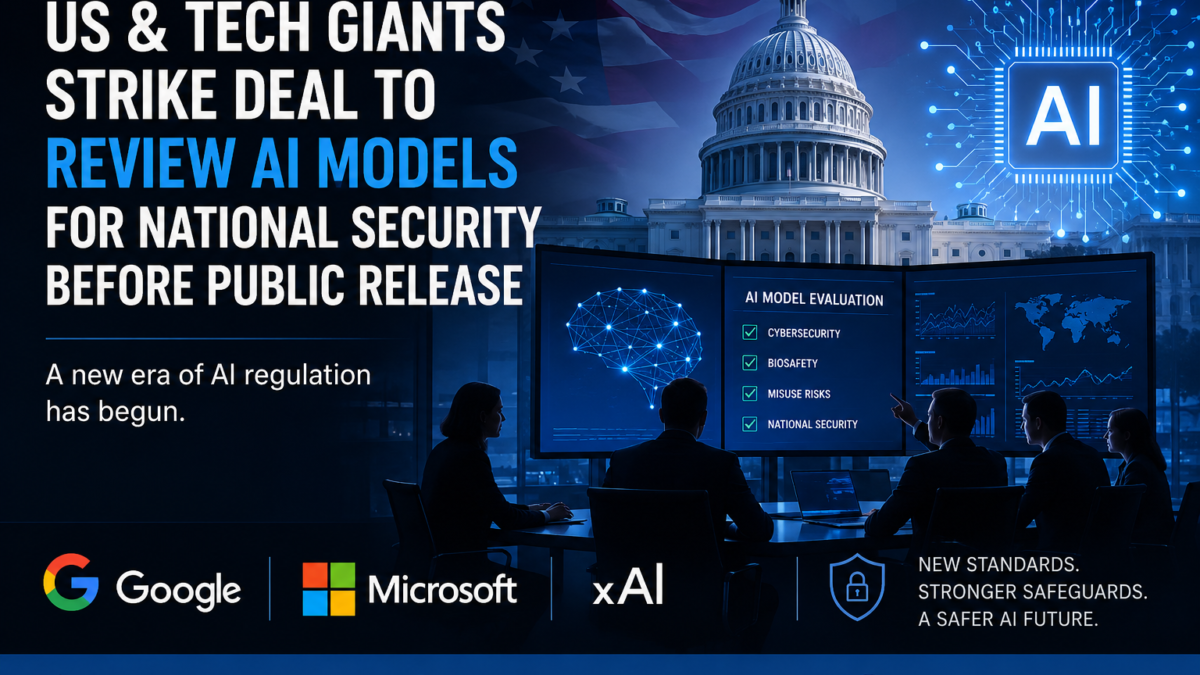
In a move that signals a fundamental shift, the United States Department of Commerce has partnered with companies like Google, Microsoft, and xAI to review advanced AI systems before they are released to the public.
Pause on that for a moment.
We are no longer talking about fixing problems after they occur. We are talking about anticipating risks before a product even exists in the real world. That’s not just regulation — that’s a complete redefinition of how powerful AI has become.
And while this might sound like a story reserved for policymakers and cybersecurity experts, it quietly carries a message for an entirely different audience: B2B marketers.
The Moment AI Stopped Being “Just a Tool”
Artificial intelligence has been part of the marketing conversation for years now. It writes copy, optimizes campaigns, analyzes data. Useful, impressive — but still, in many ways, manageable.
What’s changed is not just capability, but consequence.
The reason governments are stepping in early is simple: today’s AI systems can do far more than assist productivity. They can identify vulnerabilities, simulate attacks, and accelerate processes that were once slow, manual, and contained.
Speed has multiplied.
And when speed multiplies, so does risk.
That’s why this decision matters. It signals that AI is no longer operating within predictable boundaries. It’s expanding into a space where its impact — positive or negative — can scale instantly.
The Hidden Pattern: It’s Not About AI, It’s About Speed
If you strip away the politics and the technical layers, what remains is a single, powerful insight:
The world is now moving faster than our ability to respond to it.
Governments are trying to close that gap by testing AI models before they go live. They’re attempting to match the speed of innovation with the speed of oversight.
But this isn’t just a government problem. It’s a business problem.
And nowhere is it more visible than in B2B marketing.
The Same Gap Exists in Your Pipeline
Most marketing teams today are not short on data.
They have dashboards filled with metrics, CRMs full of contacts, and tools that track every imaginable interaction. On paper, it looks like control.
In reality, it’s often delay.
Buyers are moving faster than the systems designed to engage them. They research independently, compare options silently, and form opinions long before a brand enters the conversation.
By the time outreach happens, the moment has already passed.
This is the same imbalance governments are reacting to in AI — a gap between what can be known and how quickly action follows.
From Reaction to Anticipation
What makes the recent AI review deal so important is not just the action itself, but the mindset behind it.
It represents a shift from reaction to anticipation.
Instead of asking, “How do we fix problems?”
the question becomes, “How do we prevent them before they emerge?”
For marketers, this shift is long overdue.
Traditional B2B strategies are still rooted in a slower world — one where leads are generated, nurtured over time, and gradually converted. But that timeline no longer exists in the same way.
Today’s buyer journey is compressed, nonlinear, and often invisible.
Waiting to respond is no longer a neutral act.
It’s a losing strategy.
Why This Changes the Definition of “Good Marketing”
For years, success in marketing was measured by volume — more leads, more impressions, more outreach.
But in a high-speed environment, volume without timing is ineffective.
Relevance now depends on when you show up, not just what you say.
A perfectly crafted message delivered too late is indistinguishable from noise.
This is where most pipelines quietly fail. Not because they lack potential, but because they lack synchronization with buyer intent.
Where Systems Like iTMunch Fit In
This is exactly the kind of environment iTMunch is built for.
Not one where data is scarce, but one where action lags behind insight.
By focusing on real-time intent signals and enabling faster engagement, it shifts marketing closer to the pace at which decisions are actually being made.
It’s not about adding another tool to the stack.
It’s about reducing the distance between knowing and doing.
Because in a landscape shaped by AI-level speed, even small delays compound into lost opportunities.
Trust, Timing, and the New Buyer Mindset
There’s another layer to this shift that’s easy to overlook: trust.
When technologies become powerful enough to require government oversight, uncertainty naturally increases. Buyers become more cautious, more selective, and more resistant to generic messaging.
They don’t just want information.
They want confidence.
And confidence is built through relevance — showing up with the right insight at the right moment.
Not earlier. Not later. Exactly when it matters.
The Real Takeaway
It’s tempting to see this news as a story about AI regulation. But that’s only the surface.
At its core, it’s a story about timing.
About what happens when the pace of innovation outstrips the pace of response.
Governments are adjusting. Security teams are adjusting.
The question is: are marketers adjusting?
Because the same forces reshaping AI are already reshaping buyer behavior. Faster decisions. Shorter windows. Higher expectations.
And in this environment, the biggest competitive advantage isn’t creativity or scale.
It’s alignment with speed.
Conclusion
The agreement between the U.S. government and leading AI companies marks a turning point — not just for technology, but for how we think about readiness, risk, and response.
For B2B marketers, the lesson is clear, even if it isn’t obvious at first glance.
The world you’re marketing in has changed pace.
And in a world where everything happens faster — from innovation to decision-making — success no longer belongs to those who know the most.
It belongs to those who act at the right moment.
Because increasingly, the cost of being late isn’t inefficiency.
It’s invisibility.