The Signal-to-Action Shift: Why B2B Marketing in 2026 is Moving Faster Than Ever
 Vansh Banthia,
6 months ago
4 min read
Vansh Banthia,
6 months ago
4 min read
Introduction: The Lead That Came Too Late in B2B Marketing
In the realm of B2B marketing, the notification came in—another “qualified” lead.
The notification came in—another “qualified” lead.
On paper, everything checked out. Right company size, correct industry, senior decision-maker. Marketing had done its job. The system worked exactly as designed.
But by the time sales reached out, the conversation was already over.
The prospect had shortlisted vendors. Demoed competitors. Even moved into procurement discussions.
Your brand? You were late.
Not because you didn’t have the data.
But because you didn’t act on it fast enough.
This is the quiet crisis in B2B marketing today. And in 2026, it’s forcing a fundamental shift—from collecting signals to acting on them in real time.
The Era of Passive Marketing is Ending
For years, B2B marketing operated on timelines. Campaigns were planned weeks in advance. Leads were nurtured through predefined journeys. Follow-ups were scheduled, sequenced, and automated.
It was structured. Predictable. Scalable.
And now—it’s too slow.
Today’s buyers don’t move in linear journeys. They jump between channels, consume information independently, and make decisions faster than ever before. By the time your campaign “catches up,” the opportunity is often gone.
What’s replacing this model isn’t just faster marketing—it’s responsive marketing.
What Are Signals, Really?
Signals are everywhere.
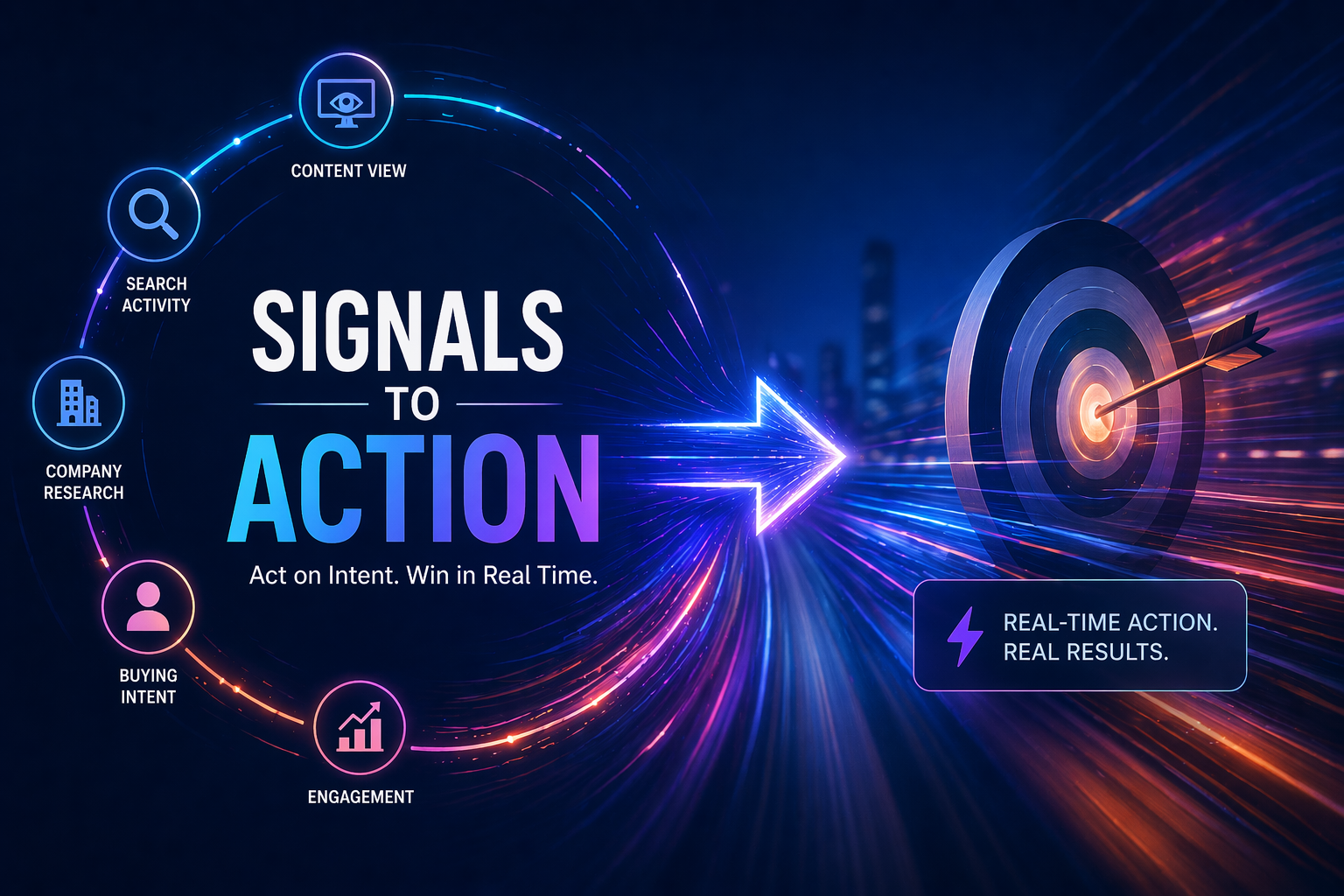
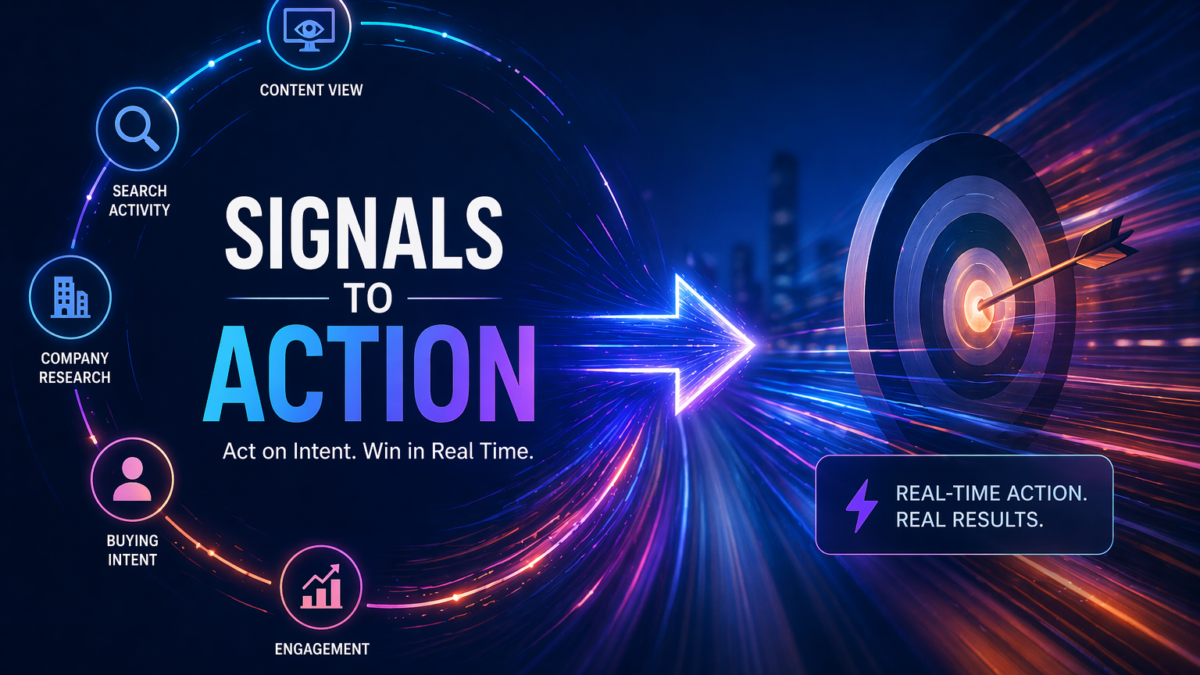
A company visiting your pricing page multiple times.
A decision-maker engaging with competitor content.
A spike in research activity around a specific solution category.
Individually, these actions don’t mean much. But together, they tell a story.
They reveal intent.
They indicate timing.
They highlight opportunity.
The problem isn’t a lack of signals. It’s that most teams don’t know how to act on them when it matters.
From Data Collection to Decision Making
In the past, collecting data was the goal. The more insights you had, the better your campaigns could perform.
But in 2026, data alone is no longer a competitive advantage. Everyone has access to it.
What separates high-performing teams is what they do next.
They don’t wait for leads to fill out forms.
They don’t rely on static nurture sequences.
They don’t treat every prospect the same.
Instead, they build systems that respond instantly to signals.
When a high-value account shows interest, outreach is triggered immediately. Messaging adapts in real time. Sales is notified before the window closes.
It’s not just marketing anymore—it’s orchestration.
Speed is the New Differentiator
There was a time when better messaging won deals. Then came better targeting.
Now, it’s speed.
The first brand to respond to intent often shapes the conversation. They define the narrative. They influence the criteria.
By the time competitors step in, the buyer’s perception is already formed.
This doesn’t mean rushing blindly. It means being ready—having the infrastructure, alignment, and clarity to act the moment opportunity appears.
Because in B2B today, timing isn’t just important. It’s decisive.
Why Most Teams Are Still Struggling
Despite having access to advanced tools and data, many organizations are still stuck in outdated workflows.
Marketing generates leads.
Sales follows up later.
Data sits in silos.
And in between these steps, momentum is lost.
The issue isn’t capability—it’s coordination.
Signal-based marketing requires alignment across teams, systems, and strategies. Without that, even the best data becomes useless.
What High-Performing Teams Are Doing Differently
The teams that are winning in 2026 aren’t necessarily doing more. They’re doing things differently.
They’ve moved away from rigid funnels and embraced fluid buyer journeys. They prioritize high-intent accounts over large lead volumes. And most importantly, they’ve built processes that allow them to act—fast.
For them, marketing isn’t about pushing messages. It’s about responding to behavior.
And that shift changes everything.
The Future: Marketing That Moves in Real Time
As AI continues to evolve, this shift will only accelerate. Systems will become better at detecting signals, predicting intent, and triggering actions automatically.
We’re moving toward a world where:
- Campaigns adapt in real time
- Outreach is triggered by behavior, not schedules
- Sales and marketing operate as a single, unified function
In this world, the brands that win won’t be the ones with the biggest budgets. They’ll be the ones that move the fastest and act the smartest.
Conclusion: The Cost of Waiting
In B2B marketing, the biggest risk is no longer doing the wrong thing.
It’s doing the right thing—too late.
The shift from signal to action isn’t just a trend. It’s a necessity.
Because in 2026, opportunities don’t wait. Buyers don’t pause. And markets don’t slow down.
The only question is:
Are you ready to act when it matters?