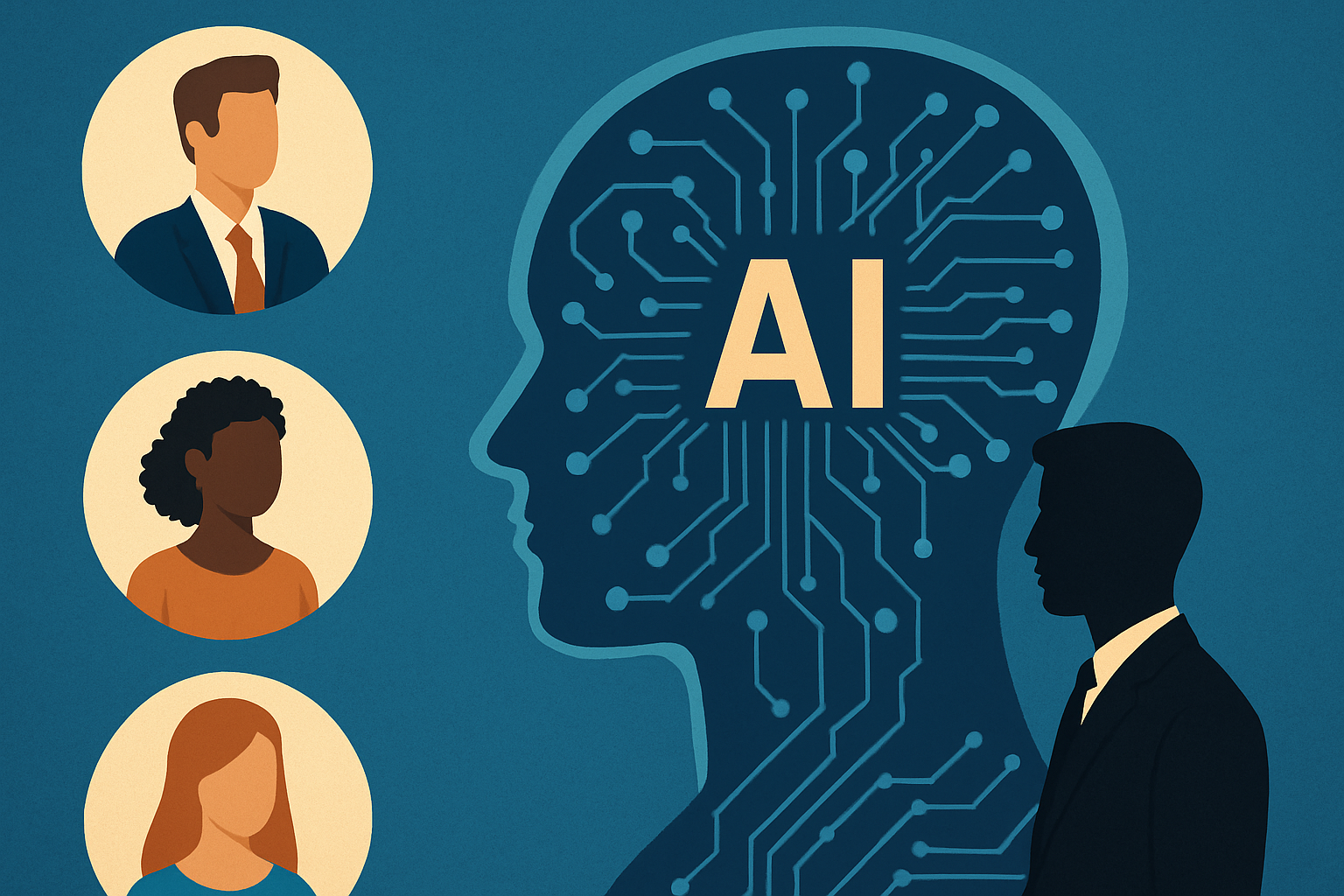
AI in Hiring: Revolutionizing Talent Acquisition or Reinforcing Bias?
 Gaurav Uttamchandani,
1 year ago
4 min read
Gaurav Uttamchandani,
1 year ago
4 min read
Table of Contents
Introduction
Artificial Intelligence (AI) is rapidly transforming the landscape of talent acquisition. From resume screening and candidate sourcing to video interview analysis, AI-powered tools promise to make hiring faster, fairer, and more efficient. But beneath this promise lies a growing concern: Could AI in hiring be reinforcing bias instead of removing it?
In this blog, we explore both sides of the AI-in-hiring revolution—its revolutionary potential and the risks of embedded bias. We’ll also share tips for HR leaders looking to adopt AI responsibly.
The Benefits of AI in Talent Acquisition
AI offers several advantages in the recruitment process:
- Speed: Automates repetitive tasks like resume filtering and scheduling.
- Scalability: Can analyze thousands of applications in seconds.
- Consistency: Applies the same criteria to all applicants.
- Predictive Analytics: Helps identify candidates with the highest success probability.
- Candidate Experience: Chatbots and AI-based platforms provide instant responses and 24/7 engagement.
These improvements not only reduce recruiter workloads but also improve the overall candidate experience. In high-volume hiring scenarios, AI ensures faster response times and smoother engagement.
Real-World Applications of AI in Hiring
- Resume Screening Tools: Platforms like HireVue and Pymetrics assess resumes using machine learning to rank candidates.
- Video Interview AI: Some systems analyze facial expressions, word choice, and tone of voice.
- Chatbots: Tools like Olivia or Mya interact with candidates, schedule interviews, and answer FAQs.
- Predictive Hiring Models: AI analyzes past hiring data to suggest the best candidate fit based on outcomes.
Many large enterprises are already using these technologies to streamline their hiring pipelines and focus on high-value human interaction.
Where Things Go Wrong: Bias in AI Hiring Tools
Despite these benefits, multiple reports and studies have shown that AI tools can inadvertently reinforce existing biases. Why?
- Biased Training Data: If an AI tool learns from biased hiring history, it may replicate those patterns.
- Algorithmic Opacity: Many tools operate as black boxes with limited transparency.
- Over-Reliance on Patterns: AI may penalize non-traditional career paths or undervalue minority experiences.
- Facial Analysis Risks: Tools analyzing facial features can disadvantage candidates with disabilities or certain ethnic backgrounds.
Case in Point: In 2018, Amazon scrapped its internal AI hiring tool after discovering it was biased against female applicants for technical roles.
Ethical Considerations and Regulations
HR leaders must understand the ethical and legal implications of deploying AI in hiring:
- Compliance: Ensure alignment with GDPR, EEOC guidelines, and local labor laws.
- Transparency: Provide candidates with clarity on how AI is used in their evaluation.
- Fairness Audits: Regularly audit AI models for disparate impact or unfair exclusions.
- Human Oversight: Keep humans in the loop for final decision-making.
Countries like the U.S., UK, and EU are starting to introduce regulations requiring algorithmic transparency and bias audits, making compliance more critical than ever.
Best Practices for Using AI in Hiring
- Vet AI Vendors Thoroughly
- Ask for validation studies and compliance reports.
- Use AI for Assistance, Not Decision-Making
- Combine algorithmic insights with human judgment.
- Diversify Training Data
- Ensure the AI is trained on inclusive, representative datasets.
- Monitor and Audit Regularly
- Set up checkpoints to catch drift or unintentional bias.
- Educate Your Team
- Train HR staff on how AI works and what its limitations are.
- Communicate With Candidates
- Be transparent about when and how AI is being used in the hiring process.
Future Outlook: Smarter, Fairer AI?
Emerging trends in HR tech show promise:
- Explainable AI (XAI) is making AI decisions more transparent.
- Bias mitigation algorithms are helping models adjust for known issues.
- AI Ethics Committees are becoming standard in large organizations.
- Responsible AI certifications are being introduced by global HR associations.
With these advances, the goal is clear: to build AI that enhances inclusion, not undermines it.
Conclusion
AI has the potential to revolutionize hiring—but only if it’s implemented responsibly. While it can improve efficiency and scalability, unchecked AI can perpetuate the very biases it was meant to eliminate.
For HR leaders and recruiters, the future lies in balancing automation with ethics, transparency, and human intuition. The responsibility is not just technical—it’s cultural, strategic, and deeply human.
Call to Action
Are you exploring AI solutions for hiring? Contact Us to learn how to evaluate tools for fairness, compliance, and effectiveness.
You May Also Like: AI Employees: The Extinction of Human-Driven Work?
Learn More: HR Tech Munch