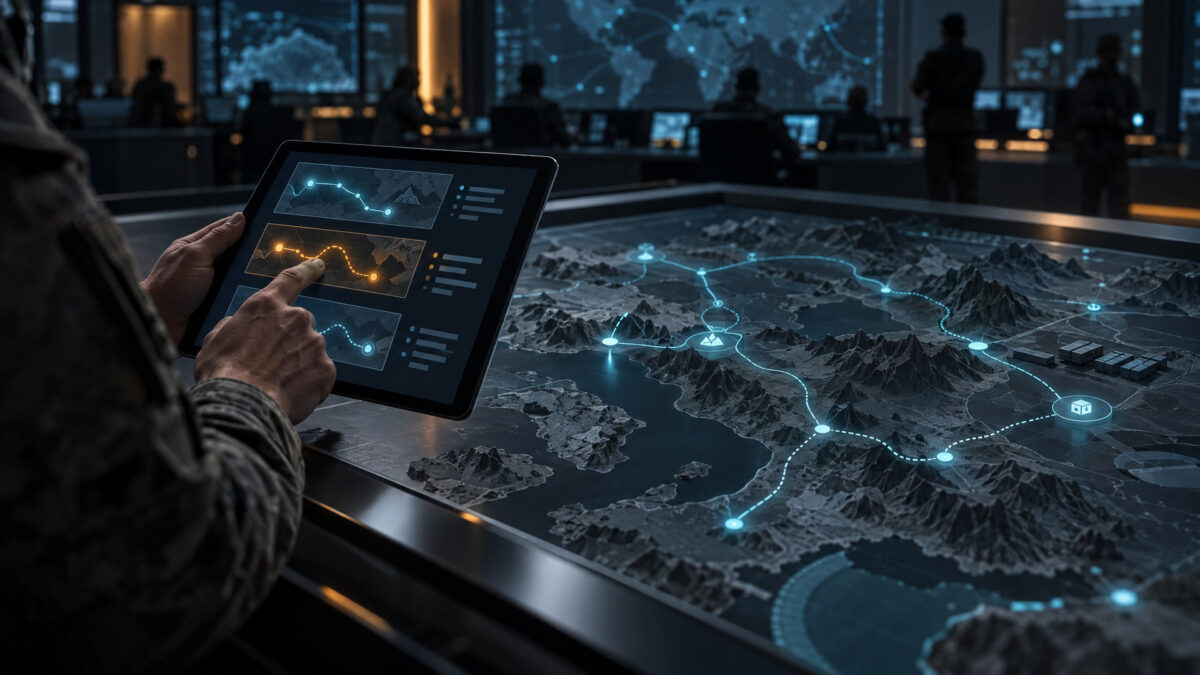
Poland signed a five-year Palantir AI deal for military decision-support software on Nov. 27. The agreement is estimated at about $300 million, according to Defense Minister Władysław Kosiniak-Kamysz as reported by Reuters and Bloomberg. The Polish Ministry of National Defence says the system will analyze information from multiple sources and help commanders assess options. It says people—not the software—will make operational decisions.
The ministry’s official announcement (in Polish) confirms the Nov. 27 signing in Warsaw and describes an AI-enabled decision-support system for the Polish Armed Forces. Its release does not publish an itemized price or rollout timetable, so the $300 million figure should be read as a reported estimate rather than a public contract breakdown.
What will the Palantir system do?
The defence ministry says the software is intended to combine and analyze information from different sources, build a shared picture of a situation and present commanders with possible courses of action. The ministry says the system is intended for use across the Armed Forces’ commands and service branches.
Politico and Bloomberg identify the software as Palantir’s Maven Smart System. The ministry describes it as decision support: AI may help identify threats and assess risk, but authorized personnel remain responsible for decisions. This distinction matters. The announcement describes a tool to assist commanders, not an autonomous system with authority to act.
What has Poland said about military data?
The ministry says the software will run on military infrastructure and that information will be processed inside a closed military environment. It says Palantir will not have access to the data, encryption keys or remote access to the system, while the Polish Armed Forces control who can access information.
Those are the Polish government’s stated safeguards. The public announcement does not provide a technical audit or the full contract terms, so readers should treat them as official assurances rather than independent verification. The ministry also says Poland is developing its own AIRON and NEFRYT systems, which could replace supplier tools in the future.
Why the deal matters beyond its price
The agreement puts a U.S. software provider into a sensitive part of Poland’s military decision-support infrastructure. It also highlights a wider European debate: established U.S. systems may offer capabilities governments want now, while long-term reliance on foreign suppliers can raise questions about control, resilience and technological independence. Reuters and Politico both describe that tension around the deal.
Polish officials say they selected Palantir because they wanted an operationally mature system. The ministry’s plan to develop AIRON and NEFRYT signals that the contract is not necessarily intended to end Poland’s work on domestic alternatives. The reported five-year term gives those projects a potential window to mature, although the ministry’s announcement does not specify a transition schedule.
For a broader discussion of human responsibility in AI systems, see iTMunch’s explainers on who is responsible when an AI agent makes a decision and what computer-use AI agents can and cannot do.
What remains unclear
The ministry’s public release does not detail the software’s deployment schedule, the individual data sources it will connect, the contract’s cost breakdown or the technical arrangements for auditing its operation. The estimated value and five-year term come from statements attributed to the defence minister by Reuters and Bloomberg. Those details may become clearer as further contract information is released.
Frequently asked questions
What is Poland buying from Palantir?
Poland signed an agreement for AI-enabled military decision-support software. Politico and Bloomberg identify the system as Palantir’s Maven Smart System.
How much is the Palantir deal worth?
Reuters and Bloomberg report an estimated value of about $300 million over five years, citing the Polish defence minister. The ministry’s published announcement confirms the agreement but does not provide an itemized financial breakdown.
Will the AI make military decisions?
The Polish ministry says AI will assist with information analysis, threat recognition and recommendations. It says authorized people will make decisions about actions.
Where will the military data be stored?
The ministry says the software will run on military infrastructure and that data, encryption keys and system access will remain under the Polish Armed Forces’ control. These are official assurances; the public release does not include a separate technical audit.
The significance of the agreement is not just its reported value. It is also a test of how military AI can support faster analysis while keeping data and decision authority under national control. Poland’s ministry says the system will operate that way; further contract details will show how those safeguards are implemented. Follow iTMunch for updates as more information becomes public.
Poland Signs Palantir Military AI Deal Estimated at $300M