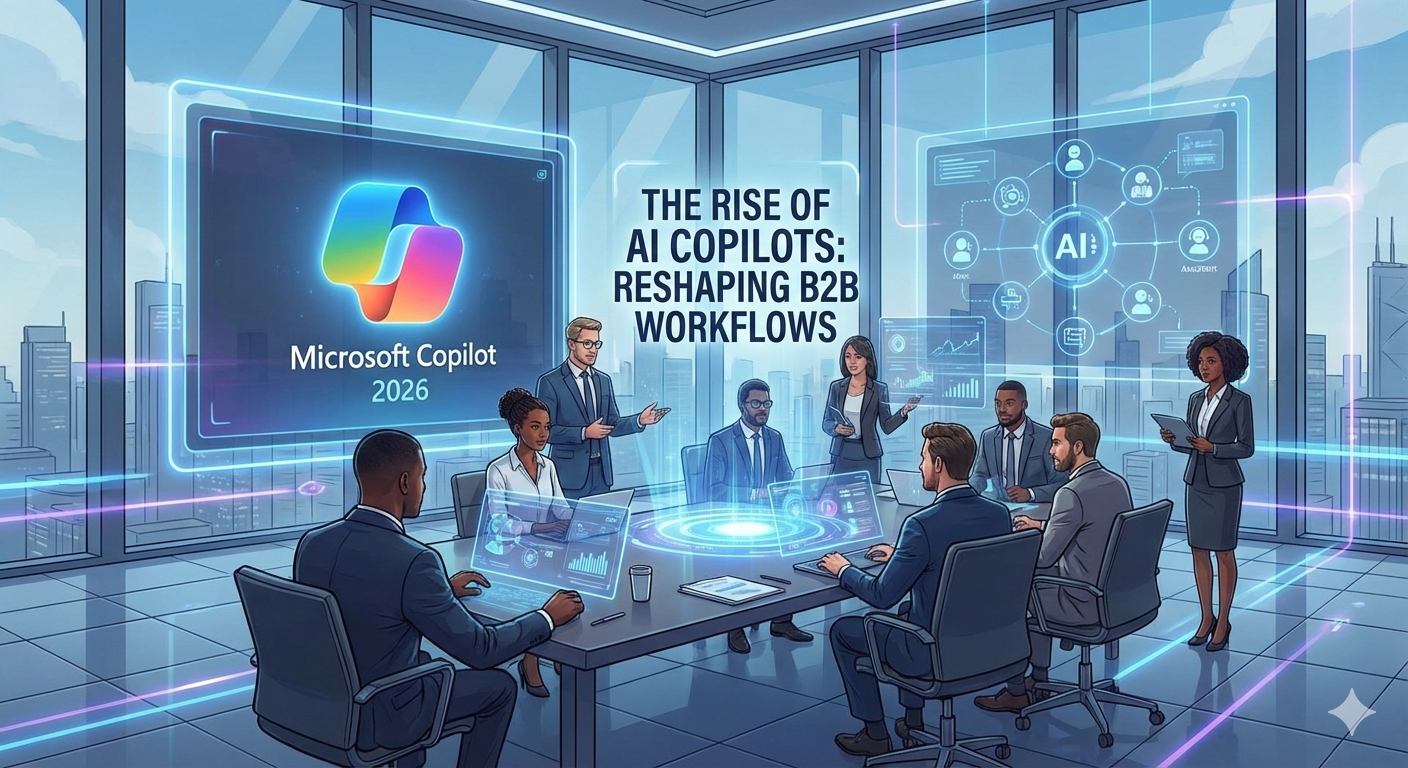
Microsoft Copilot and the Rise of AI Copilots: How Intelligent Assistance Is Reshaping B2B Workflows in 2026
 Vansh Banthia,
2 months ago
3 min read
Vansh Banthia,
2 months ago
3 min read
Enterprise AI is entering a new phase. After years of experimentation with chatbots and automation tools, businesses are now embracing AI copilots—systems designed not just to respond, but to work alongside teams.
At the forefront of this shift is Microsoft Copilot, embedded across Microsoft 365, Dynamics, and the broader enterprise stack. For B2B organizations, Copilot represents more than productivity gains—it signals a transformation in how knowledge, decisions, and execution converge.
This blog explores why AI copilots matter, how Microsoft Copilot is redefining enterprise workflows, and what B2B leaders should prepare for next.
What Is Microsoft Copilot?
Microsoft Copilot is an AI-powered assistant integrated directly into everyday enterprise tools such as:
- Microsoft Word, Excel, PowerPoint, and Outlook
- Microsoft Teams
- Dynamics 365 (CRM and ERP)
- Power Platform and Azure services
Unlike standalone AI tools, Copilot operates within existing workflows, using organizational data, permissions, and context to deliver relevant insights and actions.
This native integration is what makes Copilot a strategic enterprise capability rather than a novelty feature.
Why AI Copilots Are Different from Traditional Automation
Traditional automation focuses on rules and triggers. AI copilots focus on context and reasoning.
Copilot can:
- Summarize meetings and conversations
- Draft documents and proposals using internal data
- Analyze spreadsheets and highlight insights
- Recommend next actions based on patterns
For B2B teams, this means less time spent on execution and more time on decision-making and strategy.
The Impact on B2B Marketing Teams
Marketing teams are early beneficiaries of Copilot’s capabilities.
Smarter Content Creation
Copilot helps generate outlines, drafts, and summaries—but more importantly, it aligns content with internal knowledge, past performance, and brand context.
Campaign Intelligence
By analyzing performance data across channels, Copilot helps marketers understand what’s driving results and where to optimize.
Faster Collaboration
From campaign planning to reporting, Copilot reduces friction across teams by consolidating insights into a single interface.
For platforms like iTMunch, this complements AI-driven demand generation and content intelligence strategies.
Sales Teams and AI-Driven Assistance
Sales productivity has always been constrained by administrative work. Copilot changes this dynamic.
Real-Time Deal Intelligence
Copilot analyzes emails, CRM updates, and meeting notes to surface deal risks and opportunities.
Better Buyer Conversations
With access to historical data and account context, sales teams can engage buyers with relevance and precision.
Pipeline Visibility
Leadership gains clearer visibility into pipeline health without relying on manual reports.
Copilot in Customer Success and Operations
Beyond marketing and sales, Copilot enhances:
- Customer onboarding workflows
- Renewal forecasting
- Support ticket analysis
- Operational reporting
This cross-functional impact is what positions Copilot as an enterprise-wide intelligence layer.
Governance, Security, and Trust
Microsoft has emphasized enterprise-grade security, compliance, and permission-based data access within Copilot.
However, successful adoption requires:
- Clear governance policies
- AI usage guidelines
- Data hygiene and access controls
AI copilots amplify both strengths and weaknesses in organizational data—making preparation critical.
What B2B Leaders Should Do Now
To prepare for Copilot-driven workflows, leaders should:
- Identify high-friction processes
- Improve data quality and accessibility
- Train teams on AI collaboration
- Align AI initiatives with business outcomes
When combined with platforms like iTMunch, Copilot enables smarter demand generation, better buyer engagement, and faster growth.
The Bigger Shift: From Tools to Teammates
AI copilots represent a philosophical shift. They are not tools to be used occasionally—they are digital teammates embedded into daily work.
In this new model:
- Execution becomes faster
- Decisions become data-informed
- Teams become more strategic
Final Thoughts
Microsoft Copilot is not about replacing people—it’s about elevating how work gets done.
For B2B organizations navigating complexity and scale, AI copilots will define the next era of productivity and intelligence. Those who invest early in AI-ready workflows and platforms like iTMunch will be best positioned to compete.
In 2026, success won’t depend on who uses AI—but on who uses it intelligently.
Also read: Google Gemini: How Multimodal AI Is Redefining Enterprise Decision-Making in 2026