Generative AI in Search: How AI-Powered Search Engines Are Changing SEO in 2025
 Gaurav Uttamchandani,
4 months ago
5 min read
Gaurav Uttamchandani,
4 months ago
5 min read
Table of Contents
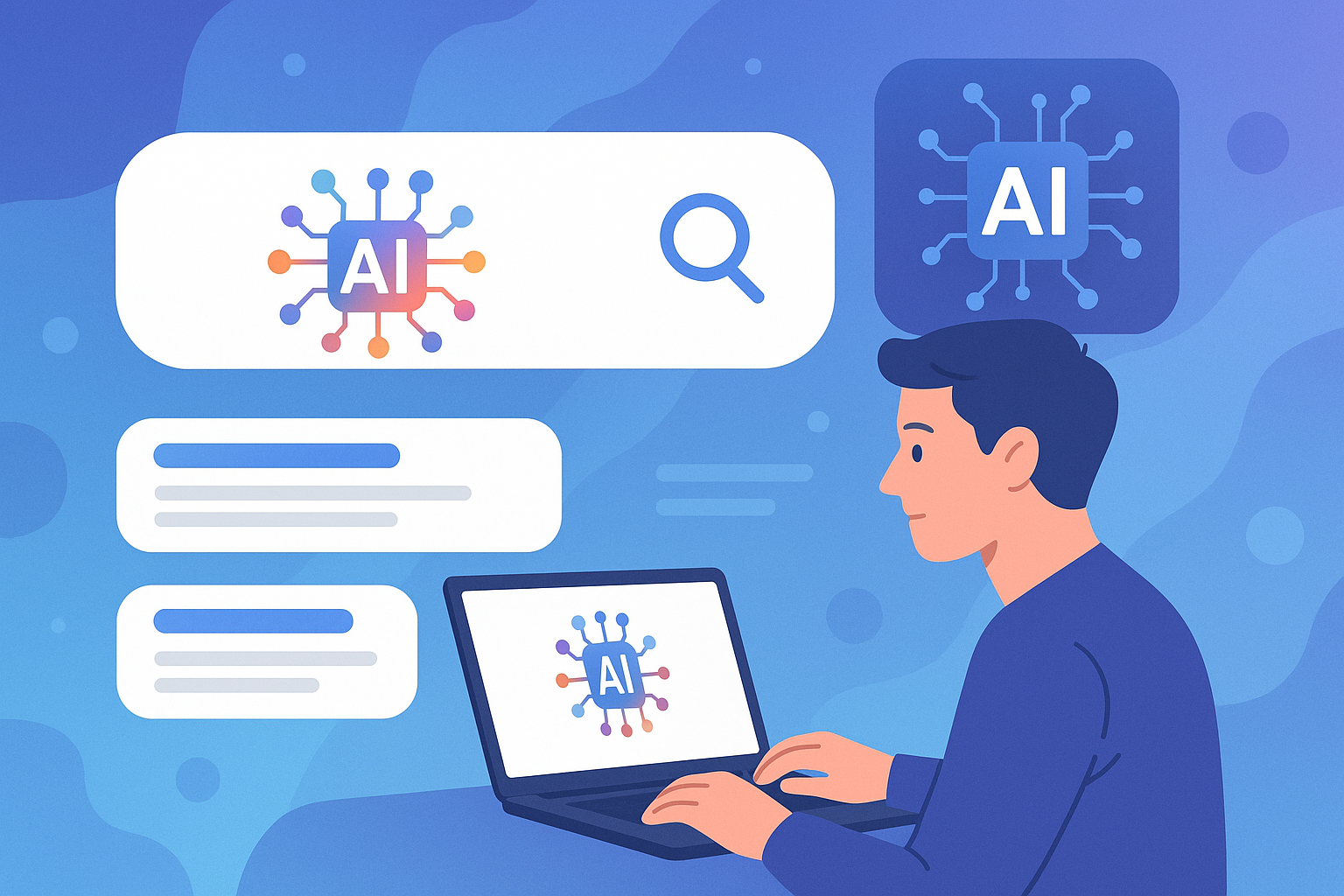
For years, the rules of search were simple: optimize your content for Google’s algorithms, rank high on SERPs, and watch the traffic roll in. But 2025 marks a turning point. With Generative AI-powered search engines—from Google’s AI Overviews to Perplexity AI and ChatGPT Search—SEO is no longer just about keywords and backlinks.
Instead, search is becoming conversational, context-driven, and AI-curated. For businesses, this means rethinking SEO strategies from the ground up.
So, how exactly is generative AI changing search in 2025—and what does it mean for your business? Let’s dive in.
What Is Generative AI in Search?
Generative AI in search uses large language models (LLMs) to deliver answers directly instead of showing a list of links. Rather than forcing users to click through multiple pages, AI-powered engines generate summaries, insights, or even actionable advice in real time.
Examples in Action (2025):
- Google AI Overviews: Integrated into search results, giving instant answers and content recommendations.
- Perplexity AI: Combines conversational Q&A with citations for transparency.
- ChatGPT Search (OpenAI): Offers AI-powered web search blending real-time results with natural language responses.
This shift is reducing the need for clicks—forcing marketers to optimize not just for rankings, but for visibility within AI-generated responses.
Why Generative AI Search Is Disruptive
1. Fewer Clicks to Websites
AI summaries often answer user queries directly. This reduces click-through rates (CTR), even if your page ranks high.
2. Higher Competition for Visibility
AI engines may only cite 3–5 sources per query, compared to Google’s 10+ blue links. This makes the fight for inclusion even tougher.
3. Conversational Queries Are Rising
Instead of typing “best CRM tools 2025,” users now ask: “Which CRM is best for startups in 2025 and why?”
This requires content optimized for intent + natural language, not just keywords.
4. Authority & Trust Matter More
AI models prioritize content from authoritative, high-quality, and frequently updated sources. Thin, keyword-stuffed blogs are at risk of being ignored completely.
Opportunities for Marketers
Despite the disruption, AI-powered search opens new opportunities for forward-thinking businesses.
1. AI Snippet Optimization
Just like featured snippets in traditional SEO, businesses can now target AI answer boxes by structuring content clearly (FAQs, bullet points, schema markup).
2. Content Designed for AI Training
AI search engines learn from credible, structured content. Long-form, research-backed, and semantically rich content has a higher chance of being referenced.
3. Voice + Conversational SEO
With AI search, voice queries are surging. Optimizing for natural language (“how,” “why,” “best way to…”) ensures higher inclusion rates in AI answers.
4. Building Multi-Format Content
AI engines don’t just pull from text—they reference video, podcasts, and infographics. Multi-format content has a higher chance of being surfaced.
How Businesses Can Adapt SEO Strategies in 2025
Here’s a step-by-step playbook for staying ahead in the era of AI-driven search:
- Focus on Topical Authority
- Build deep content clusters around your niche.
- Example: Instead of one CRM blog, create a full CRM Knowledge Hub with guides, comparisons, and FAQs.
- Optimize for Conversational Queries
- Use natural, question-based H2s and H3s.
- Example: “What’s the best AI tool for small businesses in 2025?”
- Implement Structured Data & Schema
- Add FAQ schema, How-To markup, and product schema to make your content machine-readable.
- Double Down on Quality & Credibility
- Back claims with statistics, case studies, and authoritative links.
- AI engines prefer citing reliable, verifiable sources.
- Leverage Multi-Channel SEO
- Don’t rely solely on web traffic. Distribute content via LinkedIn, YouTube, podcasts, and newsletters—channels less impacted by AI search disruption.
- Track AI Visibility
- Tools like BrightEdge AI & Semrush AI reports now track whether your site is being cited in AI answers. Start monitoring now.
See Also: Why Personalization 3.0 Is the Key to Higher B2B Conversions
Real-World Example
In early 2025, a SaaS company optimized its knowledge base articles with FAQ schemas and clear, concise summaries. Within 2 months, its content started being cited in Google AI Overviews and Perplexity AI responses.
The result?
- 2.5x higher brand impressions despite fewer raw clicks.
- A 30% jump in direct branded searches, as users remembered the company’s name from AI responses.
This shows that while clicks may drop, brand visibility and authority can rise significantly.
The Future of SEO in an AI World
The rise of generative AI search doesn’t mean SEO is dead—it means SEO is evolving. In fact:
- Traffic metrics will shift → from clicks to brand mentions in AI answers.
- Content must evolve → from keyword-driven to intent + authority-driven.
- Marketers must adapt → by integrating SEO with content distribution, brand authority, and multi-channel growth.
The winners in 2025 will be those who embrace AI search, not resist it.
Conclusion
Generative AI-powered search engines are transforming how people discover information in 2025. With fewer clicks and smarter answers, SEO strategies must evolve from chasing rankings to building brand authority, structured content, and multi-format experiences.
For marketers, the shift is clear: don’t just optimize for search engines—optimize for AI.
You May Also Like: Whitepapers in the Age of Voice: Optimizing for Smart Assistants and Audio Summaries