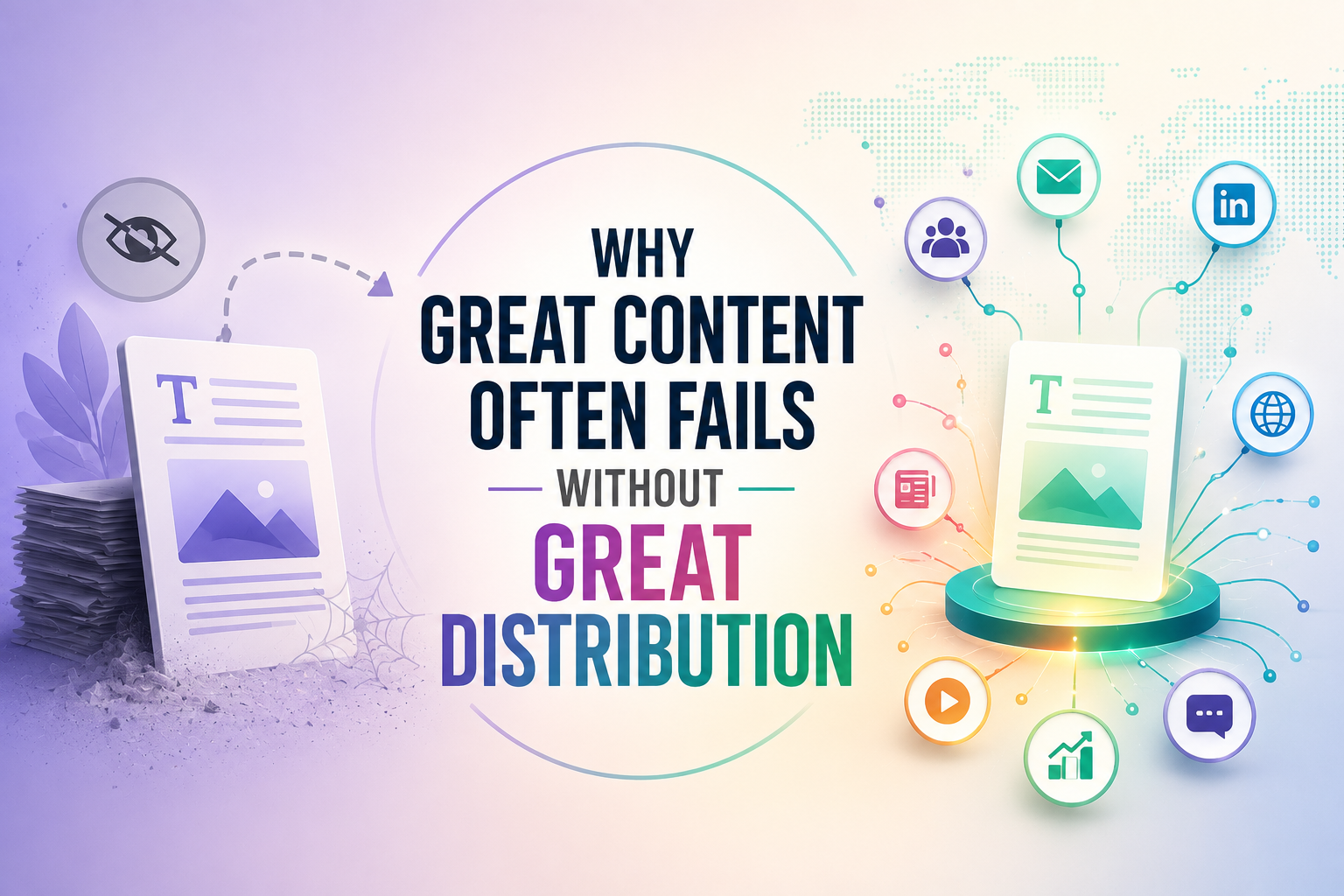
Every marketing team has experienced it. A thoughtfully researched white paper, an insightful industry report, or a compelling blog post is published with high expectations. The content is accurate, valuable, visually polished, and aligned with business goals. Yet weeks later, engagement remains underwhelming, leads are limited, and the content quietly fades into the archive. This is where Content syndication becomes essential, helping valuable content reach the right audiences instead of getting lost in an increasingly crowded digital landscape.
The instinctive response is often to question the quality of the content itself. Was the topic strong enough? Did the messaging resonate? Should more visuals have been added?
More often than not, the problem is something else entirely: distribution.
In today’s crowded digital environment, producing excellent content is only half the challenge. Ensuring that the right audience actually discovers it has become equally important. As AI-powered search reshapes buyer behavior and content volume continues to rise across every industry, Content syndication is emerging as a critical strategy for extending the reach and impact of valuable content.
For B2B decision-makers, success is no longer determined by what gets published. It depends on what gets discovered.
Great Content Alone No Longer Guarantees Visibility
The internet has never contained more business content than it does today. Every day, organizations publish blogs, research reports, webinars, videos, customer stories, and thought leadership designed to educate buyers. At the same time, AI tools have made content creation significantly faster, increasing competition for attention across nearly every industry.
The challenge is not a shortage of quality information. It is an abundance of it.
Enterprise buyers are also changing how they conduct research. Instead of relying on a single search engine, they move between AI assistants, professional communities, industry publications, newsletters, podcasts, and social platforms before engaging with vendors. Recent advances in AI-powered search experiences from Google, Microsoft’s Copilot ecosystem, and conversational AI platforms have accelerated this shift, allowing buyers to receive summarized answers without visiting dozens of individual websites.
This means exceptional content may never reach its intended audience if it remains confined to a company website.
Even organizations with strong domain authority cannot assume every valuable resource will naturally rank or be discovered organically. Search algorithms evolve constantly, buyer behavior changes rapidly, and competition continues to intensify.
That is why Content syndication has become increasingly relevant. Rather than waiting for audiences to find content, businesses are strategically placing valuable assets where potential buyers already spend their time researching and learning. Content syndication helps brands maintain visibility across multiple trusted digital channels instead of depending solely on organic search traffic.
Distribution is no longer a promotional afterthought. It is a strategic component of content success, and Content syndication plays an increasingly important role in making that possible.
Distribution Creates Business Value Beyond Traffic
Many organizations still evaluate content performance primarily through website visits. While traffic remains important, modern B2B marketing requires a broader perspective.
The goal is not simply attracting anonymous visitors. It is reaching qualified professionals who influence purchasing decisions.
This is where effective distribution delivers measurable value. By expanding the visibility of high-quality assets across trusted digital channels, companies increase opportunities to educate buyers earlier in their decision-making journey. Content syndication enables organizations to place educational resources in front of relevant audiences at multiple stages of the buying process.
Content syndication also supports consistency throughout long buying cycles. Enterprise purchasing decisions often involve multiple stakeholders conducting independent research over several months. Repeated exposure to valuable insights across respected industry platforms reinforces credibility and strengthens brand recognition long before formal sales conversations begin.
This aligns with broader trends shaping B2B marketing today. Research continues to show that buyers complete a significant portion of their evaluation independently before engaging with vendors. They consume multiple sources, compare perspectives, and develop shortlists based on the information available during this self-directed research process.
Organizations that combine high-quality educational content with Content syndication become more visible throughout those moments of independent discovery.
Importantly, distribution should never be confused with excessive promotion. Buyers respond positively to content that helps them solve business challenges, understand market developments, or evaluate technology decisions. When valuable information appears in relevant environments, it supports informed decision-making rather than interrupting it.
The objective is not greater exposure for its own sake. It is meaningful visibility among audiences who genuinely benefit from the expertise being shared, which is exactly what a well-planned Content syndication strategy is designed to achieve.
The Future of Content Belongs to Brands That Reach Buyers Everywhere
Content marketing is entering a new phase where success depends on both creation and distribution working together. One without the other creates an incomplete strategy.
Organizations are investing more heavily in original research, executive thought leadership, customer success stories, and educational resources because these formats build trust with increasingly sophisticated buyers. However, even the strongest content cannot influence decisions if it remains unseen.
This reality is encouraging marketing leaders to rethink how they measure performance. Instead of focusing solely on publishing frequency, they are evaluating audience reach, engagement quality, brand visibility, and how effectively content supports buyer education across multiple digital touchpoints.
In this environment, Content syndication complements broader marketing initiatives by helping valuable insights travel beyond owned channels. It extends the lifespan of existing assets, introduces brands to new audiences, and reinforces authority across the digital ecosystem where modern buyers conduct research.
As AI continues transforming search experiences and content discovery becomes increasingly fragmented, distribution will only grow in importance. The brands that consistently appear across trusted industry sources, professional communities, and authoritative platforms will remain visible even as discovery habits continue to evolve.
Great content deserves to be seen. But visibility does not happen automatically.
For B2B organizations, the most successful content strategies will combine exceptional storytelling with intentional distribution. That combination ensures expertise reaches the people who need it most, creating stronger awareness, better buyer engagement, and greater long-term marketing impact. In a marketplace where attention is increasingly difficult to earn, Content syndication is no longer simply an amplification tactic, it is an essential part of making great content matter.