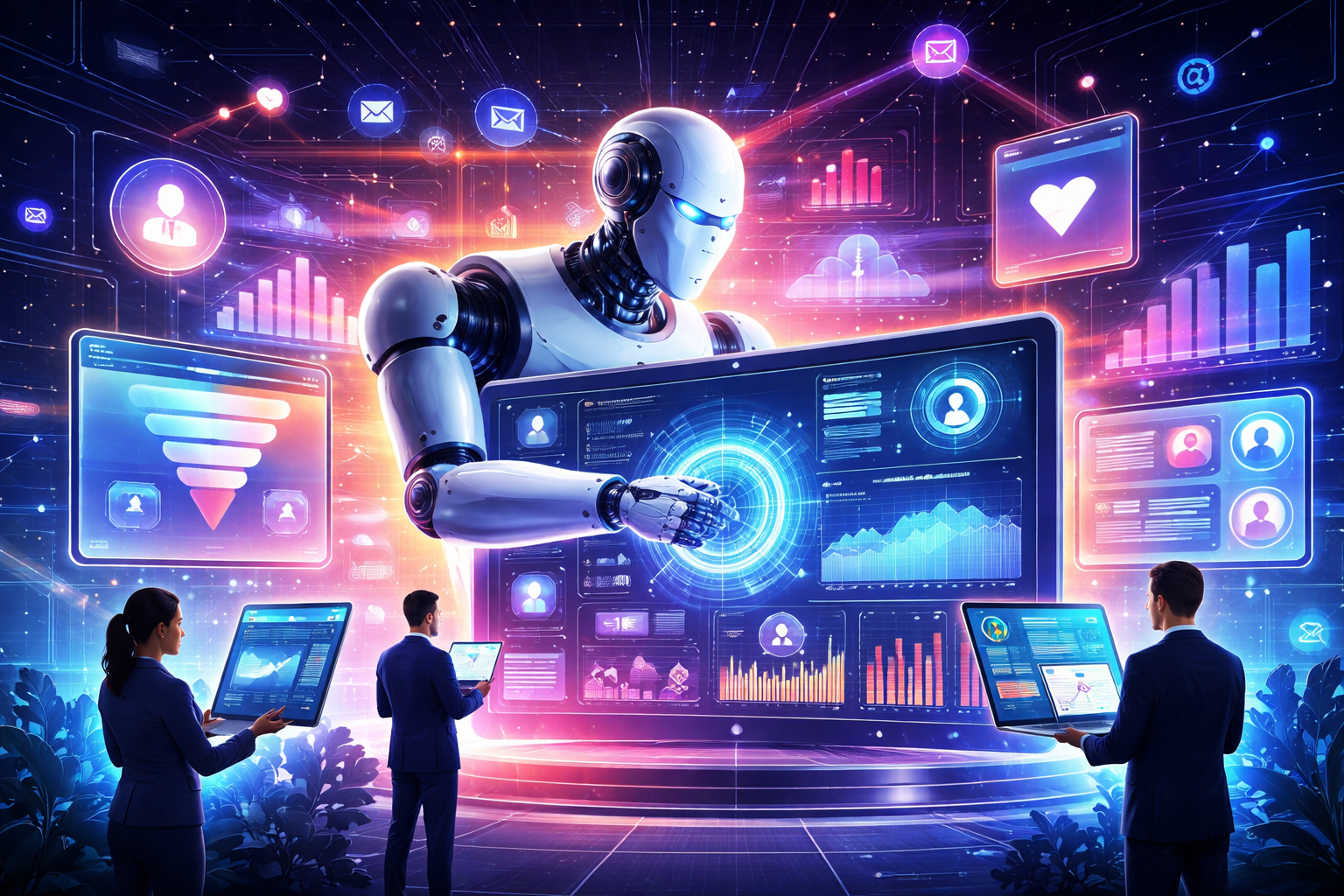
Marketing automation has been evolving for years—from basic email workflows to advanced AI-powered personalization. But a new concept is now emerging that could redefine how businesses approach marketing entirely: Autonomous Marketing Systems.
Unlike traditional automation tools that require human input and manual optimization, autonomous marketing systems use artificial intelligence to plan, execute, analyze, and optimize campaigns independently.
For B2B companies looking to scale faster and improve efficiency, this shift represents one of the most significant transformations in modern marketing.
What Are Autonomous Marketing Systems?
Autonomous marketing systems are AI-driven platforms capable of managing marketing activities with minimal human intervention.
These systems go beyond automation by combining multiple capabilities, including:
- data analysis and audience segmentation
- campaign planning and execution
- real-time optimization
- performance tracking and reporting
- predictive decision-making
Instead of marketers manually adjusting campaigns, the system continuously learns from data and improves outcomes on its own.
Why This Trend Is Emerging Now
Several technological advancements have made autonomous marketing possible.
Rise of Generative AI
Generative AI tools can now create high-quality content, including emails, ads, and landing pages, at scale.
This allows systems to produce and test multiple variations of campaigns automatically.
Advanced Data Analytics
Modern AI systems can process vast amounts of data in real time, identifying patterns and trends that humans might miss.
Integration of Marketing Tools
Marketing platforms are becoming more connected, allowing AI systems to manage multiple channels from a single interface.
These developments are enabling a shift from assisted marketing to self-operating marketing systems.
How Autonomous Marketing Works in Practice
Autonomous marketing systems follow a continuous cycle of learning and optimization.
Step 1: Data Collection
The system gathers data from multiple sources, including websites, CRM platforms, and campaign analytics tools.
Step 2: Audience Segmentation
AI analyzes user behavior and segments audiences based on intent, preferences, and engagement patterns.
Step 3: Campaign Creation
The system generates content such as emails, ads, and landing pages tailored to different audience segments.
Step 4: Execution and Optimization
Campaigns are launched automatically, and the system continuously adjusts variables such as targeting, messaging, and timing to improve performance.
Step 5: Performance Analysis
AI evaluates campaign results and applies insights to future strategies.
This cycle repeats continuously, allowing campaigns to improve over time without manual intervention.
Benefits for B2B Companies
Autonomous marketing systems offer several advantages for organizations looking to scale their marketing efforts.
Increased Efficiency
By automating repetitive tasks and decision-making processes, businesses can reduce manual workload and focus on strategic initiatives.
Faster Campaign Optimization
AI can test and adjust campaigns in real time, leading to better performance compared to manual optimization.
Improved Personalization
Autonomous systems can deliver highly personalized experiences at scale by analyzing individual user behavior.
Better ROI
By continuously optimizing campaigns, businesses can achieve higher returns on their marketing investments.
Challenges and Considerations
While autonomous marketing offers significant potential, it also introduces new challenges.
Loss of Human Control
Fully autonomous systems may make decisions that require human oversight, especially in sensitive campaigns.
Data Dependency
The effectiveness of these systems depends on the quality and availability of data.
Ethical and Brand Concerns
Businesses must ensure that AI-generated content aligns with brand values and ethical standards.
Organizations should adopt a balanced approach where AI handles execution while humans provide strategic direction and oversight.
The Future of Marketing
Autonomous marketing systems represent a shift toward self-optimizing business processes.
In the coming years, these systems may become capable of managing entire marketing funnels—from lead generation to conversion—without significant human involvement.
For B2B companies, this means faster growth, improved efficiency, and the ability to compete in increasingly data-driven markets.
However, success will depend on how effectively businesses integrate these systems while maintaining control over brand messaging and customer relationships.
Conclusion
The rise of autonomous marketing systems marks a new chapter in the evolution of digital marketing.
By combining artificial intelligence, data analytics, and automation, businesses can create marketing strategies that are not only efficient but also continuously improving.
For organizations looking to stay ahead of the competition, embracing this technology could be a key step toward building a smarter, more scalable marketing engine.
In the near future, the question will not be whether to adopt autonomous marketing—but how quickly businesses can adapt to this new reality