Autonomous IT Operations (AIOps): The Next Evolution of IT Management
 Vansh Banthia,
3 weeks ago
3 min read
Vansh Banthia,
3 weeks ago
3 min read
Modern organizations rely heavily on complex digital infrastructures that include cloud environments, distributed applications, microservices, and large volumes of data. Managing these systems has become increasingly challenging for IT teams, especially as the number of applications and services continues to grow. AIOps plays a crucial role in addressing these challenges.
Traditional IT monitoring tools often struggle to keep up with this complexity. As a result, organizations are turning to AIOps to improve system monitoring, incident management, and operational efficiency.
By combining artificial intelligence, machine learning, and advanced analytics, AIOps platforms help IT teams detect issues faster, automate responses, and maintain performance at scale.
With the integration of AIOps, teams can enhance their capabilities and proactively manage their environments.
What Is AIOps?
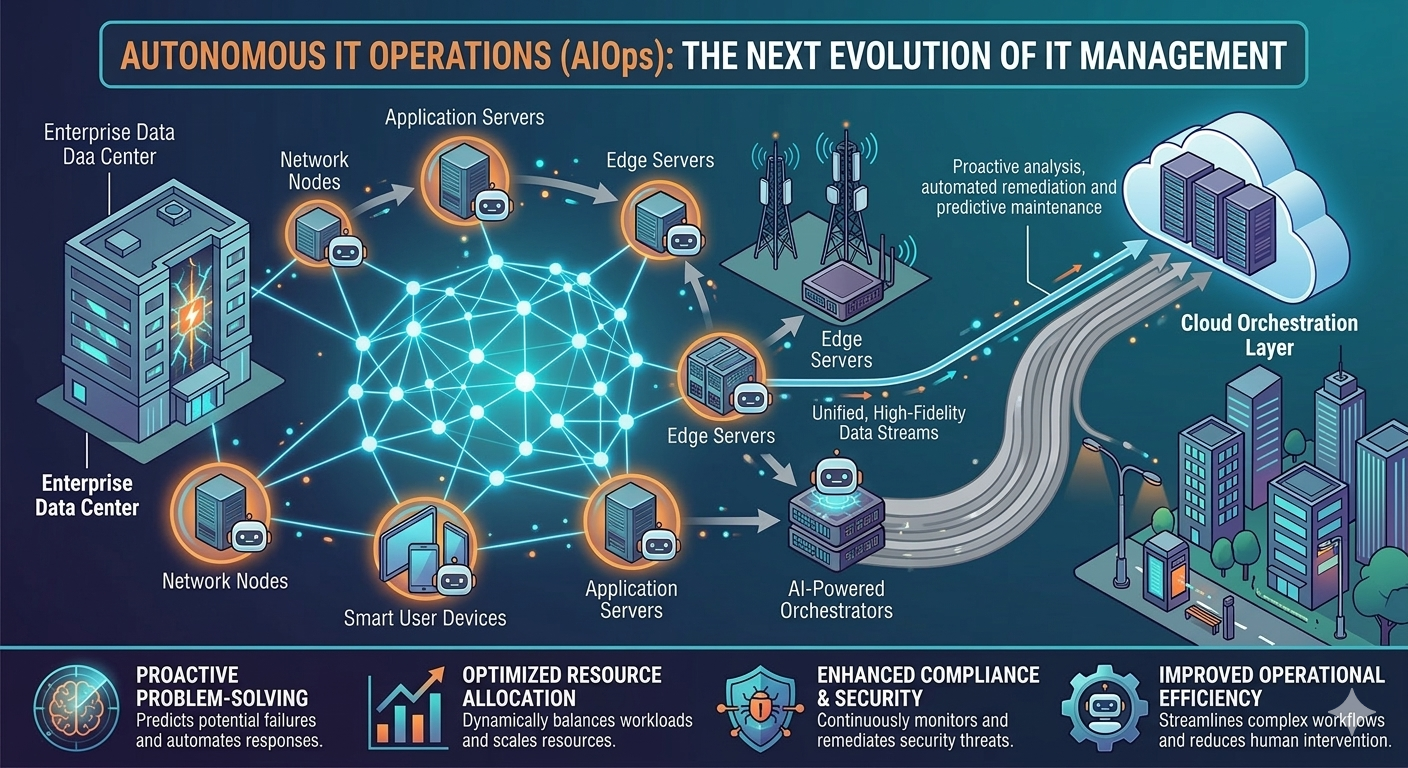
AIOps refers to the application of artificial intelligence and machine learning technologies to IT operations. These platforms analyze vast amounts of operational data generated by IT systems and use algorithms to identify patterns, detect anomalies, and automate responses.
AIOps solutions integrate with multiple IT tools and infrastructure components to collect data such as:
- Application performance metrics
- System logs and alerts
- Network activity
- Infrastructure performance data
By analyzing this information in real time, platforms provide insights that help teams manage complex environments more effectively.
Why Businesses Are Adopting AIOps
The growing complexity of IT ecosystems has made manual monitoring increasingly inefficient. Organizations are adopting AIOps solutions to address several operational challenges.
Managing Large Volumes of IT Data
Modern IT environments generate massive amounts of monitoring data. AIOps systems can process and analyze this information much faster than manual analysis.
Faster Incident Detection
AI-powered monitoring tools can identify anomalies and potential issues before they escalate into major outages.
Automated Problem Resolution
Some platforms can automatically trigger corrective actions, reducing downtime and improving service reliability.
Improved Operational Efficiency
By automating repetitive monitoring tasks, operations allow IT teams to focus on strategic initiatives rather than routine troubleshooting.
Key Applications of AIOps
Technology is being used across several areas of IT operations.
Infrastructure Monitoring
AI-powered systems continuously monitor servers, networks, and cloud resources to detect performance issues.
Root Cause Analysis
Machine learning algorithms can analyze historical data to determine the underlying causes of system failures.
Capacity Planning
Predictive analytics helps IT teams anticipate resource requirements and optimize infrastructure usage.
Security Monitoring
Tools can also identify unusual patterns that may indicate cybersecurity threats.
Challenges in Implementing AIOps
While there are significant benefits, organizations must overcome certain challenges during implementation.
Integrating AIOps platforms with existing IT systems can require significant planning and configuration. Organizations also need high-quality operational data for AI algorithms to produce accurate insights.
Additionally, IT teams may require new skills and training to effectively manage AI-driven operations platforms.
The Future of Intelligent IT Operations
As digital transformation accelerates across industries, infrastructures will continue to grow in scale and complexity. AIOps is expected to play an increasingly important role in helping organizations maintain reliable and efficient technology environments.
In the future, autonomous operations platforms may evolve further to provide fully automated incident management, predictive maintenance, and self-healing IT systems.
By combining human expertise with advanced AI capabilities, AIOps is shaping the next generation of intelligent IT operations.