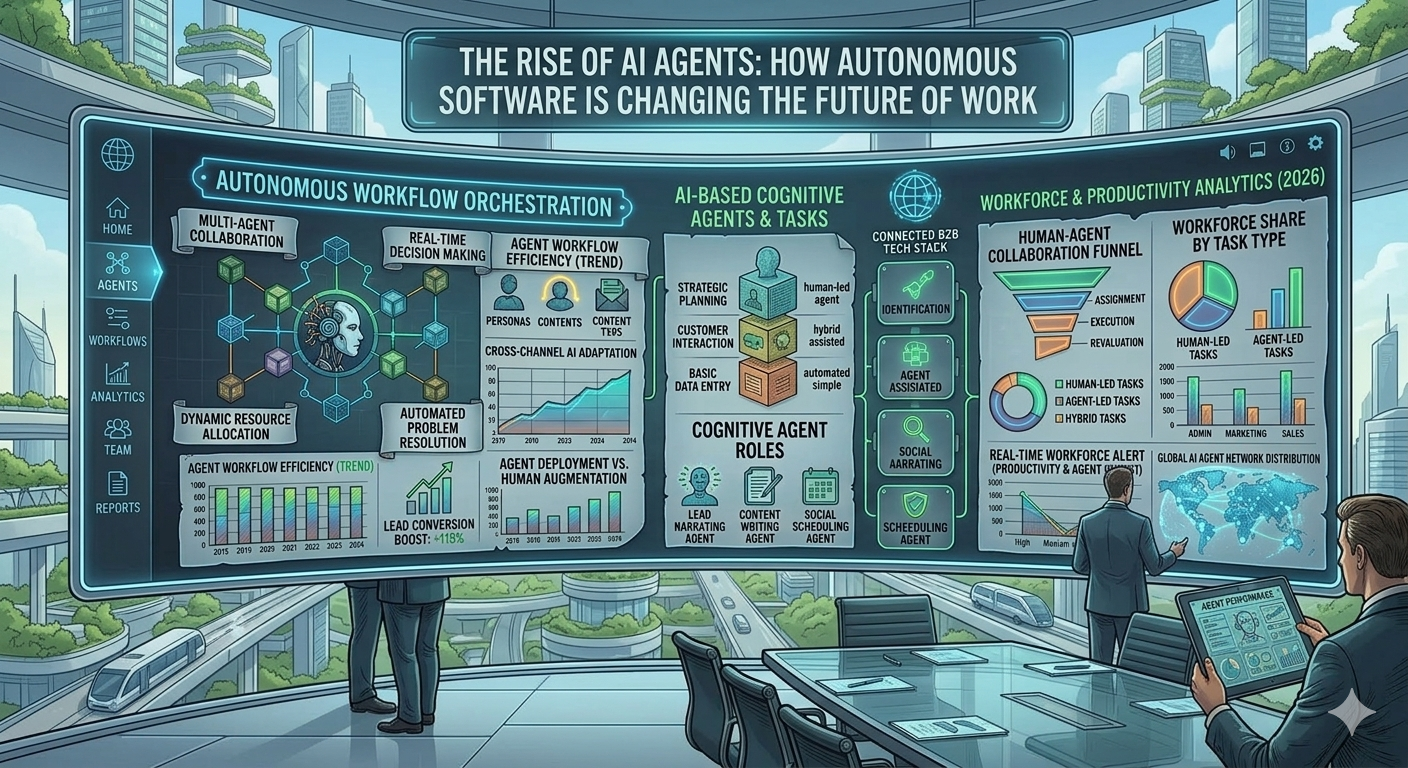
The Rise of AI Agents: How Autonomous Software Is Changing the Future of Work
 Simon Powell,
3 weeks ago
3 min read
Simon Powell,
3 weeks ago
3 min read
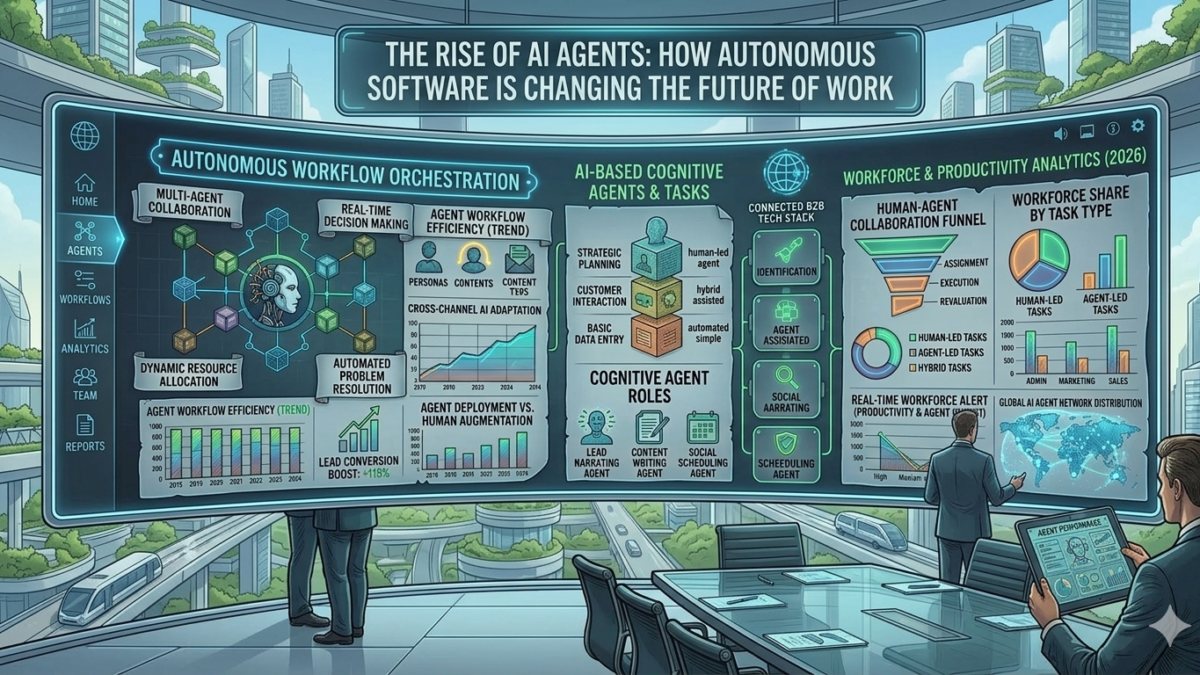
For years, businesses have used automation to streamline repetitive tasks. But a new evolution is emerging in the world of artificial intelligence: AI agents.
Unlike traditional automation tools that follow fixed rules, AI can make decisions, complete complex workflows, and interact with multiple systems autonomously. From sales outreach and customer support to coding and research, these intelligent digital assistants are rapidly transforming how companies operate.
As organizations increasingly adopt AI-driven tools, the workplace is shifting toward a future where humans collaborate with autonomous systems rather than simply using software tools.
Technology platforms and innovation-focused media outlets like iTMunch frequently explore how emerging technologies such as AI are reshaping industries ranging from IT and fintech to marketing and startups.
What Are AI Agents?
AI agents are software systems designed to perform tasks independently by combining artificial intelligence, machine learning, and automation.
Unlike simple chatbots or scripted automation, AI agents can:
- Understand complex instructions
- Access multiple tools or platforms
- Make decisions based on data
- Execute multi-step tasks without constant human input
For example, an AI agent could:
- Analyze sales leads
- Send personalized outreach emails
- Schedule meetings
- Update CRM records
- Generate reports
—all automatically.
This level of autonomy is why many experts believe AI represents the next major leap after generative AI.
Why AI Is Gaining Momentum
Several technological trends are accelerating the adoption of AI agents across industries.
1. Rapid Advances in Large Language Models
Modern AI models can understand natural language instructions and convert them into actions. This allows AI agents to execute tasks simply by interpreting human prompts.
2. Integration With Business Software
AI agents can connect with CRM systems, email platforms, analytics tools, and databases, allowing them to perform real workflows rather than just answering questions.
3. Demand for Productivity
Organizations are constantly searching for ways to increase productivity without increasing operational costs. AI agents provide a scalable solution by automating complex digital work.
Real-World Use Cases of AI Agents
1. AI Sales Assistants
AI-powered agents can qualify leads, send follow-ups, and maintain CRM updates automatically. Sales teams benefit by focusing on relationship building and closing deals rather than manual tasks.
2. Customer Support Automation
AI agents can handle customer inquiries, troubleshoot issues, and escalate complex cases to human support teams.
3. Marketing Campaign Optimization
Marketing teams are deploying AI agents to analyze campaign data, adjust budgets, and optimize targeting strategies in real time.
4. Software Development
AI coding agents can generate code, debug errors, and test applications, dramatically accelerating development cycles.
Benefits for Businesses
Companies implementing AI agents are already experiencing several advantages.
Improved efficiency
Tasks that once took hours can now be completed in minutes.
Reduced operational costs
Automation reduces the need for manual repetitive work.
Faster decision-making
AI agents analyze data quickly and provide actionable insights.
Scalability
Businesses can manage larger workloads without increasing headcount.
Challenges and Concerns
Despite their potential, AI agents also present new challenges.
Security and data privacy remain major concerns, especially when AI systems access sensitive business information.
Over-automation risks may arise if organizations rely too heavily on AI without human oversight.
Additionally, businesses must carefully monitor AI agents to ensure decisions remain ethical, transparent, and aligned with company goals.
The Future of AI Agents
The next wave of AI innovation will likely focus on collaborative intelligence, where humans and AI agents work together seamlessly.
Instead of replacing human roles, AI agents will act as digital teammates, handling operational tasks while professionals focus on creativity, strategy, and complex decision-making.
As technology continues evolving, companies that successfully integrate AI agents into their workflows will gain a significant competitive advantage.
Conclusion
AI agents represent a major shift in how software works. Rather than simply responding to commands, these intelligent systems can analyze, decide, and execute tasks autonomously.
For businesses navigating an increasingly digital landscape, AI agents offer a powerful opportunity to enhance productivity, streamline operations, and unlock new levels of efficiency.
The organizations that embrace this technology today will be the ones shaping the future of work tomorrow.