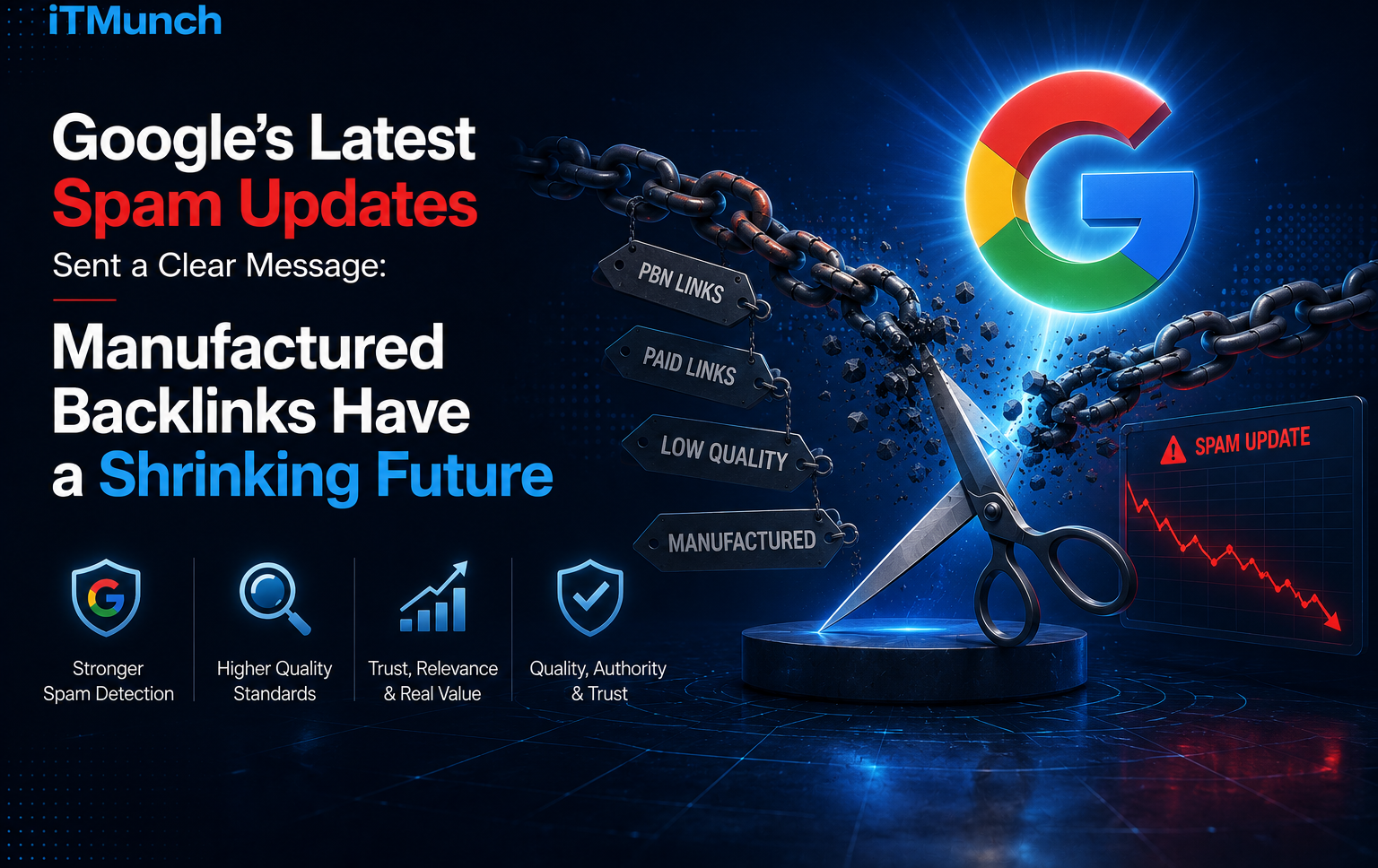
Google’s Latest Spam Updates Sent a Clear Message: Manufactured Backlinks Have a Shrinking Future
 Purva Wankhade,
2 months ago
5 min read
Purva Wankhade,
2 months ago
5 min read
For years, building a Backlink strategy often meant chasing quantity over quality. Businesses purchased links, joined private blog networks, exchanged placements, and relied on large-scale outreach campaigns designed more for search engines than for readers. While many of these tactics produced short-term gains, Google’s continuous algorithm updates have steadily shifted the rules of the game.
The latest spam updates reinforce a message that has been growing louder every year: search rankings are increasingly earned through credibility rather than manipulation. Google’s advances in spam detection, AI-powered search, and content evaluation are making it far more difficult for manufactured backlink profiles to influence rankings over the long term.
For B2B decision makers, this represents more than an SEO adjustment. It signals a broader shift in how digital authority is established. In an era where AI-powered search experiences, knowledge panels, and conversational search engines increasingly shape buyer discovery, businesses must rethink what a valuable Backlink actually represents.
Google Is Measuring Trust, Not Just Links
A decade ago, search algorithms primarily viewed backlinks as votes of confidence. The more websites linking to a page, the stronger its perceived authority became. That approach inevitably encouraged artificial link-building practices that prioritized volume over relevance.
Today’s search ecosystem operates very differently. Google’s spam detection systems continue becoming more sophisticated, using machine learning to identify unnatural link patterns, manipulative anchor text, expired-domain abuse, scaled content networks, and low-value websites created primarily for search rankings. Recent spam policy enforcement has demonstrated Google’s continued focus on reducing the visibility of sites relying on artificial ranking signals.
At the same time, the introduction of AI-powered search experiences has changed how authority is evaluated. Search engines increasingly analyze topical expertise, content originality, author credibility, user engagement, contextual relevance, and even the trustworthiness of content covering critical topics such as cloud resilience, alongside every Backlink pointing to a website. A link from a highly trusted, industry-relevant publication now carries significantly greater value than dozens of links from unrelated or low-quality domains.
This evolution reflects a larger goal. Google is attempting to reward organizations that genuinely contribute useful information rather than those that simply master ranking tactics.
For enterprise organizations, this means backlink strategies must align with brand authority, industry expertise, and long-term reputation instead of isolated SEO campaigns.
The Future of Backlinks Is Built on Authority
A strong Backlink profile is no longer created through aggressive outreach alone. It is increasingly earned by publishing information that industry publications, analysts, researchers, customers, and business communities naturally want to reference.
This shift aligns closely with broader changes across B2B marketing. Organizations are investing more heavily in original research, proprietary data, executive thought leadership, customer success stories, technical documentation, and educational resources because these assets generate credibility beyond search rankings.
Recent trends also show AI search engines summarizing information directly within search results. As generative search experiences continue evolving, authoritative mentions across reputable publications may influence visibility even when users never click through traditional blue links. In this environment, a Backlink becomes one signal within a much larger trust ecosystem rather than the sole measure of authority.
Digital PR is emerging as a stronger long-term investment than large-scale link acquisition campaigns. Businesses that consistently contribute expert commentary, publish unique industry insights, and participate in meaningful conversations are building reputations that algorithms increasingly recognize.
This approach benefits both search performance and brand perception. Decision makers evaluating enterprise vendors often encounter brands across news articles, research reports, podcasts, webinars, and industry publications long before visiting a corporate website. Every credible mention strengthens trust, regardless of whether it delivers immediate SEO value.
The Smartest Link Strategy Is Becoming a Brand Strategy
One of the biggest misconceptions in SEO is treating backlinks as isolated technical assets. In reality, every Backlink reflects a broader question: why did another organization decide this content deserved to be referenced?
The answer increasingly depends on business credibility rather than outreach volume.
Organizations producing original market research, publishing annual benchmark reports, sharing customer success insights, and contributing expert perspectives are naturally earning citations across industry websites. These references are difficult for competitors to replicate because they originate from unique expertise instead of scalable link-building tactics.
Artificial intelligence is accelerating this shift even further. AI-powered search systems evaluate relationships between entities, brands, topics, and sources rather than relying exclusively on hyperlinks. Mentions without clickable links, expert citations, and consistent topical authority all contribute to how businesses are understood within modern search ecosystems.
As Google’s search systems continue integrating AI capabilities, backlink quality will become increasingly connected to overall brand trust. Businesses that focus solely on acquiring links without investing in authority-building content may find diminishing returns as algorithms become better at distinguishing genuine recommendations from manufactured signals.
For B2B organizations, this changes the role of SEO entirely. The objective is no longer to build the largest backlink profile. It is to become the most trusted source within a specific industry.
The future of Backlink strategy belongs to organizations that create knowledge worth referencing, not campaigns designed solely to acquire links. Google’s latest spam updates simply reinforce a trend that has been building for years: sustainable search visibility comes from earning trust, demonstrating expertise, and consistently delivering original value. As search continues evolving toward AI-driven discovery and entity-based understanding, the businesses that invest in credibility today will be the ones that remain visible tomorrow.