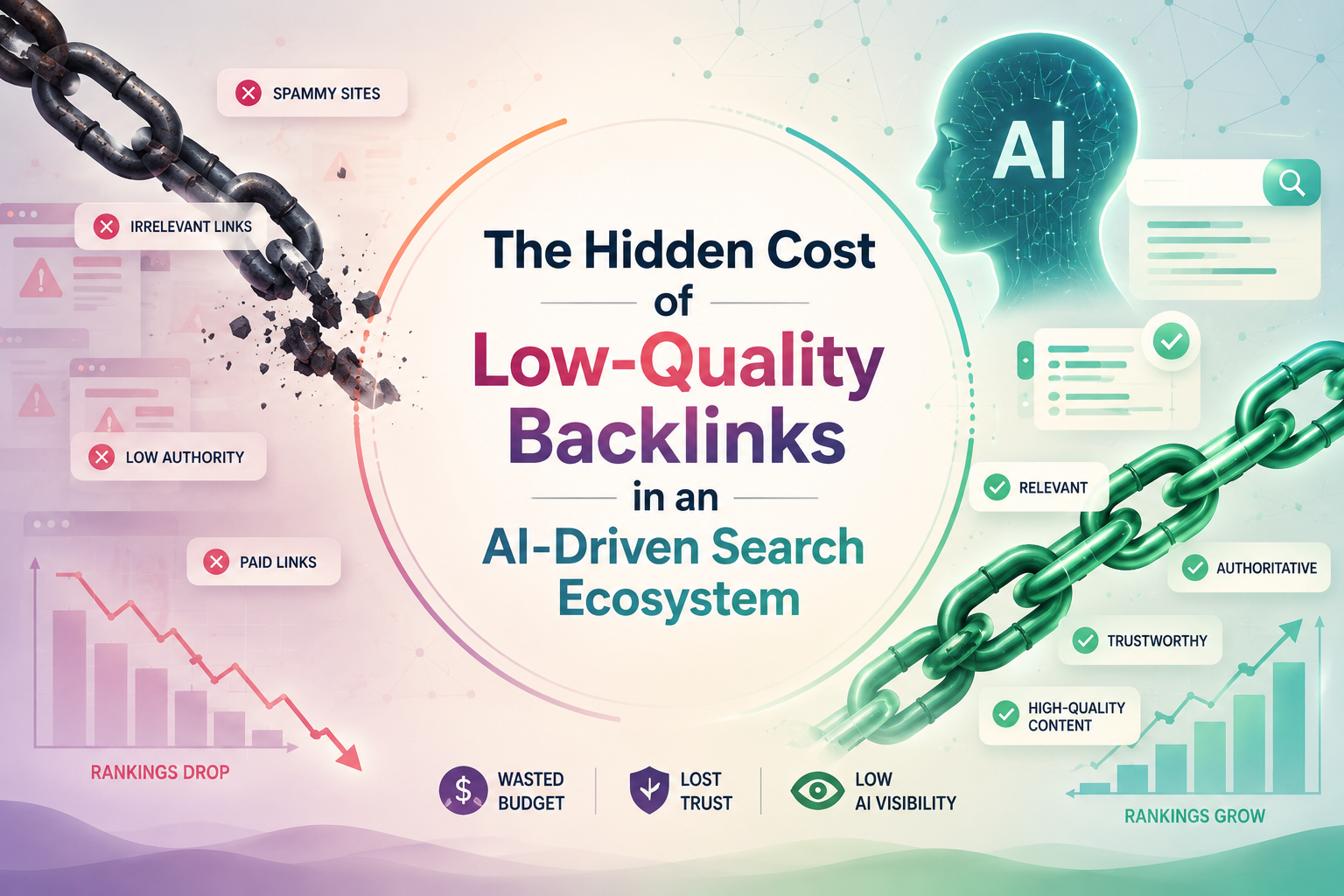
The Hidden Cost of Low-Quality Backlinks in an AI-Driven Search Ecosystem
 Purva Wankhade,
3 months ago
4 min read
Purva Wankhade,
3 months ago
4 min read
For years, backlinks have been considered one of the strongest signals influencing search visibility. A link from another website represented credibility, authority, and trust. Businesses invested heavily in earning links because search engines used these connections as indicators of content value.
But the search landscape has changed dramatically.
With AI-driven search experiences reshaping how users discover information, the role of backlinks is becoming more complex. Search engines are moving beyond simple ranking signals and focusing on understanding context, expertise, authority, and the overall credibility of online information.
In this environment, not all backlinks create value.
A low-quality backlink may no longer be just an ineffective SEO tactic. It can become a hidden business risk that impacts digital reputation, search visibility, and long-term growth.
For B2B organizations competing in crowded markets, understanding the difference between meaningful authority and artificial link building is becoming more important than ever.
Why Low-Quality Backlinks Are Becoming More Dangerous in AI Search
The evolution of search is changing how websites earn visibility. Traditional search engines and newer AI-powered search platforms are increasingly focused on delivering reliable, contextually relevant answers rather than simply matching keywords.
Google’s continued advancements in AI-powered search experiences, including AI Overviews, reflect a broader shift toward understanding content quality, expertise, and trust signals. Search systems are becoming better at identifying patterns that indicate whether a website genuinely contributes valuable information or is attempting to manipulate rankings.
This is where low-quality backlinks create problems.
A backlink from an unrelated, low-authority, or suspicious website may have once provided temporary ranking improvements. Today, those links can send conflicting signals about a brand’s credibility. Search algorithms are becoming more capable of evaluating link relevance, surrounding content, and the overall quality of referring domains.
For businesses, the challenge is no longer simply acquiring more links. It is building a digital reputation supported by credible connections.
A strong backlink from an industry publication, research platform, or trusted business resource can reinforce authority. Hundreds of irrelevant links from weak sources can have the opposite effect by making a website appear less trustworthy.
The difference is similar to professional reputation. A recommendation from a respected industry expert carries more weight than dozens of unknown endorsements.
The Business Impact of Poor Backlink Decisions Goes Beyond Rankings
Many organizations view backlinks as an SEO metric, but the consequences of poor link strategies extend further.
In a B2B environment, digital trust plays a major role in how potential customers evaluate companies. Buyers researching software providers, technology solutions, or professional services often encounter websites through search results before engaging with sales teams.
If a company’s online presence is supported by questionable sources, it can weaken the perception of expertise.
Low-quality backlinks can also create unnecessary SEO challenges. Search engines continuously refine their ability to detect manipulative practices, and businesses relying on outdated link acquisition methods may find themselves spending more time fixing problems than building authority.
The rise of AI-generated content has made this issue even more important. As the internet becomes saturated with automatically produced content, search engines are placing greater emphasis on signals that separate genuine expertise from content created purely to capture rankings.
This means backlinks are increasingly becoming part of a larger authority ecosystem. They work alongside high-quality content, brand mentions, digital reputation, user experience, and demonstrated expertise.
For enterprise marketers and business leaders, this changes the question from “How many backlinks do we have?” to “What does our backlink profile say about our brand?”
The Future of Backlinks Is About Trust, Not Volume
The future of SEO is moving away from quantity-driven strategies and toward credibility-driven growth.
In an AI-driven search ecosystem, backlinks will continue to matter, but their value will increasingly depend on context. A link from a relevant, authoritative source can help search systems understand a brand’s expertise and industry relevance.
Businesses are now investing more in thought leadership, original research, expert insights, digital PR, and valuable content assets because these approaches naturally attract stronger backlinks.
This shift reflects a broader change in digital marketing. Search visibility is no longer built through isolated tactics. It comes from creating a trustworthy online presence that search engines, AI systems, and users can recognize.
The most successful organizations will treat backlinks as relationships rather than transactions. Instead of focusing on acquiring links at scale, they will focus on becoming sources worth referencing.
As AI continues to transform how information is discovered and evaluated, the cost of low-quality backlinks will become increasingly visible. Businesses that prioritize authentic authority will be better positioned to earn trust, improve visibility, and remain competitive in the evolving search ecosystem.